Hosting & celebrations · August 2, 2026 · 7 min read
What Do You Do at a Sleepover? 24 Indoor Ideas
What do you do at a sleepover? Pick from 24 indoor ideas by age, then use the free printable cards to plan a simple night.
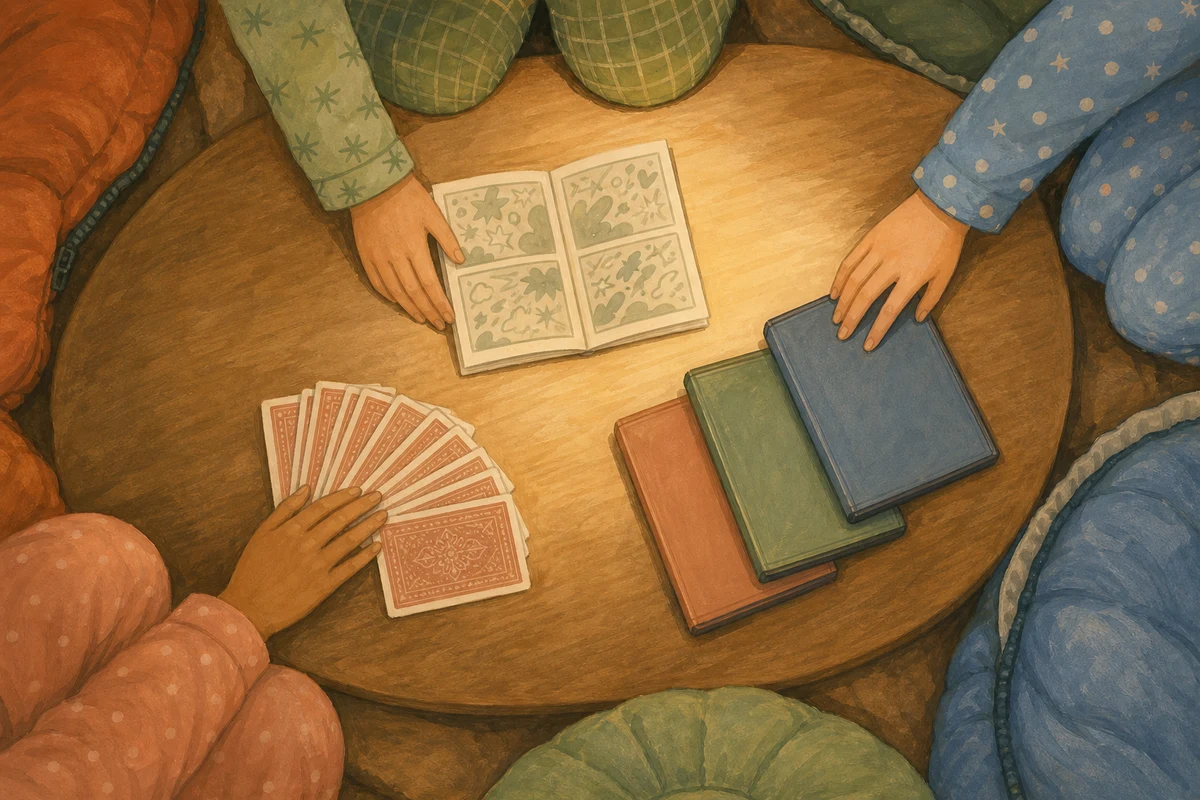
What do you do at a sleepover? Start with the things the group already enjoys together. That might be a movie or tabletop game. It could involve drawing or music. A ridiculous story made one sentence at a time works too. Pick four or five ideas and keep one easy backup. Then leave room for the guests to ignore half the plan because they're busy talking.
That last part is useful. A sleepover doesn't need 40 scheduled activities. It needs enough good options that nobody spends the whole movie window choosing a movie.
The ideas below stay indoors and use ordinary things a family may already have. You won't need a themed haul before anyone arrives. Treat the age bands as shortcuts for the amount of reading, setup, and conversation involved, not as rules. You know the group in your home.
Sleepover ideas for ages 6 to 8
At this age, the easiest choices have a visible starting point and don't depend on one child explaining a complicated rule. If it can't be explained in a sentence or two, save it for another night.
- Drawing telephone. Everyone draws a simple picture. Fold the paper to hide most of it, then pass it on for the next person to continue.
- Three-word story. Pick three ordinary words from the room and build a story that has to include all of them.
- Make a tiny comic. Fold paper into four boxes and give each person the same opening problem. The endings will not agree, which is the fun part.
- Guess the object. Put a familiar household object behind a book or pillow and give three clues without saying its name.
- Favorite-game round. Each guest chooses one card or board game the house already owns. Play a short round of each instead of turning one game into the whole night.
- Movie awards. After a movie, make paper awards. Try funniest moment or best costume. Add one for the character most likely to forget their backpack.
- Paper puppet scene. Draw characters on paper and tape them to pencils. Then make up a two-minute scene.
- Soundtrack drawing. Play an instrumental song and let everyone draw what the music sounds like.
The most elaborate idea here is still paper and a pencil. That's a feature. The fun should happen between the kids, not between the host and a shopping cart.
Sleepover ideas for ages 9 to 12
Groups in the middle years often enjoy a little more choice and a little less adult narration. Put the materials out and explain the first move. Then let the idea become theirs. You don't have to decide what the finished version should look like.
- Comic-strip relay. One person draws the first panel and folds it back. They write one sentence for the next person to illustrate.
- Blind drawing portraits. Draw a friend without looking down at the paper. Use a timer only if the group thinks that makes it funnier.
- Board-game remix. Change one harmless rule in a familiar tabletop game and decide whether the new version is better or wonderfully broken.
- Mini magazine. Make one page each. Mix advice with comics or quizzes. Add fashion sketches or fictional ads. Reviews of objects in the room can fill a page too.
- Name that intro. Play the first few seconds of songs from an adult-approved playlist and guess the title or artist.
- Movie bracket. Put four familiar options on paper and vote through two semifinal matchups instead of debating the whole streaming catalog.
- One-room scavenger hunt. Use the sleepover scavenger hunt guide when the host wants a complete clue activity that fits the home.
- Ridiculous product pitch. Invent an unnecessary product and draw it. Give the group a 30-second sales pitch.
A movie bracket solves a very specific sleepover problem: four people saying “I don't care” while vetoing every title. The bracket gets the choices out of the air and onto one small piece of paper.
Sleepover ideas for teens
Teen sleepovers don't need a younger-kid activity with the label peeled off. Give the group a premise that produces conversation or a shared result. A joke they can keep extending works too. It doesn't have to look like a hosted party game.
- Three-slide pitch. Make a tiny presentation for an absurd invention or a dream room. The worst movie sequel imaginable also works.
- Playlist draft. Choose a theme and take turns adding one song from an adult-approved music library. Play the finished list in order.
- Table-read a short scene. Write one page of dialogue together. Assign the parts, then read it at the table.
- Collage prompt. Use old magazines and scrap paper. Drawing supplies can turn them into a dream room or imaginary album cover. A fictional travel poster works too.
- Trivia swap. Each person writes five questions about a shared interest, then trades question sets with someone else.
- Bad-review challenge. Write a dramatic one-star review of an ordinary object. A spoon or lamp works. So does a sock. Read the reviews without naming the object first.
- Movie awards, serious edition. Choose categories before watching, then defend the winners afterward.
- Design a tabletop game. Start with paper and a coin. Add six index cards. Decide how someone wins, then play one test round and fix the rule that causes an argument.
The bad-review game tends to improve as the object gets less impressive. A lamp with “very limited portability” can carry a surprising amount of conversation.
Choose four activities and one backup
You don't have to assign every hour. Choose one idea from each line:
| Role in the evening | What works here | Example |
|---|---|---|
| Easy opener | Familiar, quick to explain | Favorite-game round |
| Make something | Something made by hand with materials already in the house | Mini magazine |
| Shared main pick | One longer group choice | Movie bracket |
| Quiet later pick | Seated and easy to stop | Bad-review challenge |
| Backup | Almost no setup and no new decision | Three-word story |
The backup isn't a sixth obligation. Reach for it when the craft takes eight minutes instead of forty. It also works when a game rule becomes a committee meeting or the chosen movie gets a roomful of groans.
If the group is happily talking or replaying the same game, leave the next card alone. The cards are there to answer “what now?” They aren't there to interrupt a good thing, and you don't need to use all six.
Print the sleepover activity cards
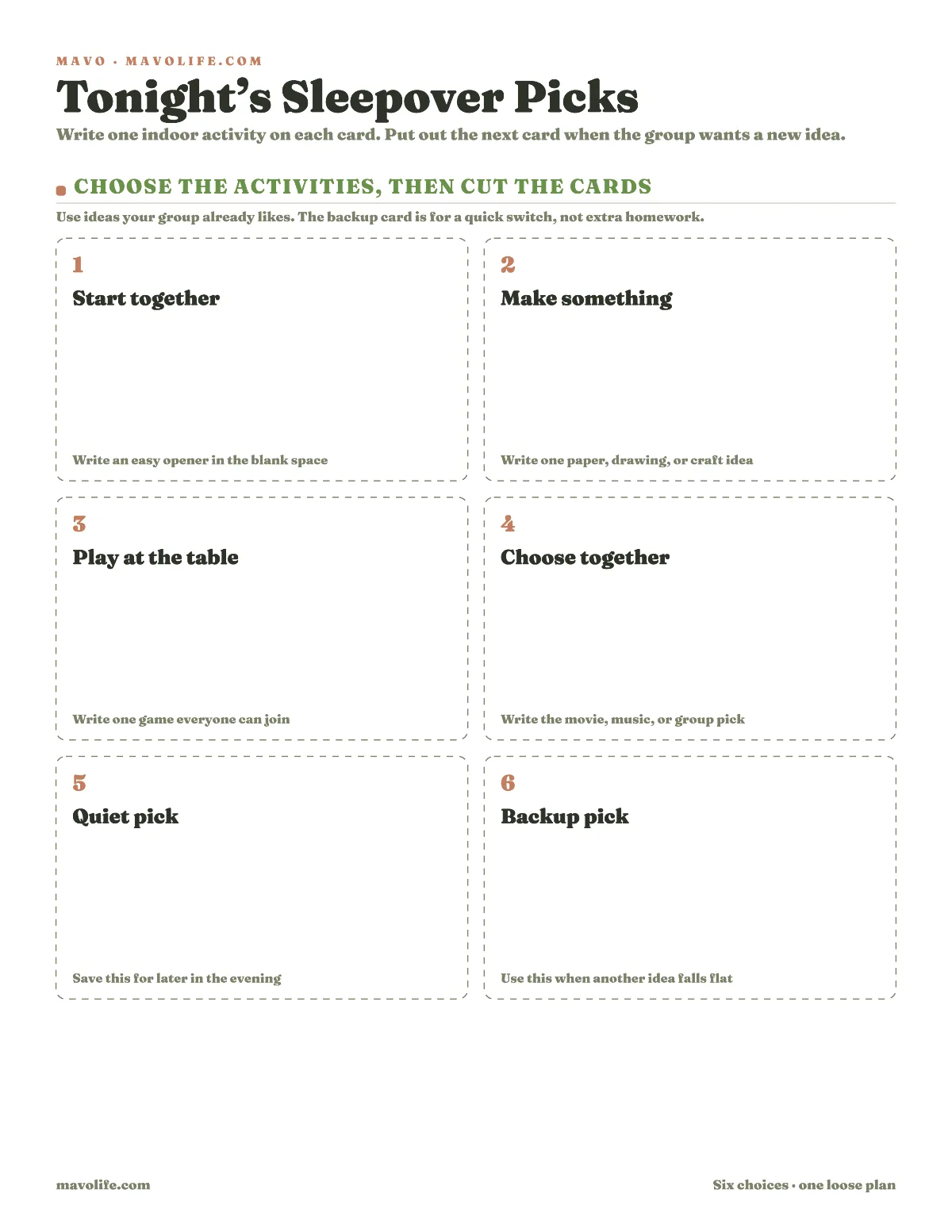
Download the printable sleepover activity cards (PDF)


Fill the six cards in one sitting before guests arrive. You won't need a second planning session. The host child can choose the ideas with an adult, using only activities and materials that already fit the home and the group. Write one activity in the blank space on each card. Cut them apart and stack them in the rough order you expect to use them.
The labels supply a loose time slot without turning the night into a schedule. “Start together” gets an easy opener. “Quiet pick” waits until later. “Backup pick” stays at the bottom until it is useful.
When a card falls flat, put it back in the stack. No appeal hearing is required. Bring out the backup, or let the group choose again.
Adjust the list for the group you have
For two friends
Choose ideas that produce something both people can see or share. A comic or playlist works. So does a trivia set or movie bracket. Skip activities that need teams. A two-person sleepover can spend a long time on one good idea, so you don't need six cards.
For a mixed-age group
Choose ideas with different jobs inside the same activity. One person can read a prompt while another draws. Someone else can choose the next card. Use the age bands to find the simplest shared entry point, then let the group add complexity if they want it.
For a house with no craft stash
Build the whole night from paper and pencils. Add one familiar game plus a movie or music option the family already uses. Three-word story and drawing telephone need very little else. Movie awards and bad reviews are just as light on supplies. So is trivia swap.
Keep entertainment separate from the host checklist
Activities are only one part of hosting. The first sleepover checklist covers what families exchange before drop-off. That includes packing and pickup, along with the routines and information the host needs. Keeping that job on its own page lets this list stay focused on the fun part.
For one ready-made centerpiece, use the customizable indoor scavenger hunt. For more plans and printables around having people over, browse the family hosting collection.
Write the backup card last. By then you'll know which activity asks the least from the room, and that is exactly what a backup should do.