Caregiver handoffs · July 10, 2026 · 6 min read
First sleepover checklist: hosting and sending
A first sleepover checklist that works both ways: what to pack and send when your kid goes, and the allergies, bedtime, and rules to capture when you host.
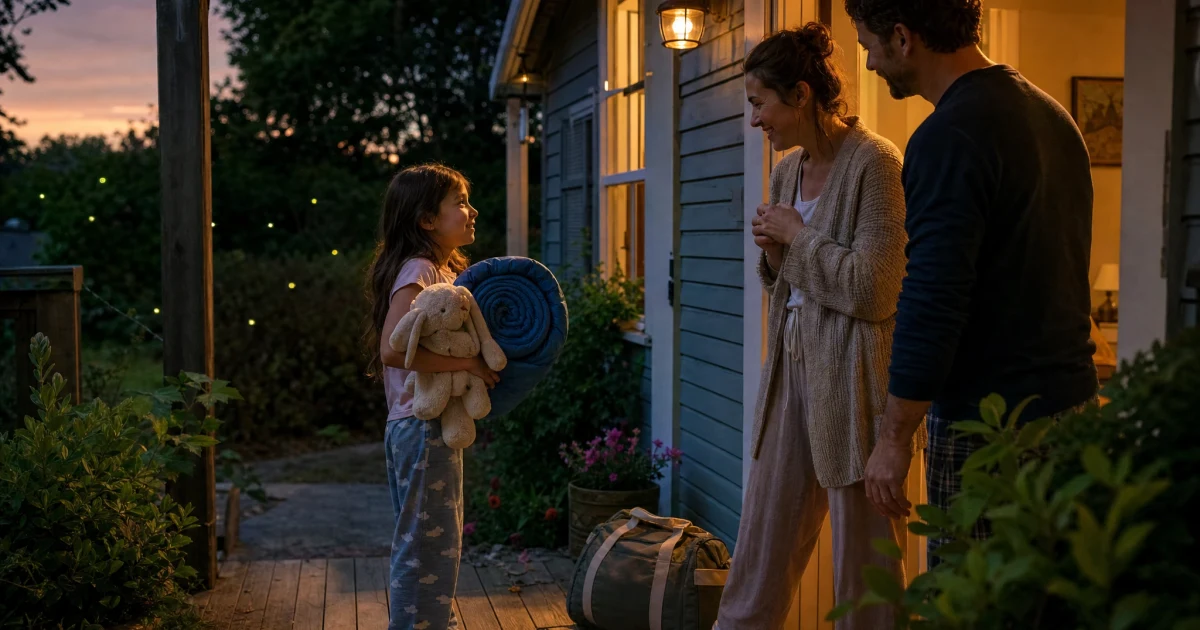
The first sleepover has two front doors.
There's the night your kid goes to someone else's house with a rolled-up sleeping bag and a stuffed animal that cannot, under any circumstances, be left behind. And there's the night you host, and a kid you barely know is asleep down the hall with an allergy you really hope you wrote down right.
A paid sitter comes to your house, and a grandparent already knows your kids. A first sleepover is the odd one out. It runs between two families who don't know each other's routines, and across a year it tends to run both directions. A sitter's information sheet only has to point one way. This one has to read from either side.
So here's a single card that reads from either side. Whoever's kid is going fills it in and sends it along. Fill it in on a computer, or print it and write in the blanks before the sleepover.
One card, either direction
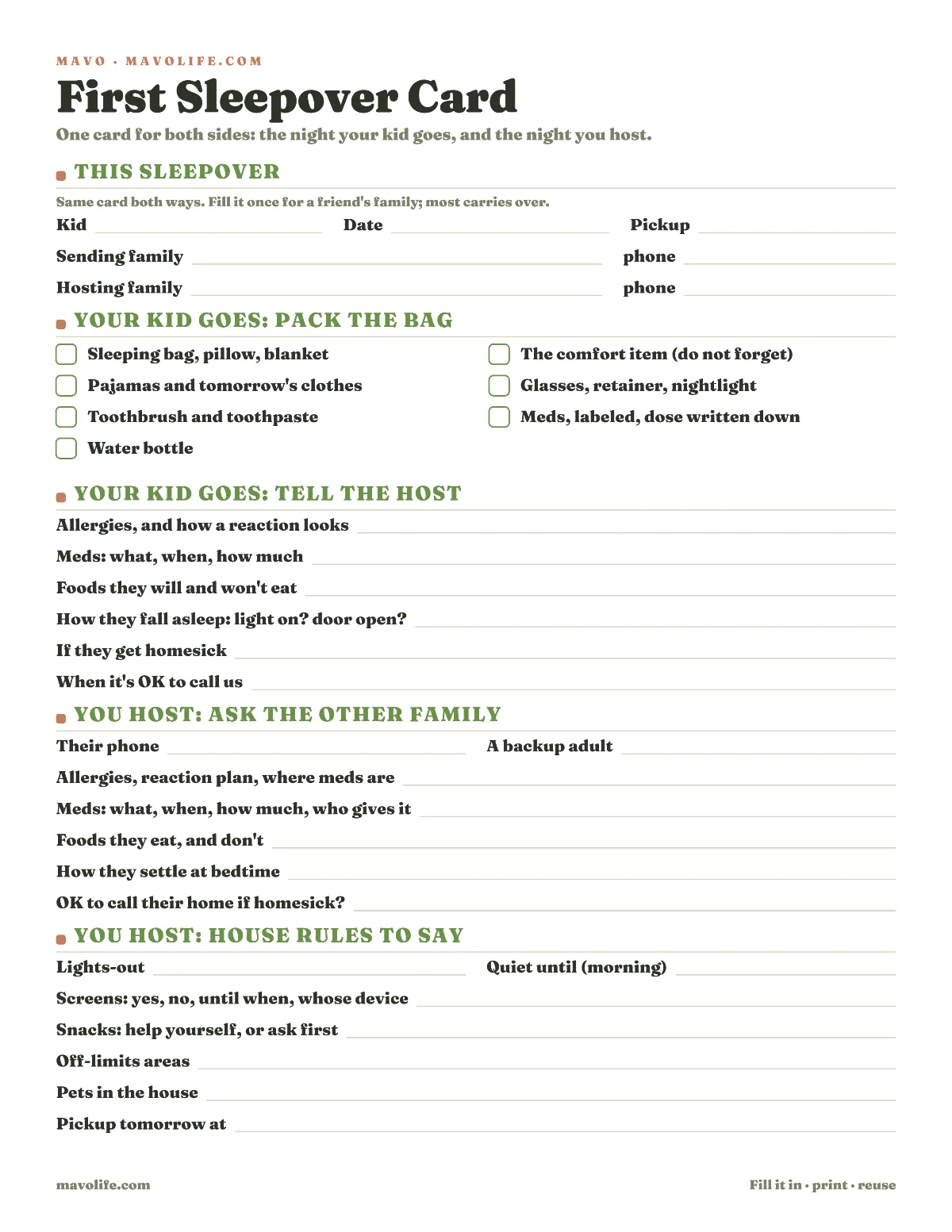
Download the printable sleepover card (PDF)
The card holds one kid's night: the times, both families' numbers, the bag, and the handful of things the hosting house actually needs to know. The nice part is that the two families often swap directions. Your kid sleeps at theirs this month, their kid sleeps at yours next month, and the same card comes back to you filled in by them. Your side barely changes between sleepovers, so the second one is mostly copying the first.
The send-off side: what to pack and what to say
The bag is the easy half. A kid can pack most of it themselves if you read the list out loud, and if something gets missed, it's a borrowed toothbrush, not a ruined night.
Slow down on the comfort item. The specific stuffed animal, the specific blanket, the specific pillowcase. If your kid has a thing that makes the dark okay, it goes in first and gets checked at the door, because it's the one item that turns a 2 a.m. wobble back into sleep instead of a phone call home.
Then settle the homesickness line before you drop off, and tell your kid and the host the same version of it. Some families say call anytime. Some say we'll come get you, no questions and no shame. Some say let's try one phone call first. There's no correct answer, only the one you actually mean, and the night goes smoother when everyone already knows it.
Sort the arrival, too. Whether your kid eats dinner before they come or after they get there, and what time drop-off actually is, so the host isn't holding a hungry guest at an awkward hour.
If medications go in the bag, they go labeled, with the dose written down, and you tell the host what and when rather than trusting the bottle to explain itself. It's the same handoff you'd want if the kid coming over were yours.
And if the whole idea has your kid, or you, a little wobbly, a full overnight isn't the only version of a first sleepover. The American Academy of Pediatrics calls the shorter one a "lateover": pajamas, a movie, the fun part, then a pickup at bedtime instead of a whole night away. Plenty of good first sleepovers are lateovers, and they still count.
The host side: what to ask and what to say
Hosting flips the card over. Now you're the one who needs the details, and the catch is that the visiting kid won't hand them to you. A seven-year-old will not announce the tree-nut allergy. They'll just quietly skip the cookie, or worse, not skip it.
So ask the other family directly, before drop-off: the allergy and what a reaction looks like, where the medicine lives and who gives it, and the foods that are a hard no. Sending them a blank card is an easier ask than a list of questions in a text thread, and you get the answers back in writing instead of half-remembered from the doorstep. These are the same facts you'd want on hand for any kid in your care, and they're worth keeping somewhere you can reuse. If you host often, a one-page kid health sheet means you're not re-asking every time.
It's fair to trade who else will be home for the night, too. A quick "my partner's here and my teenager will be around" is a normal thing to offer, and it quietly answers a question the other parent may be too polite to ask.
Then say your house rules out loud. Every family runs bedtime, screens, and snacks a little differently, and the visiting kid only knows the rhythm of their own house. Lights-out at nine. Screens stop after the movie. Snacks are in the kitchen, just ask first. You're not laying down the law, you're sparing a kid the work of guessing, which is the thing that actually helps them settle in.
Homesickness looks different from the host's chair. A kid who was cheerful at seven can hit a wall at ten-thirty, and the calm move is the one you already agreed on with their parents: the phone call, or the pickup, done without making the kid feel like they failed at it.
And the boring but real one. If anything ever tips into an emergency, the host calls the local emergency number first, then the parents. The card is for the ordinary night. The emergency number is for the rest.
Once those details are settled, the sleepover activity ideas page helps the host choose a short indoor plan without absorbing the logistics covered here.
Getting the details from one house to the other
Whichever side you're on, the details usually arrive as a text. The other parent sends "she's allergic to tree nuts, medicine's in the front pocket, bedtime's 8:30, we'll grab her at 10." It's all there. It's also going to be four screens up in your messages by the time you actually need it, at 8:20, in the kitchen, with someone else's kid asking for a snack.
That's the reason to get it out of the thread. Forward the email or paste the text into Mavo before the sleepover, and it turns into a plan item you can pull up in a couple of taps instead of scrolling for it. Add from Anywhere drops the other family's rundown into the same shared plan the rest of your household already checks.
Give the pickup time its own line. It's exactly where two families both quietly assume the other one has it handled. Put an owner on the pickup with Who's Handling It, so tomorrow's 10 a.m. has a single name on it, and let a reminder nudge whoever that is. No one circling the block at 9:55, wondering if they were supposed to have left already.
How the next one gets easier
The first sleepover is the hard one on both sides of the threshold. You're guessing at whether your kid is ready, the other family is guessing at your kid, and the little card is doing the quiet work of making two slightly nervous households legible to each other.
It gets easier fast. By the third sleepover the card is a two-minute refresh, and the two houses start to learn each other's shape. And when a helper turns into a regular, the every-other-Friday host, the sitter who's basically family now, the one-night card grows into a standing handbook you write once and barely touch. Same idea, more runway: the more each house knows, the less either kid has to spend the night guessing.