Hosting & celebrations · July 28, 2026 · 6 min read
Thanksgiving Day Schedule for Hosts + Free PDF
Use this Thanksgiving day schedule to map family-supplied times, kitchen zones, adult owners, and handoffs on one free fillable page.
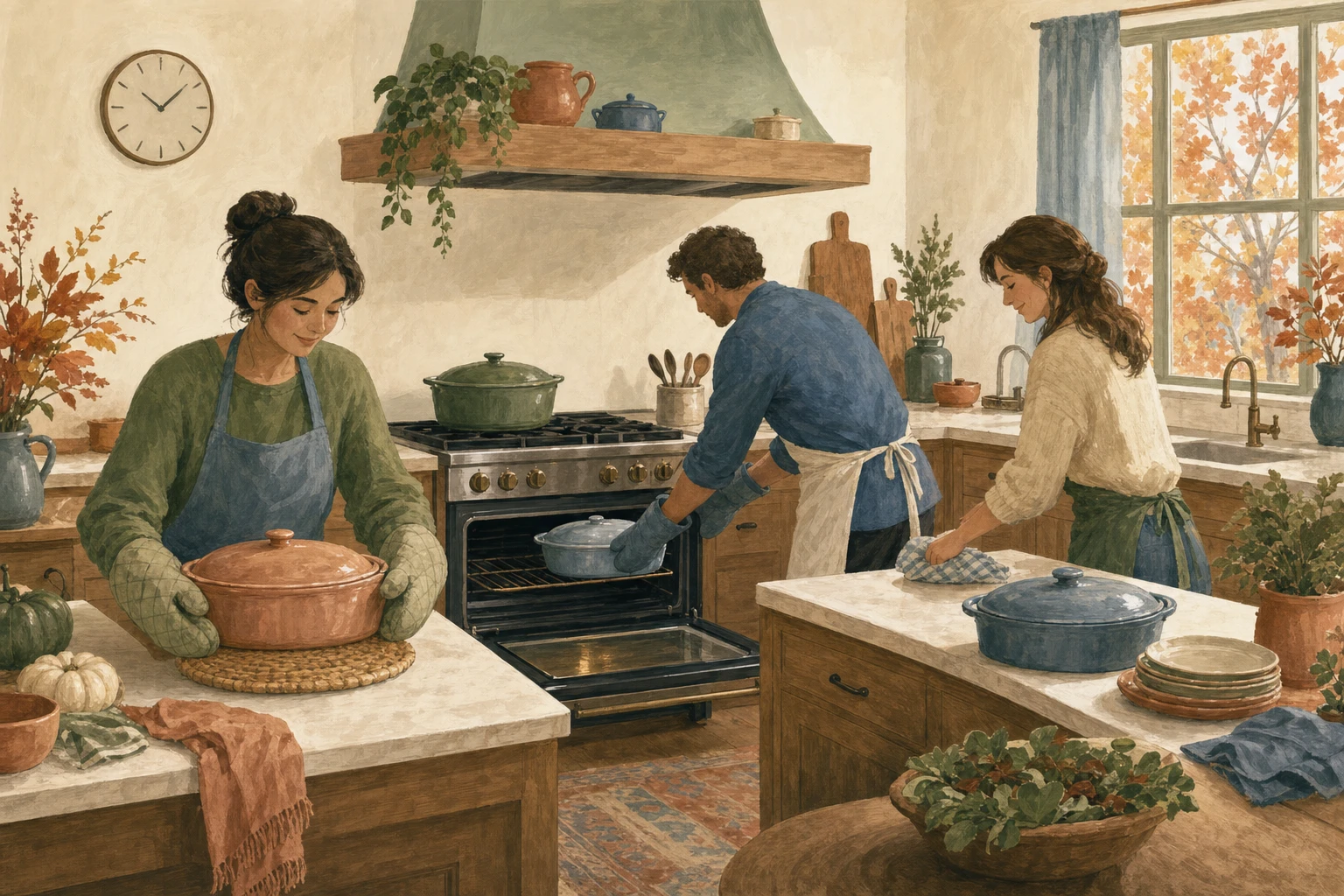
The Epicurious Thanksgiving timeline method starts with the serving goal and works backward. That's a sensible way to find the cooking order. A shared Thanksgiving day schedule needs one more piece: what happens when each task leaves the cook's hands.
The difference shows up beside a busy oven. Casserole at 2:40 tells the host when something starts. It doesn't tell a helper which oven slot is free or who owns the dish. The landing place is missing too. This one-page schedule keeps those day-of handoffs beside the family's own recipe-derived times.
Get the one-page host schedule
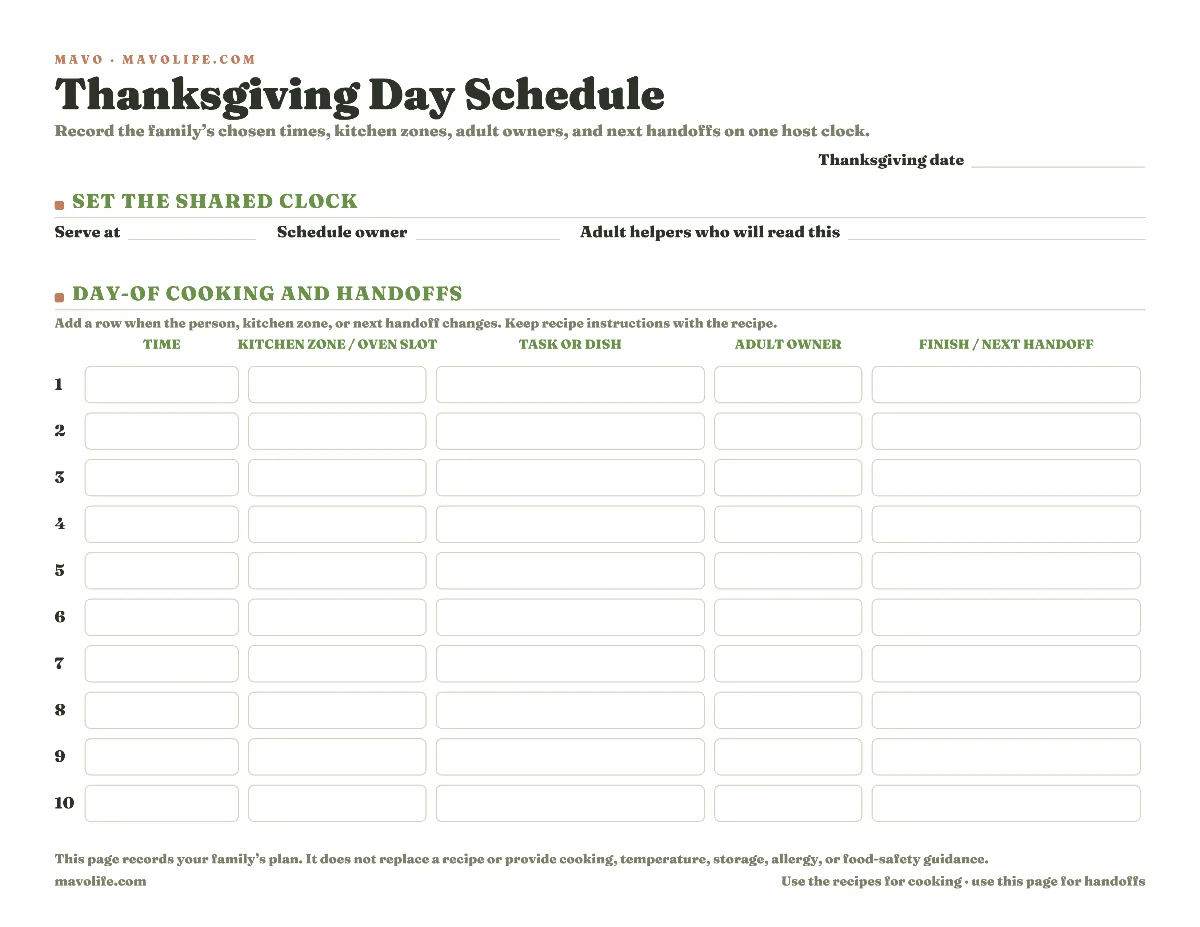
Download the fillable Thanksgiving day schedule (PDF)
The PDF is fillable, so you can type before printing or write on paper. It has room for the Thanksgiving date and serve time. Separate spaces name the adult keeping the current schedule and the helpers who will read its ten day-of rows.
It works without an account, but it won't calculate start times or replace a recipe. Use each recipe and trustworthy guidance for preparation and cooking decisions. That includes temperature and storage as well as allergy and food-safety guidance. The schedule records only the family's chosen clock and handoffs.
If the dishes and contributors aren't settled yet, use the Thanksgiving menu planner first. That page owns the meal itself and what still needs shopping. This page begins once the menu and recipes are real.
Write the finish before the start
Take one task and begin with the far-right column: Finish / next handoff. Ask what another adult should see when the line is complete. The answer might be land on the marked trivet or tell Jordan the oven is open. It could also be give Chris the serving bowl.
Now work left. Name the adult carrying the line to that finish. Add the task or dish, then the kitchen zone it needs. The time comes from the family's recipe or another decision the household has already made.
A filled row might read:
2:40 p.m. · main oven, next slot · family casserole recipe · Maya · land on the marked trivet
Maya still follows the recipe for how to prepare the dish and decide when it's done. The row shows where the task belongs in the shared day and who has it now. Its final cell shows what becomes possible when Maya finishes.
There's no need to copy every stir or check from the recipe. Add a row when an adult takes over or a shared kitchen place changes. A finished item moving can deserve a row too, as can a guest arrival or the moment everyone sits down. Ten lines work when each one marks a real change.
Draft backward, then copy the rows in clock order
Write the serve time at the top. On scratch paper, work backward from the last handoff before dinner. Who moves the settled dishes? Which counter or table spot has to be clear? Who needs to know that the final oven slot is open?
Keep moving backward with the times already supplied by the recipes. When two dishes claim the same oven slot, the scratch draft exposes the collision. Return to the recipes and settle the family's order there. This schedule shouldn't invent a new cooking time.
Do the same check for people. Someone can't own a kitchen task and greet arriving relatives at the same moment. Keep one job with that person and move the other to an adult who's actually available.
Once those choices hold together, copy the rows onto the printable from earliest to latest. The planning happens backward because dinner is the fixed point; the finished page reads forward because that's how helpers will use it during the day. Blank rows are fine.
Let the oven shape the handoffs
One oven can feel like it has a waiting list by midafternoon. The schedule makes the family's chosen order visible before several covered dishes arrive beside the same door.
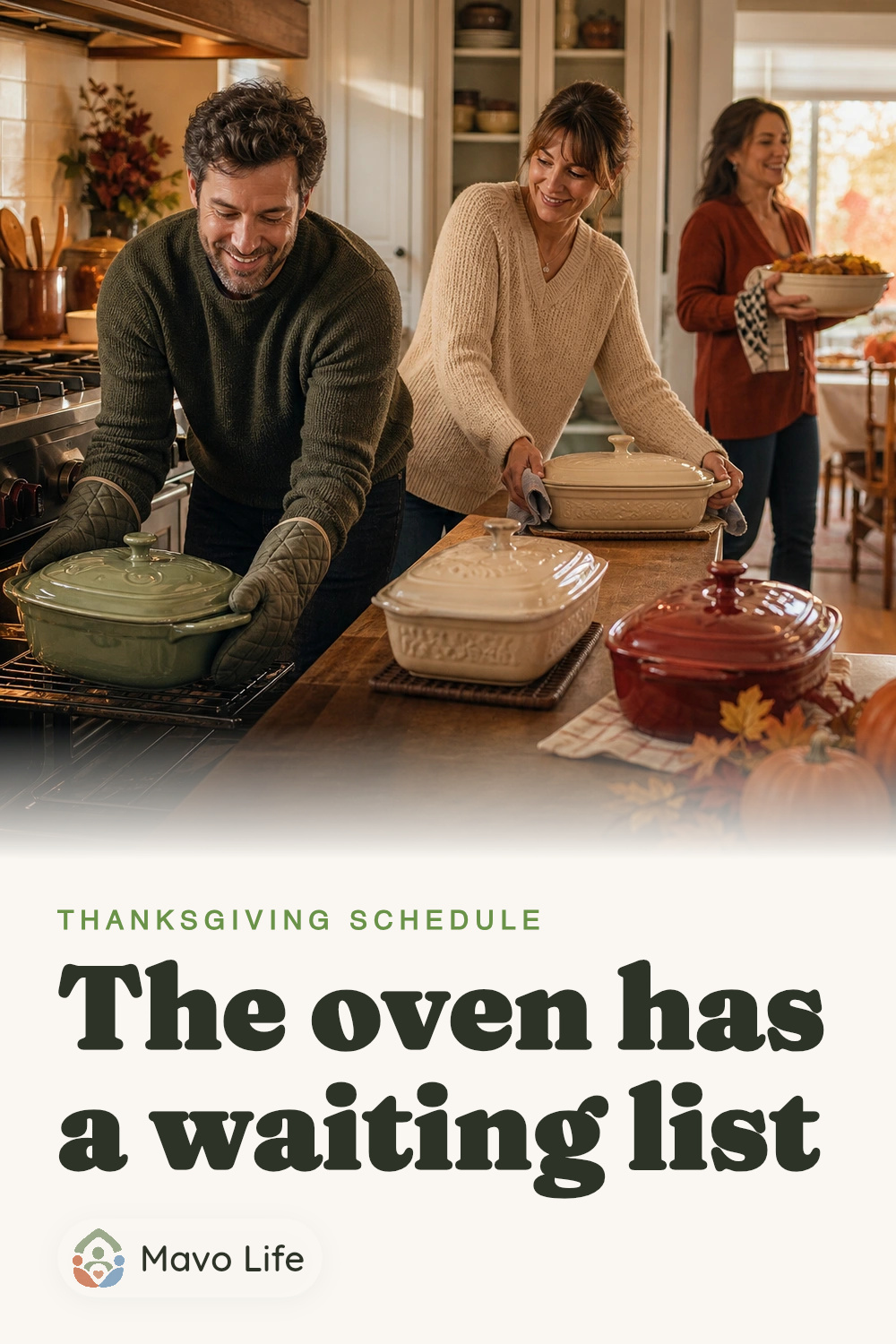

Write kitchen zones the way helpers will recognize them: main oven, first slot, mixer counter, or sideboard, left end. A zone can describe the first and next oven slots without repeating the temperature or cooking instructions in the recipe.
A landing zone matters because the dish leaving the oven can block the counter needed for the next task. Put the empty trivet or serving piece in place before the line begins. Then the finish instruction points to something a helper can actually see.
Give one adult the whole line whenever you can. Sam and Chris works only if they already know their split. Otherwise, two names hide the same question the schedule is meant to answer.
Put the page through a ten-minute test
Imagine the host steps outside to meet a relative. Could another adult read the current row and move it to the named finish without asking what every note means?
If not, add the missing place or handoff. Don't add recipe directions. The page stays useful because it names shared moments, not because it becomes a second recipe binder.
Use a written time when helpers need one reference. After the parade may be perfectly clear in the host's private notes, but it can drift when people arrive at different moments. The exact time your family chose gives everyone the same point on the clock.
A blank owner or a note such as oven? can stay during planning. It shows which decision is still open. Resolve it before the page reaches the kitchen so nobody has to guess during the handoff.
Adapt the schedule to the gathering
For a potluck
Keep guest-brought food off the cooking rows unless the host's kitchen has a real handoff. Add an arrival only when someone needs to receive the dish or make room for it. Who's bringing what still belongs on the menu planner.
For one adult cooking
Write me as the owner and use the finish column for a physical reset. The oven opens. The dish reaches the sideboard. The serving piece is ready. Even without delegation, those endpoints make the page a route through the kitchen.
When the meal happens at another home
Use one row for the departure handoff. Record the loading place and name the adult who owns the move. The finish is the person receiving it at the other home. Your page can end when the responsibility changes homes.
When a helper arrives later
Give that person only rows after their confirmed arrival. A hopeful early assignment won't help anyone already in the kitchen. Leave the owner blank until the arrival is settled or move the line to someone who's already there.
Change the next collision when dinner slips
When one line runs late, find the next row using the same adult or kitchen zone. That's the first handoff affected. Update its time and tell the person named on it.
Independent rows can stay where they are. You don't have to rewrite the whole page because one oven slot moved. Draw through the old time and write the current one beside it. If the serve time changes, update that fixed point before checking which rows depend on it.
The family hosting collection has the plans around the meal. Keep this sheet where the adults doing the day-of work can see it.
If the oven falls behind at 3:20, update the next oven row and tell its owner before changing anything else.