Caregiver handoffs · July 3, 2026 · 6 min read
Babysitter notes: everything on one page before you go
A copyable babysitter information sheet that works for grandparents too, with tonight's plan, contacts, routines, what's different, and who owns the follow-up.
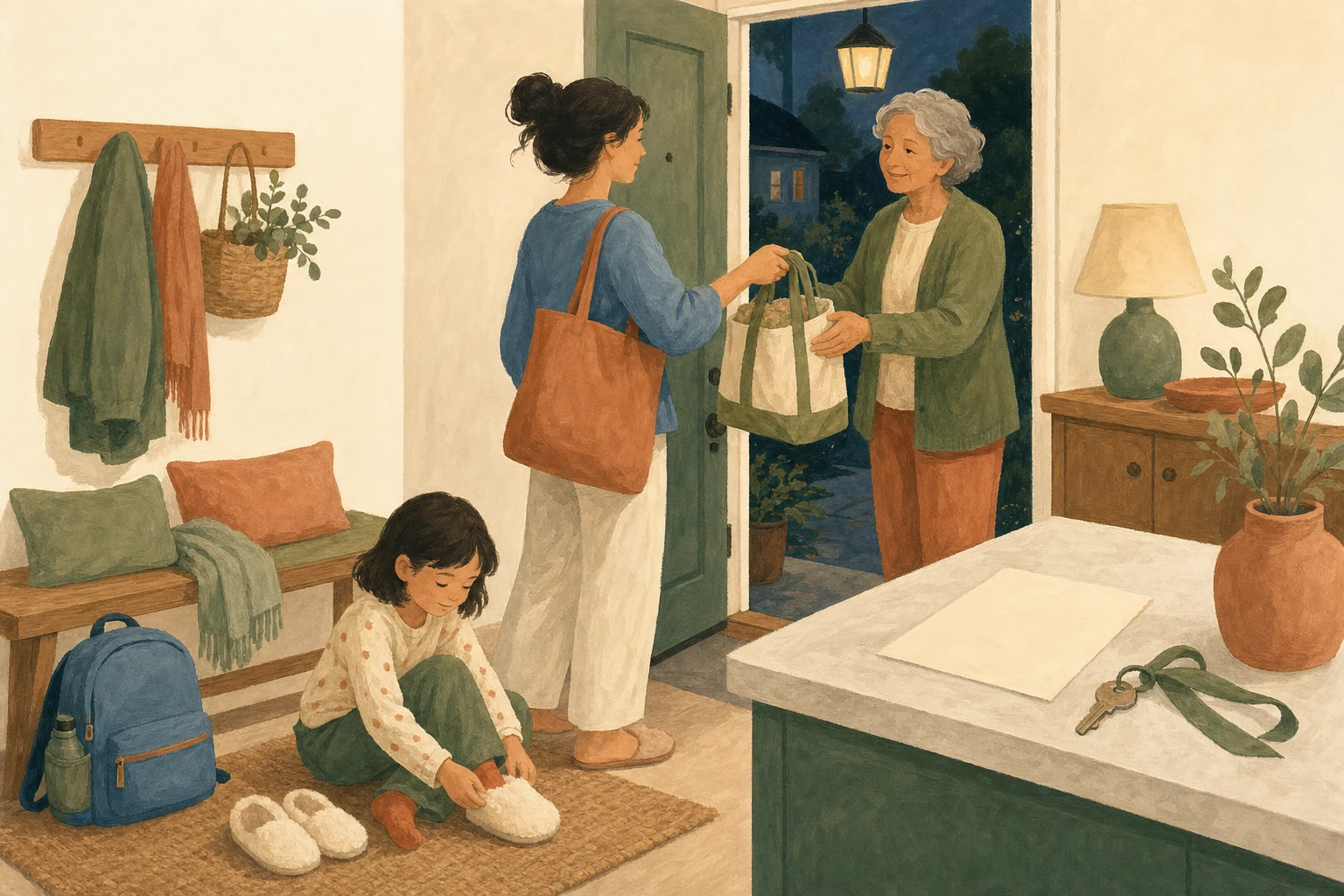
You're halfway out the door when the questions start coming back at you. What time is bedtime tonight? Is the blue cup okay, or is that the one that leaks? Who should the sitter call if soccer pickup runs late? Did the school email say pajama day was tomorrow or Friday?
The person helping you may be perfectly capable. The plan is the problem: it's scattered across your memory, the fridge, a text thread, a calendar invite, and the one school email you meant to forward.
Good babysitter notes aren't a long manual for your family. They're one clear page that says what's happening tonight, what matters, and who owns the next step if something changes. The same page works when it's a grandparent covering instead of a paid sitter.
Start with tonight's plan
Begin with the time block the helper is actually covering. Not the whole family calendar. Not every routine your house has ever had. Just tonight.
Write:
- Start and end time.
- Where everyone will be.
- Pickup or drop-off details.
- Dinner plan.
- Bedtime or quiet-time plan.
- Anything that has to be ready before you get back.
| Tonight's plan | Details |
|---|---|
| Coverage time | 5:30 to 9:30 p.m. |
| Kids home | Nora and Eli |
| Dinner | Pasta is in the fridge. Warm it on the stove. |
| Activity | Eli has piano at 6:15. Grandpa drives. |
| Bedtime | Nora at 8:00, Eli reads until 8:30. |
| Before we get home | Lunch boxes rinsed, piano bag by the door. |
Write the contact chain before anyone needs it
The contact section should be boring and easy to scan. If something feels urgent, no one should have to search a group text to decide who to call first.
Include:
- Parent or guardian names and phone numbers.
- Which parent is reachable first.
- A backup adult nearby.
- Home address.
- Neighbor name, if there is one you trust for small problems.
- Pediatrician or clinic number, if you normally leave that for caregivers.
- Allergies, medications, or health notes the caregiver truly needs.
For urgent danger, the caregiver calls 911 (or your local emergency number) first. Your handoff sheet isn't medical or safety advice; its job is smaller: the family context that helps a capable adult act calmly.
Nemours KidsHealth's babysitter guidance points the same direction: instruct the sitter, leave emergency phone numbers, and make food and safety notes clear before you go.
Mavo version: put the "who to call first" note on the plan item itself. If one parent owns the evening and another is backup, make that visible instead of relying on the helper to remember what you said while leaving.
Capture routines without writing a novel
Helpers don't need every preference. They need the few things that prevent friction.
For a sitter, that might be:
- The bedtime order: pajamas, teeth, two books, lights out.
- Food rules: what is already approved for dinner or snack.
- Screen rules: what is allowed, where, and when it stops.
- Pet notes: feed the dog at 7:00, keep the cat out of the nursery.
- House quirks: the back door sticks, the upstairs hallway light flickers, the dishwasher needs one firm push.
For a grandparent, the list may look different. Grandparents often know the kids but not the current logistics: which backpack goes to which door, whether the booster seat moved cars, or which school form is due tomorrow.
Keep the routine section short enough to reuse. If it becomes a family encyclopedia, no one will update it.
Name what is different tonight
Most handoffs fail because of the exception, not the routine: a fever that's mostly gone, a field-trip form that has to be signed, a practice that moved indoors, a grandparent pickup at a different door, a kid who's nervous about the sitter arriving after dinner.
Add a tiny "different tonight" section:
- A schedule change.
- A food, medicine, or allergy note.
- A school item due tomorrow.
- A pickup or drop-off wrinkle.
- A feeling note: anxious, overtired, excited, missing a parent.
This is also where the default parent usually carries too much. The exception lives in their head because they were the one who read the email, packed the bag, or heard the teacher mention it at pickup. Writing it down just moves that context out of your head, where the helper can actually use it.
If the exception came from a school email, connect this handoff to a simple system for turning school emails into dates and to-dos. The best caregiver note starts earlier, when the important parts of the email become plan items instead of staying buried in the inbox.
Mavo version: forward the school email, paste the note, or share a photo with Mavo AI, then turn the exception into a plan item. The sitter doesn't need the whole newsletter. They need the part that affects tonight.
The babysitter notes, ready to print
We turned the handoff into a real, one-page printable so you're not retyping it into a note. Print it, fill in the blanks before the helper arrives, and keep a filled-out master where only the tonight lines change each time. Laminate it and use a wet-erase marker, or print a fresh copy each time.
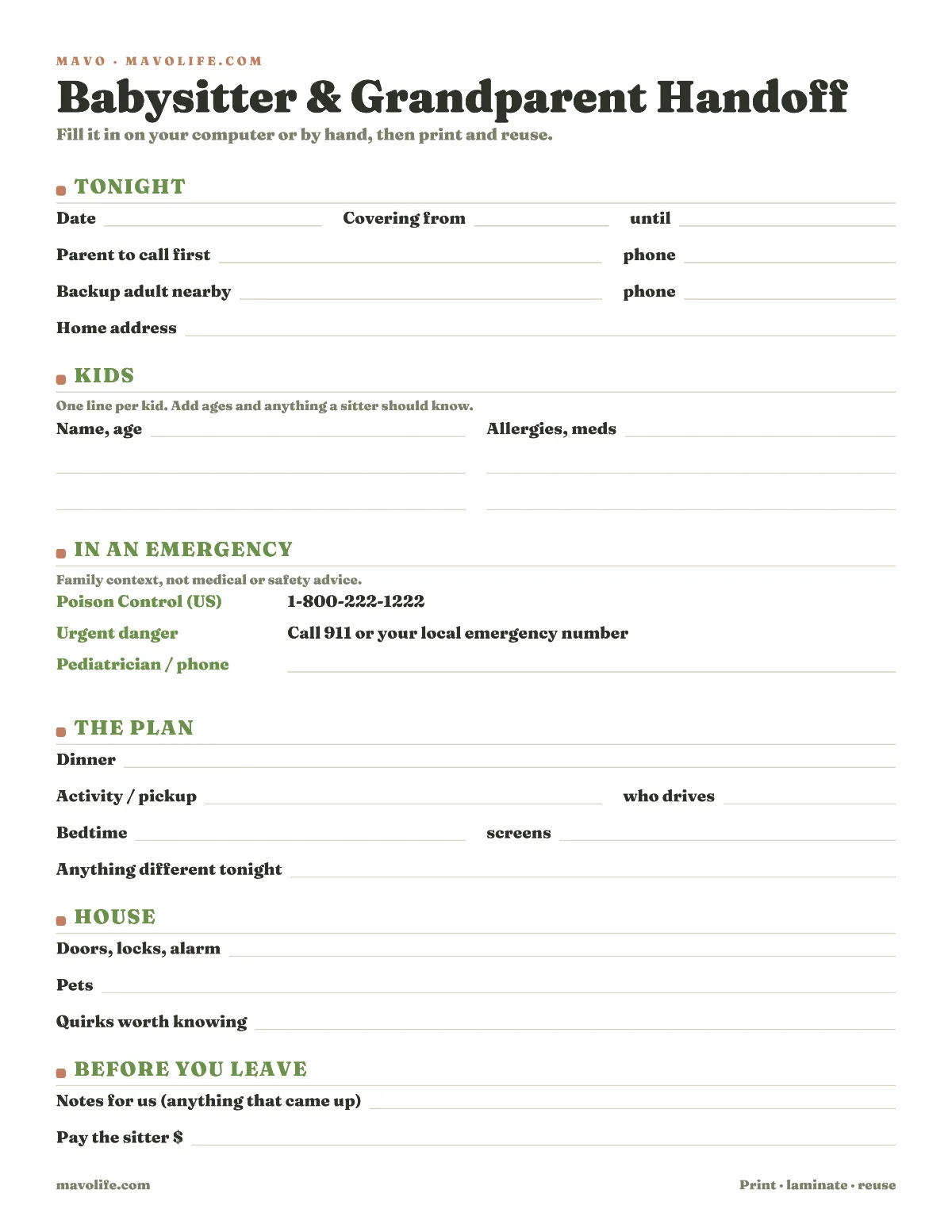
Download the printable handoff sheet (PDF)
Before you leave, a thirty-second check:
- Tonight's time block is clear.
- The helper knows who to call first.
- Dinner and bedtime are written down.
- The exception is visible.
- The follow-up owner is named.
That last line is easy to skip, and it's the one that keeps the handoff from bouncing back to the same parent every time.
Who owns the follow-up after tonight
A handoff doesn't end when the parent walks out. Someone still has to notice what happened afterward.
Did the piano bag come home? Did the sitter need to be paid? Did Grandma mention that the school folder was missing? Did the helper leave a note that tomorrow's snack supply is low?
Write the follow-up owner before you go:
| Follow-up | Owner |
|---|---|
| Pay sitter | Sam |
| Check piano bag | Maya |
| Move school form to backpack | Sam |
| Add milk to grocery list | Maya |
This is where a handoff connects to the bigger mental-load problem. If one parent writes the note, answers the texts, remembers the exception, checks the bag, and pays the sitter, the family got help with the evening but not with the load.
The fix is small: make follow-up visible and owned. If you want a broader way to talk about that invisible work, start with the default parent.
When a recurring baby bag is part of the handoff, the diaper bag checklist keeps the family's chosen contents, current state, and next reset together.
When the helper is caring for a pet instead, use the separate pet sitter notes template for the pet's familiar routine, supply locations, cues, and owner-supplied contacts.
Mavo version: put owners on the follow-up items too, with Who's Handling It and Covered status. The family can see what's handled and what still Needs Attention after the door closes.
Make it reusable, not perfect
The best handoff sheet is the one you'll actually update.
Keep a steady version with the things that rarely change: address, contacts, bedtime basics, allergies, house quirks. Then add a fresh "tonight" section each time someone helps.
That gives you a calmer rhythm:
- Start from the reusable sheet.
- Add tonight's plan.
- Add what is different.
- Name who owns the follow-up.
- Leave the helper with one clear place to look.
Mavo's job here is small: keep the handoff in the shared plan the family already looks at, instead of in one parent's head and a stack of sticky notes.
A good handoff makes the next adult less dependent on your memory. Name who owns the follow-up, and walking out the door stops feeling like handing over a mystery.