The mental load · August 3, 2026 · 5 min read
Family Laundry Schedule: Free Fillable Template
Use this free family laundry schedule to give each repeat load a day, a finisher, and a reset so clean clothes do not stall in baskets.

A laundry basket can mean at least two opposite things: clothes waiting to be washed, or clothes that are clean but haven't made it home. The second pile is the one that makes a family feel as though it has done laundry all week without finding a shirt on Tuesday morning.
The useful part of a family laundry schedule is the landing spot. Before choosing a day, decide where each regular load ends up and who carries it over that last small distance. A towel load belongs on the linen shelf. Sheets return to beds. A child's clothes may go to a bedroom basket for that child to put away. Once those endings are visible, the week has something practical to protect.
Start with where clean laundry lands
Walk through the usual clean piles once. Notice the sofa stack. Notice the basket by the stairs. The dryer can hold a load when nobody is sure who will deal with it. Those are not character flaws. They are places where the work currently loses its address.
Write the real landing spot beside each repeat load. Keep the words short enough for another person to understand without a translation. Linen shelf and Avery's basket both work. If a load has no clear place, settle that question before putting it on a day. Otherwise the calendar only records the moment it became clean, while the handoff remains unspoken.
The person who finishes a load either puts it away or passes it to the person who does. The page doesn't decide the split. It makes the existing agreement readable while there is still time to alter it.
Download the free family laundry schedule
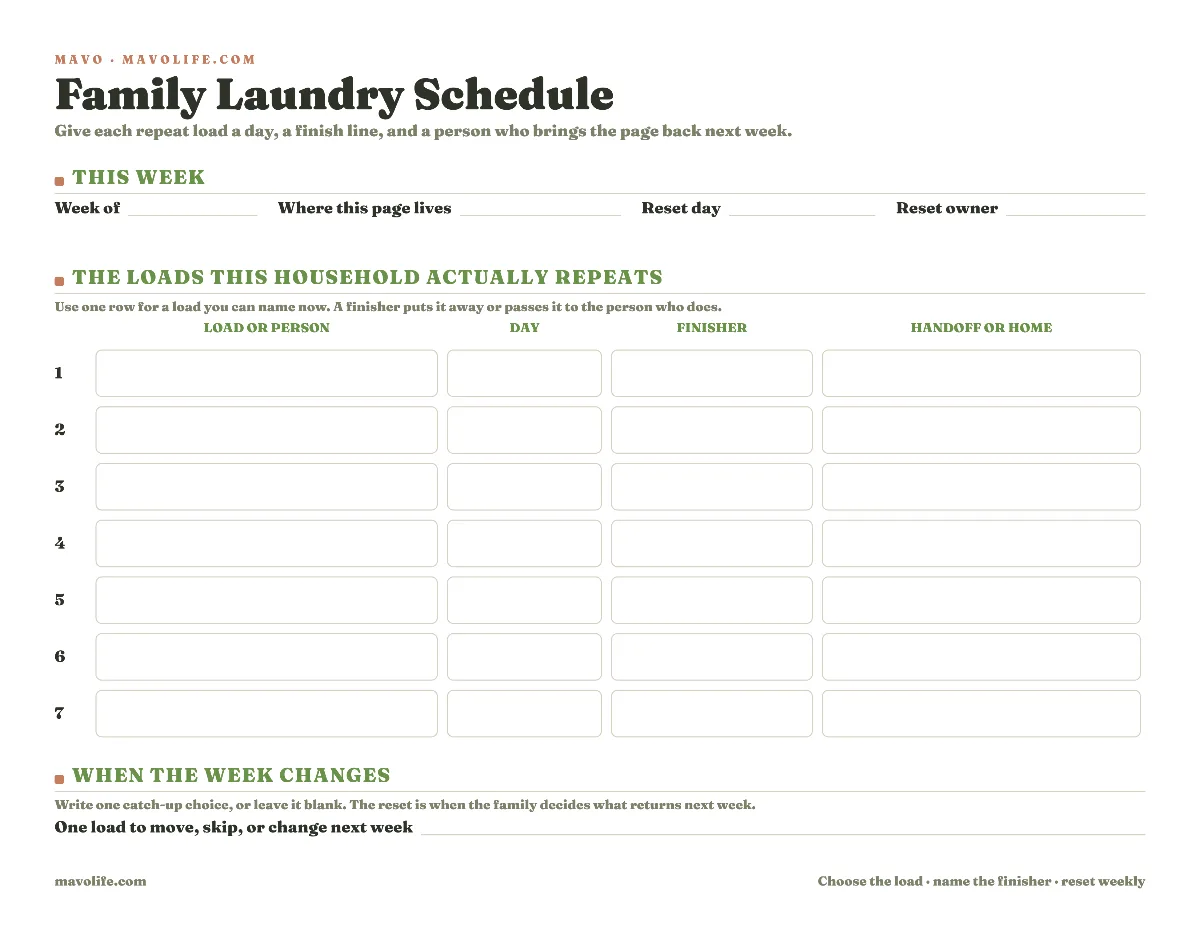
Download the fillable family laundry schedule (PDF)
The one-page PDF works typed or handwritten. Fill it in during a short Sunday or week-start sitting. Name only the loads that reliably appear. Add their landing spot, then write the person who handles the final return. The reset owner brings the page back next week. No account is required.
Schedule the loads, not a perfect household
Most template results offer a seven-day grid with a generic load assigned to every square. That can look productive while failing the actual household. One family may have enough clothes for several small loads. Another may have one shared towel load and a weekday that is never available for folding.
Start with the loads that are already real. School clothes or towels are useful only if those are words people in the home already use. A row can also belong to a person, such as Jordan's clothes, when that makes the return path obvious.
Leave unused rows blank. Seven rows are space for the repeated loads that need a visible agreement, not a requirement to invent seven categories. A laundry schedule printable should reduce the number of decisions on a busy evening. It doesn't need to turn a basket into a compliance chart.
Give every load a finisher
The middle of the laundry process is usually loud and visible. The ending is quieter: a folded stack on the sofa, a basket waiting by the stairs, a shirt that is technically clean but somehow never returns to its drawer.
The Finisher column names the person who gets the load to its next usable place. That may be the person who folds it. It may be the person who puts it away. The point is not to assign a universal job to an adult or child. It is to make the last handoff visible before the washing begins.
| Load or person | Day | Finisher | Handoff or home |
|---|---|---|---|
| Towels | Tuesday | Morgan | Linen shelf |
| Avery's clothes | Thursday | Avery | Bedroom basket |
| Sheets | Saturday | Casey | Each bed before dinner |
Those are illustrations, not a recommended split. If the same name fills every finisher cell, the page has done something useful by showing the current arrangement. It hasn't decided whether that arrangement is fair or realistic.


Put the page where the handoff happens
Write the location in the top row. It may be the laundry-room counter or a magnetic board near the stairs. The location matters because a schedule that only the writer sees becomes another thing one person has to remember. It won't help if nobody can find it.
Then use the last column for the practical return path. Linen shelf or give to Sam is enough. This is not a washing-instruction sheet. It is not a place for stain advice or care labels.
If a household's work changes every few days, a paper schedule may be the wrong shape. Use a phone note or a shared list instead. The printable earns its place when the same few loads and handoffs repeat long enough for a second person to read the plan without asking. If that isn't true, don't print it.
Reset the schedule before it becomes wallpaper
Choose a Reset day and a Reset owner before the page goes up. The reset owner doesn't own every load. They own the small job of asking whether the page still tells the truth.
At that check-in, cross out a load that no longer fits. Move one that needs a different day, or leave the page alone. The bottom line is for one deliberate decision, such as move sheets to Sunday. It isn't a hidden backlog.
The refrigerator is good at preserving old plans long after they have stopped helping. A reset date gives this page permission to end. A clean new copy is often kinder than decoding three weeks of crossed-out arrows.
When the laundry problem is really a bigger handoff
Sometimes laundry is the visible example of a larger pattern. One person notices the hamper and buys more detergent, then asks someone else to fold. In that case, use the mental load checklist to name the whole area before trying to divide single loads. The family chore list template is a better fit for standing jobs that repeat by person rather than by basket.
This page stays narrower on purpose. Print it and write the loads that genuinely repeat. Add the person who gets each one home. Then circle the reset day before it disappears under a clean-shirt pile.