Home systems · August 4, 2026 · 4 min read
30-Day Declutter Challenge: One Small Area a Day
Try this free 30-day declutter challenge with one small area a day, a clear stop rule, and a printable checkoff sheet you can start today.
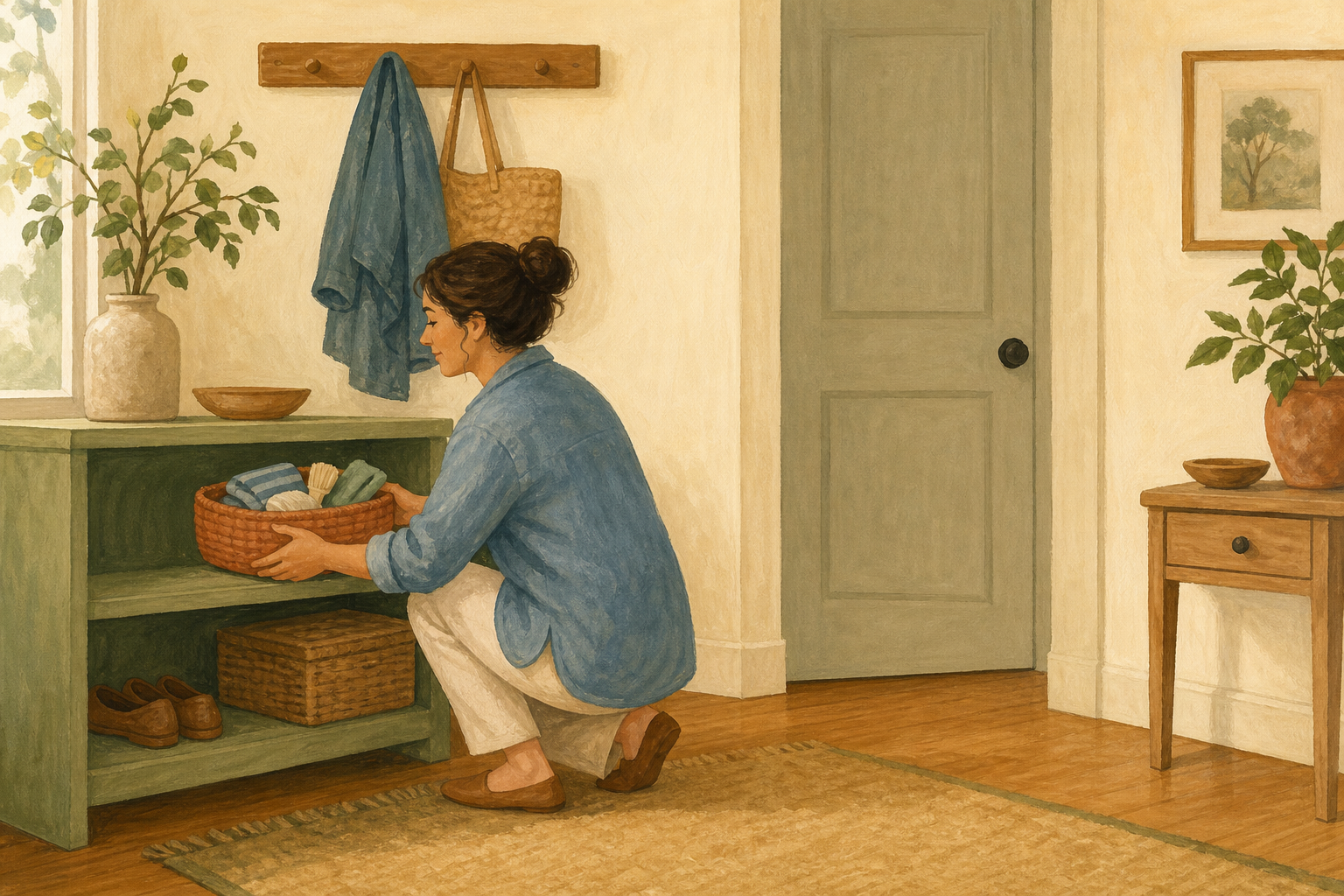
Start with a small area that fits in your hand. One drawer works. A shelf, counter corner, or bag pocket works too. Check it off when that little edge is closed, then leave the next edge alone until tomorrow.
That's the shape of this 30-day declutter challenge. It gives you a prewritten sequence and permission to resume after a missed day, so you aren't rebuilding the plan every time a week gets busy.
Download the free 30-day declutter challenge
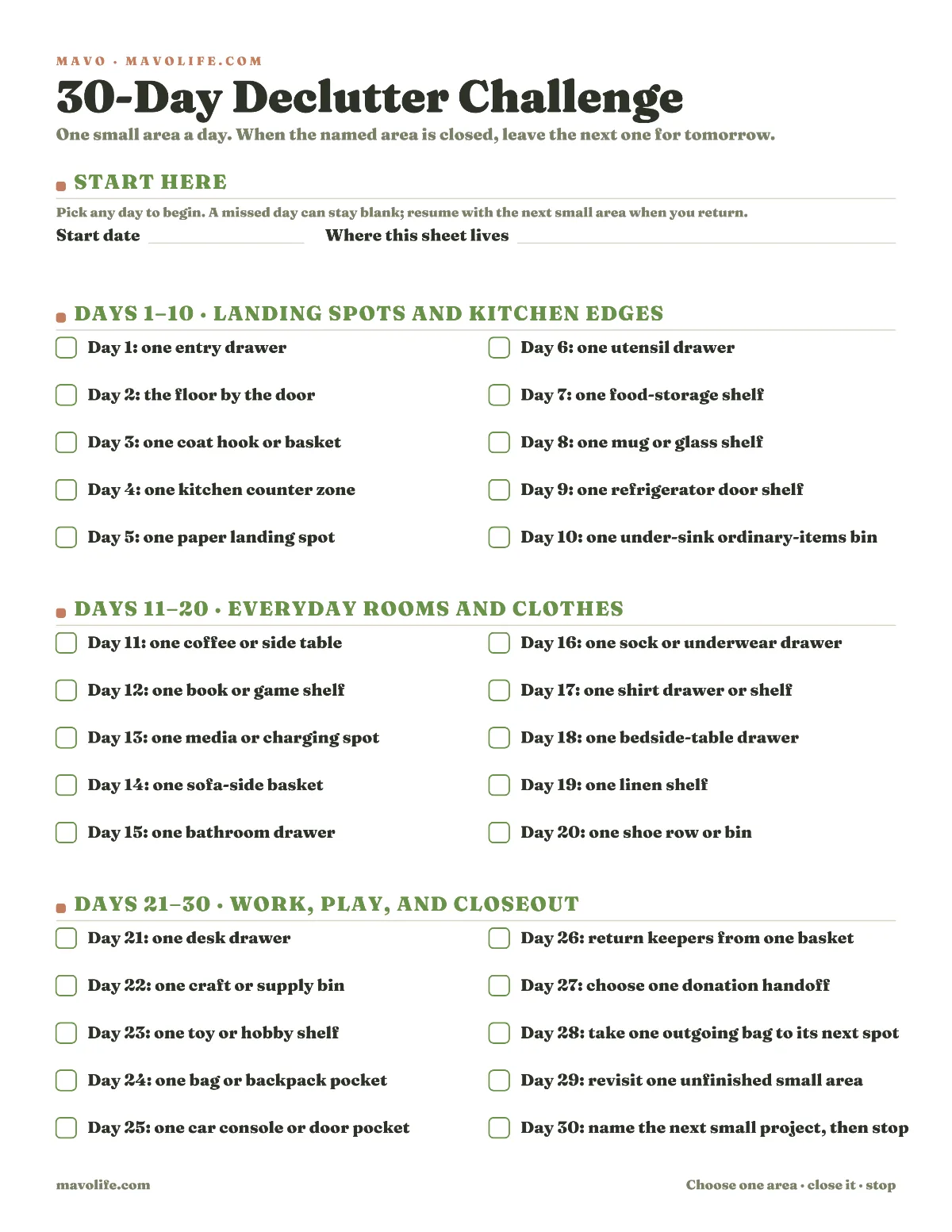
Download the 30-day declutter challenge checkoff sheet (PDF)
The PDF gives you the first 30 small areas, from one entry drawer to a single shelf or bin. Print it once and put it where the people at home can see the current day. It works without an account and gives you a useful sequence right away, rather than asking you to invent a month of tasks in tiny boxes.
The checkoff is for an ordinary household area only. Don't empty a room or haul anything heavy. Leave a decision that belongs to someone else where it is. This challenge is allowed to be boringly small.
Pick an area that has an edge
The word room can be misleading here. Keep each day to one clearly edged spot. The area needs an edge you can point to before you begin. Choose the floor by the door rather than the entryway. Choose the sock drawer rather than my closet.
The sheet starts with landing spots and kitchen edges because those are easy to see. Later days cover clothes, work and play, then closeout jobs. Start on the day that fits the actual place bothering you most. The number is there to keep the list moving, not to make a Tuesday drawer more important than a Saturday shelf.
Close today's area before you open tomorrow's
Use the same short sequence each day:
- Take out only what belongs inside the named edge.
- Put the keepers back in the place they already have.
- Put ordinary outgoing items into the handoff you have chosen for them.
- Check the day off. Do not begin another space.
The stop rule matters because a clear drawer can make the next drawer look easy. Then the nearby cabinet comes open, then the counter, then a pile starts waiting for a decision after you've run out of time. A challenge is more useful when it leaves one finished small place than when it creates three larger holding zones.
If you find an item that belongs elsewhere, use one basket for those returns. At the end of the few minutes you set aside, carry the basket to its destination instead of leaving it at the edge of the room. If you cannot decide what should happen next, leave the item for the person who owns that decision and close the small area around it.
Let a missed day stay missed
The sheet has a blank box for every day, not a punishment for every day. If Tuesday disappears, don't turn Wednesday into two areas. Resume with the next small area when you can.
That approach is useful for the same reason a realistic cleaning schedule has a written choice to move or drop optional work. A plan can stay visible without silently collecting every task it missed.
You can also swap a day. If your entryway drawer is already fine, trade it for one desk drawer or one bag pocket. Keep the scale the same. Swapping one small area preserves the challenge; replacing it with "sort the garage" changes the job.

Use the last five days to make the work leave the room
The final part of the challenge isn't a prize for making the house look perfect. It's what keeps a month of small sorting from becoming a collection of bags and baskets by the door.
- Return keepers from one basket to their actual homes.
- Choose one donation handoff you can name.
- Move one outgoing bag to the next place it needs to go.
- Revisit one unfinished small area instead of starting a large new one.
- Name the next small project, then stop.
Those are deliberately modest tasks. A donate bag still needs a next place; an item that might leave still needs a person who decides. A small area can count as finished while one of those handoffs waits.
Use a declutter day when the job is bigger
A 30-day challenge is a daily rhythm. It fits in after dinner or before work. It also works whenever a few minutes appear.
If you have a Saturday set aside and want adults and children to work through several spaces at once, use the family declutter day plan. That page has room blocks plus a stop time for the project. This one stays deliberately smaller.
For more projects with a clear household finish line, browse the home reset guides. You don't have to measure a good month by how much came out of the house. A small place that closes before the next one opens is enough for today.