Home systems · September 29, 2026 · 5 min read
New House Essentials List: Sort What You Already Have
Use a room-by-room new house essentials list and free editable workbook to decide what is already there, what to bring, what to borrow, and what can wait.
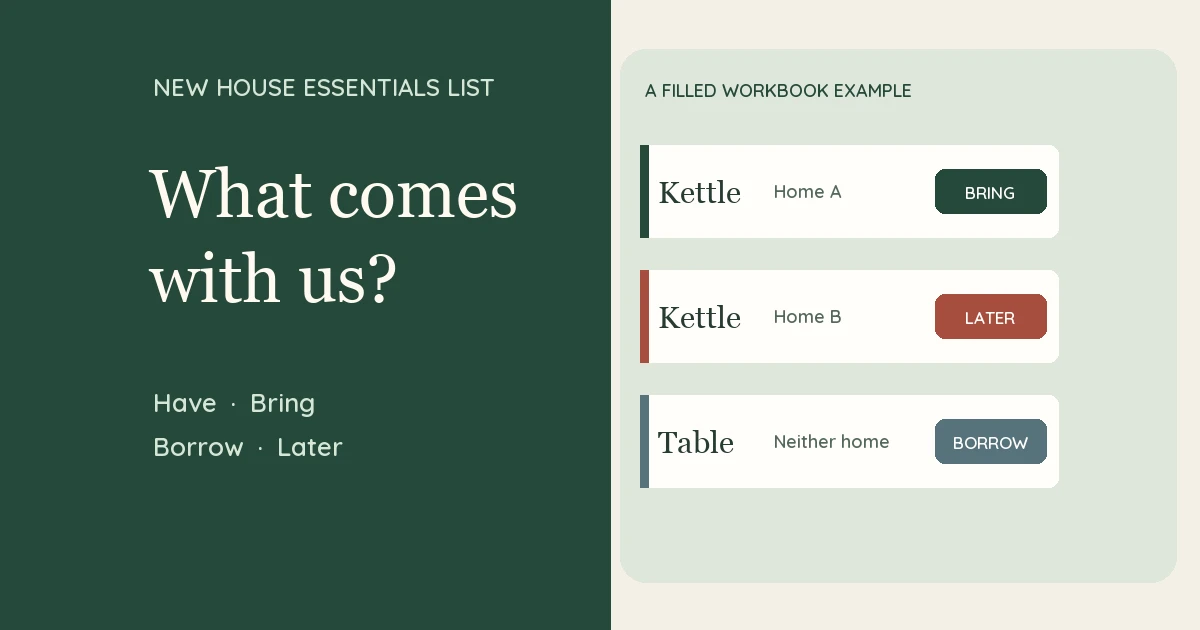
Start a new house essentials list with the belongings you already own. For each room, decide what is waiting at the new place, what needs to come from another home, what you can borrow for now, and what can wait. That gives you a more useful answer than a shopping list when two homes each have a kettle but neither has the table you need this month.
The free editable workbook starts with 62 ordinary belongings across ten areas of the home, plus 40 empty lines for your own items. Its room summary counts Have, Bring, Borrow, Later, and still-undecided lines as you change your choices. You can read the room lists below without downloading anything.
Download the editable new house essentials list (Excel .xlsx)
No email or Mavo account is needed. The file is an inventory of belongings and choices, not a guide to purchases, installations, or home safety. It opens with the starter items but no sample decisions; the filled images on this page show how a household might use it.
Make the four decisions before adding anything
Use one line per belonging and location. The four choices are deliberately different:
- Have means it is already at the new home. If the bowls are in the kitchen cupboard, mark them Have and write that spot down.
- Bring means it exists elsewhere and you intend to move it. A kettle at Home A and glasses at Home B can each have their own line and destination.
- Borrow means you are using something temporarily. A borrowed dining table can fill the room's immediate gap without being treated as something the household owns.
- Later means you are deferring the setup or the choice. A second kettle can stay at Home B while you see whether the first one works in the new kitchen.
Leave the choice blank when nobody has decided. The summary shows that line as Undecided, so a room with no choices stays visibly open. Later is a real decision to defer; blank means the decision itself has not happened.
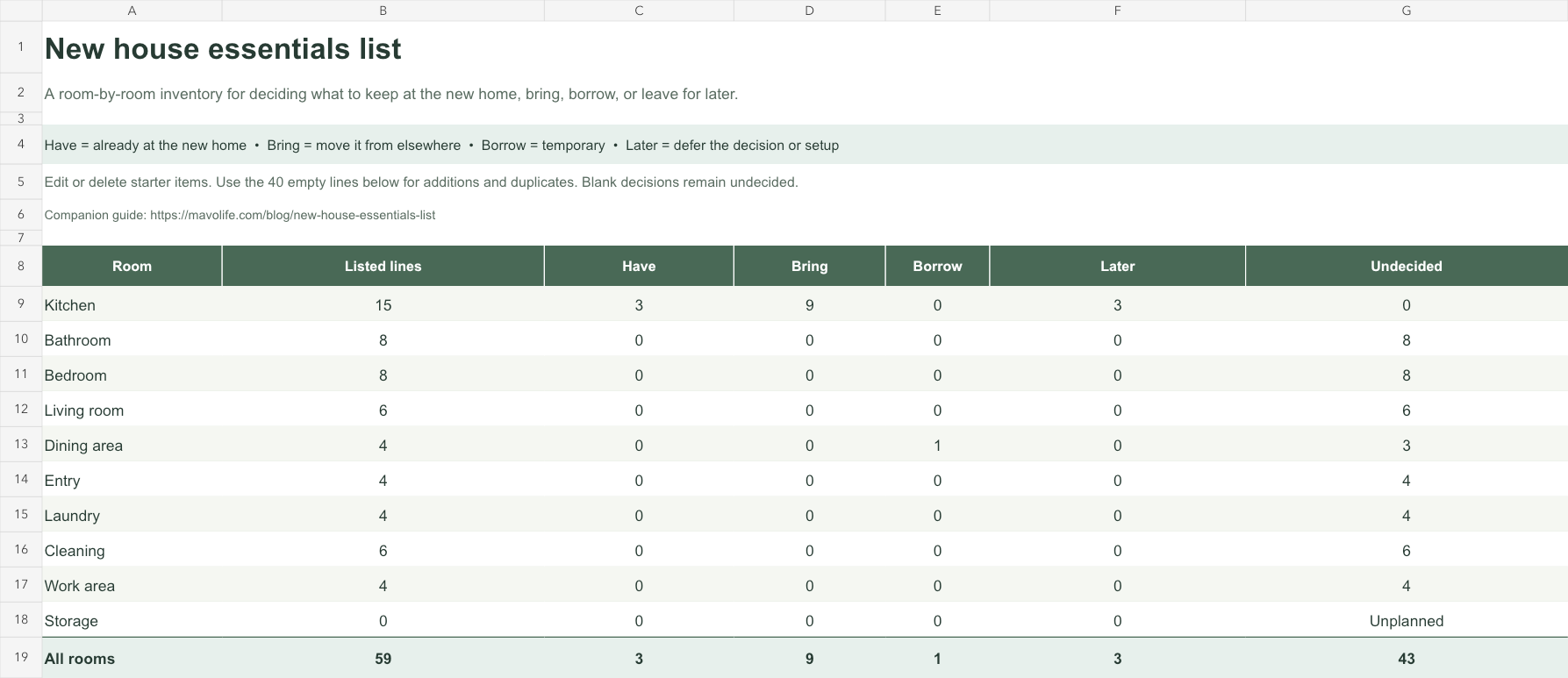
If you remove every item line for a room, its summary says Unplanned. A room with nothing listed has not been treated as finished. The numbers count your decisions about belongings; they are not a room-completion score.
Here is the filled example summary. The download starts with those decision cells empty, ready for your own belongings.
Walk through the rooms you will actually use
This is a starting list, not a target number of things to own. Delete a row when it does not fit your home, and use an empty line for a belonging the starter list misses. Keep additions within the file's 102 item lines so they stay inside the room summary.
Kitchen. The file begins with plates, bowls, glasses, mugs, cutlery, a saucepan, skillet, baking tray, cutting board, knives, kettle, food containers, dish towels, and dish soap and a sponge. Decide which existing set will be used in the new kitchen before moving a duplicate from the other home. Write the cupboard or drawer in Spot / next step when you know it.
Bathroom. Check towels, a bath mat, shower curtain, toilet paper, hand soap, a toothbrush holder, and a wastebasket. A towel that is already at the new place is Have, while a different set still packed at the old place is Bring only if you plan to move it.
Bedroom. Work through the bed frame, mattress, pillows, sheets, blanket or duvet, bedside lamp, hangers, and laundry hamper. If you are setting up one bedroom first, make choices for that room and leave the later bedroom's items undecided. Add the bedroom name to the notes so two sets of sheets do not become indistinguishable rows.
Living and dining areas. The living room starters are seating, a side table, lamp, window coverings, a throw, and storage. The dining area has a table, chairs, placemats or tablecloth, and a serving bowl. If a table is borrowed for the first month, record Borrow and whose table it is in Notes; a hoped-for permanent table does not need to be invented as a purchase line.
Entry, laundry, and cleaning. The entry has a doormat, key tray, coat rack, and shoe storage. Laundry covers a basket, detergent, drying rack, and iron or steamer. Cleaning starts with a broom and dustpan, vacuum, mop, cloths, all-purpose cleaner, and trash bags. Keep only the equipment you actually use; a duplicate vacuum at a second home can have its own line and decision.
Work and storage areas. The work area includes a desk or table, chair, task lamp, and paper storage. Storage starts with bins, a shelf, labels, and spare hangers. If the work area is not being set up yet, mark specific items Later or leave the room undecided until you know how it will be used.
Resolve duplicates without losing track of either home
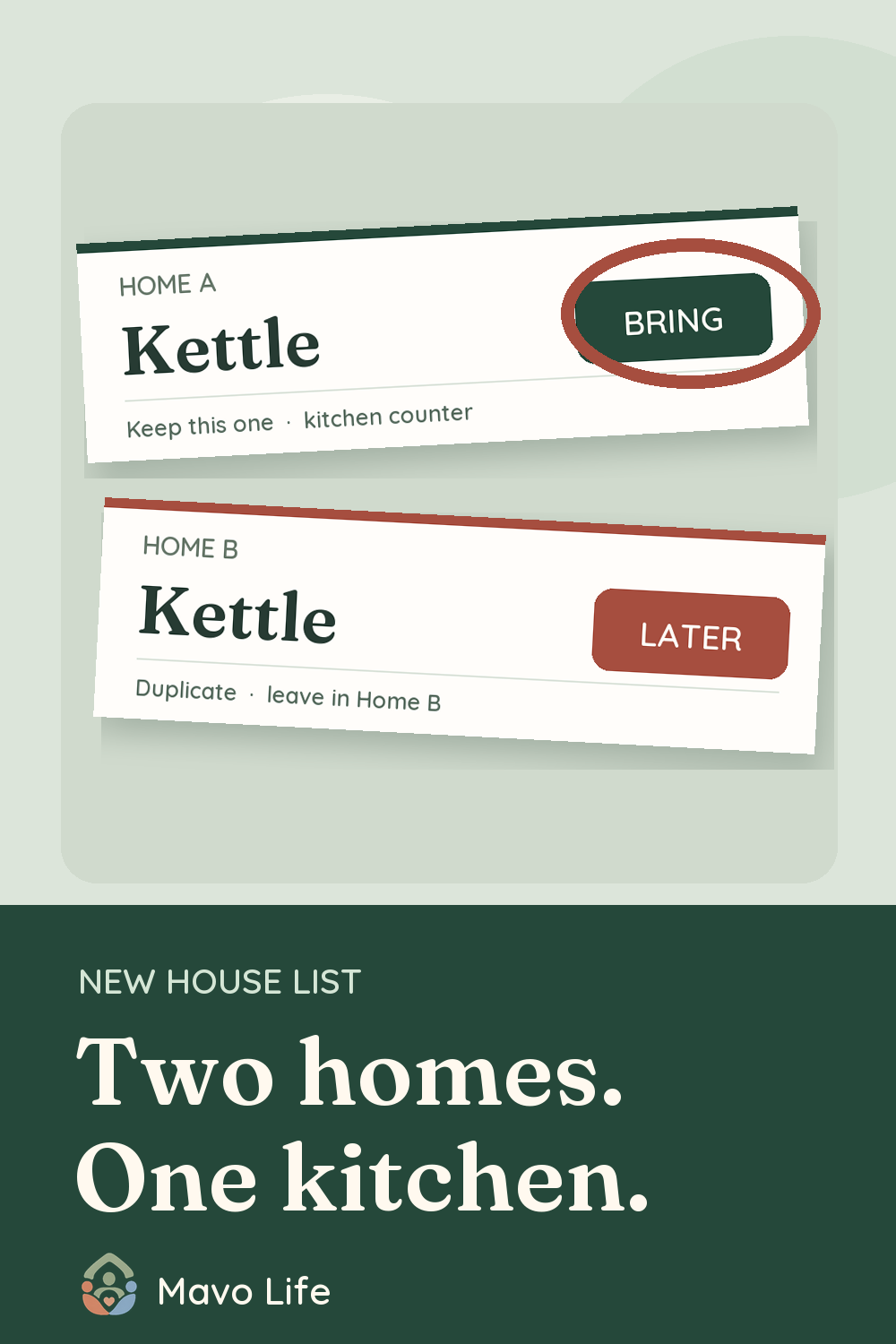
Suppose one kettle is at Home A and another at Home B. Keep two rows named Kettle, enter each current location, and choose Bring for the one you want to use. Mark the other Later with a note such as “Leave in Home B for now.” The kitchen summary then counts both lines in their respective columns. If you change the second kettle to Bring, the Bring count rises and the Later count falls; the room total stays the same.
The same approach works for belongings with different quantities. Quantity records how many are in that line; the summary counts lines, not individual plates or towels. Split a set into separate lines when the items have different locations or decisions. Use the header filters to show one room or one choice, then clear the filter to see the whole household again.

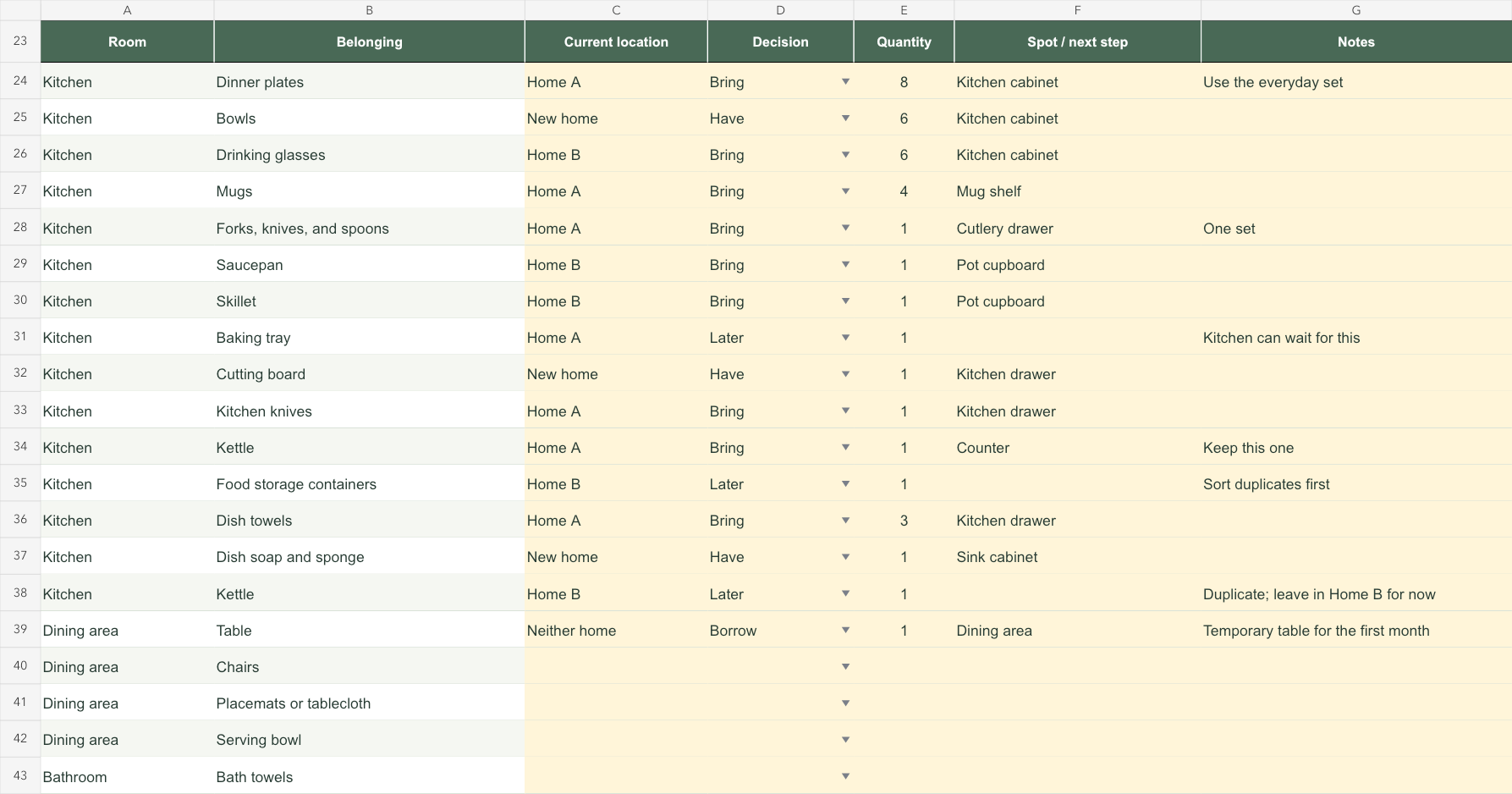
Open the Excel workbook on a larger screen to edit it. The choice cells have a dropdown; the room header and summary remain above the item rows as you scroll. It is designed for spreadsheet editing rather than printing on one page. Compatibility with other spreadsheet apps has not been tested.
If the move begins with sorting what should leave the old home, the family declutter day plan gives that separate project a stopping point and outgoing handoffs. For a student room with shared belongings, the dorm room checklist focuses on agreeing who will bring what.