The mental load · August 2, 2026 · 5 min read
We built the AI family podcast everyone is mad at Sam Altman about
Everyone spent the weekend deciding what kind of parent would want an AI podcast about their family's day. Ours runs about a minute, and the dramatic climax is a jersey. Listen, then decide.
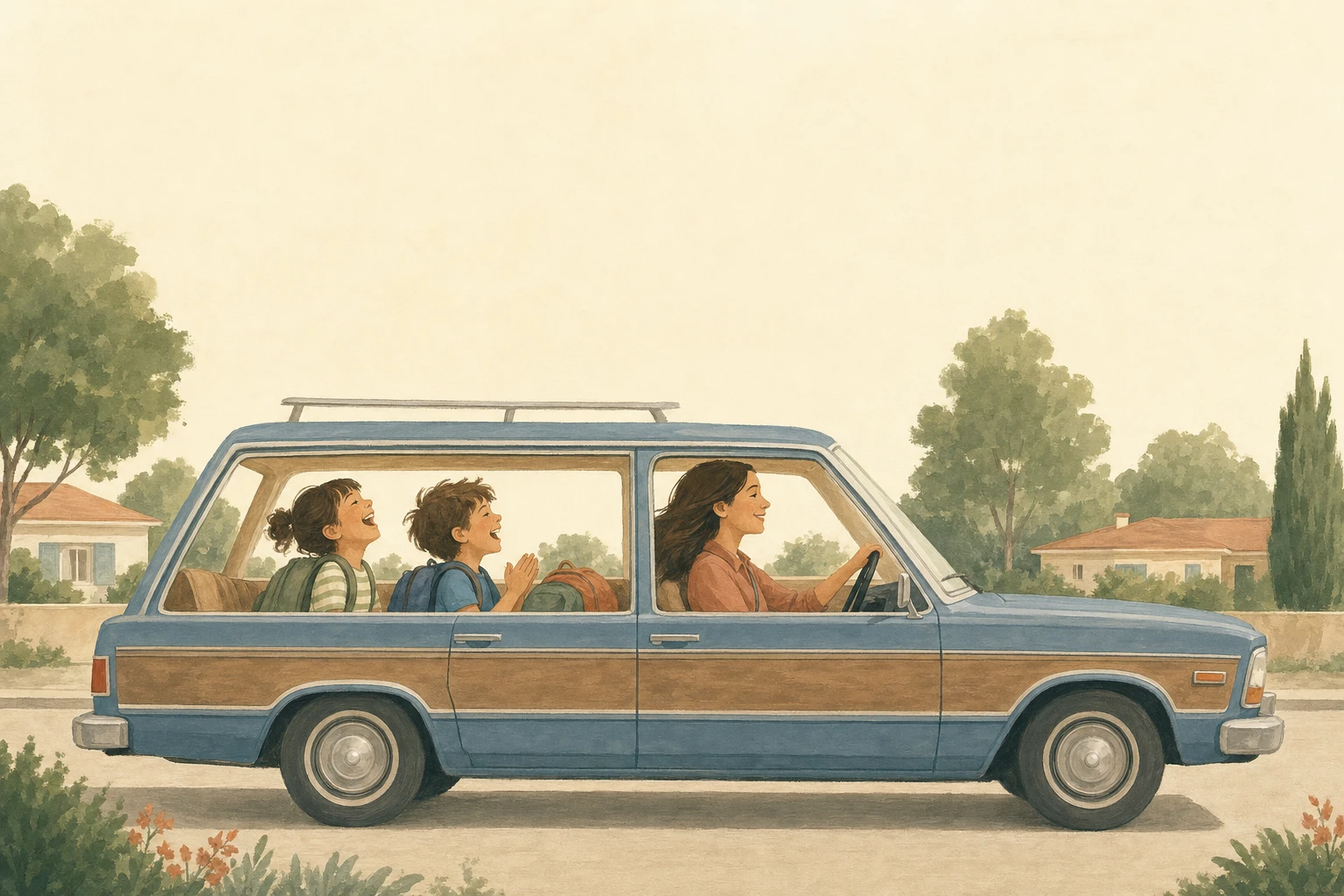
On Friday, Sam Altman shared a use case someone had told him about: wire your family calendars into ChatGPT, tell it what your kids are into, and every morning on the drive to school it makes a short podcast about the day. One kid's soccer game, another kid's birthday, a little news.
My feed spent the next two days deciding what kind of person would want that. The top reply came from Gravity Falls creator Alex Hirsch: "What if you just talked to your children". It out-liked the original by more than ten to one. Under it, the greatest hits: anti-human, failure as a parent, one reply hoping every data center would spontaneously combust.
We shipped our version within a day. The angry people are mad at something real, and at the wrong picture.
The picture everyone is mad at
The bleak version is easy to imagine: a parent who cannot be bothered, handing their kid a robot voice instead of a conversation. A slopcast playing while everyone stares out the window. If that were the product, I would hate it too. Nobody is defending that, including the parents who wanted the thing.
Here is the picture I live in. It is Tuesday. Soccer is at 4:15, which really means 3:45, and the jersey came out of the wash but never made it back to the bag. Piano is at 5:45 on the other side of town. There is a birthday party Sunday and no gift yet. A permission slip is due Friday. Somebody has to figure out which parent is driving which direction, and in Texas, every one of those legs is a 15 to 30 minute drive.
Not all of that drive time is deep conversation, and anyone who tells you theirs is deserves the parent of the year award. A lot of ours goes to departure math, out loud: when we have to leave this thing to make the next one, who is dropping off whom on the way. In our car my wife is the one holding that thread, mid-drive, while the rest of us half listen. The logistics turn a parent into a dispatcher.
What it sounds like
Our version is called Family Game Plan audio. Two hosts, Mara and Cal, talk through the day your family already saved in its plan. An episode sounds like this:
Mara: Okay, Cal, tell me we are not doing the red-jersey scavenger hunt again.
Cal: Found it. It is in the laundry room, apparently waiting to be invited. Soccer is at four fifteen, arrive by three forty-five, and Dad is driving.
Mara: And piano is right on its heels, isn't it?
Cal: Five forty-five. Tight handoff, but if the piano bag starts the day in the car, dinner at seven survives.
The public sample runs 1:07 on a fictional family's day, and the dramatic climax is a jersey. Listen for yourself:
If the player does not load, play the sample on the feature page.
It does not narrate my kids' inner lives or guess at their feelings. It covers the day's logistics: who is handling what, where the handoff is tight, what needs to be sitting by the door. The stuff that was living in one parent's head is now out loud, once, for everyone.

You listen to it together
This is the part the critics skip. It plays in the car, out loud, with the kids, and everyone hears the same day at the same time. That is the opposite of a parent whispering to an assistant so they can avoid talking.
In our car, that minute starts conversations. The kid who is nervous about the game hears who is driving and that the jersey is already in the bag, and now we are talking about the game instead of the logistics around it. Everyone gets the same three things to react to.
And the best drives keep going from there. My kid once worried that a whale might bump into a cruise ship. So we asked, together: how many whales would fit inside the largest cruise ship on earth? Neither of us would have had that conversation alone.
Episodes now lean into this on purpose: each one slips in a single small fact or question for the car, pulled from a list we curate by hand, because AI is bad at picking things at random. Somewhere on that list: how many balloons it would take to lift the family car.
There is no feed
An edition exists only when someone in the household asks for one. It plays out loud, runs about a minute, and is private to the household; the public sample is a fictional family. Nothing queues up after it and nothing plays on its own. If an edition does not start a conversation in the car, it failed.
I am not claiming a purity rule either, where AI around kids is only okay when it is boring. My other app, Bopo Stories, goes the opposite direction: AI writes a choose-your-own-adventure story and draws the pictures, the kids pick the path, and you read it with them. They love it, and you are right there for all of it. The assumption underneath the backlash is that a machine's involvement means a parent checked out. It has not worked that way in our house.
Why it only took a day
People asked how we shipped this within a day of the tweet. Audio was the easy part. The hard part is a family's week living in one shared place: the calendar, who is handling what, the loose ends that are nobody's until they are suddenly urgent. That part is Mavo, and it existed long before Friday.
It is also the real difference from the tweet's version, which wires one person's assistant into everyone's calendars. A household is not one person, and when the plan itself belongs to the whole family, one shared recording of it is the obvious next step.
Talk to your kids
I mean it, and so does every parent who wanted this feature. The real disagreement is what the minutes in the car get spent on. The mental load of times, locations, and handoffs does not disappear because you love your children. Something has to hold it.
For us, a minute of warm audio holds it, out loud, for everyone. The rest of the drive belongs to the whales.