Trips & packing · August 9, 2026 · 6 min read
Family Vacation Packing List: Shared, Adult, and Kid Sheets
Use this free family vacation packing list to split shared gear, adult bags, kid bags, and last-minute items before a trip.

The suitcase is rarely the part that holds up a family trip. It’s the loose layer around it: the charger still in use and the shared snacks nobody put in a bag. Then there’s the question of whether everyone has their own way to carry what belongs to them.
This family vacation packing list starts with a small division of the job. Each person gets a short sheet. Shared things get one bag and a named carrier. The few items that can’t be packed yet get a visible place near the door. It works wherever you’re headed because it doesn’t try to guess the destination.
If the trip is specifically a beach stay, use the beach trip packing list instead. It separates beach-day gear from the overnight layer. For a custom list built around a particular trip, the packing list generator is the better fit.
For an all-inclusive stay, the resort packing list adds editable starter belongings and a place to record what your resort has confirmed it supplies.
For a college move, use the dorm room checklist printable to record belongings and confirm shared items with a roommate.
Once the bags are settled, passengers can use the road trip games printable for a separate, no-signup set of find cards, lookout, category, and scavenger pages.
If the bags are not today's question yet, the vacation countdown printable gives the family one shared place to mark the remaining days. It tracks the destination, departure date, and only the reminders you choose; this packing guide keeps ownership of what goes in each bag.
Start with the bags, not a giant category list
A long category list asks one person to translate every item into a real bag. A better first question is simpler: who’s carrying this out of the house?
Give each adult and child one personal bag or suitcase. Then choose one shared tote or small case for the things the group uses together. It can hold travel details, chargers, and a quiet activity for the ride. The bag doesn’t need to be large. It needs a known home and a person who can see whether it made it out the door.
| Part of the trip | What belongs there | The useful decision |
|---|---|---|
| Personal bag | Clothes, sleep things, and the items one person uses | The traveler can check a short list instead of asking for every item. |
| Shared bag | Things the group needs together | One person carries it out, so it does not get packed twice or not at all. |
| Pack-last spot | Things still in use tonight | Everyone can see where the final items will wait. |
The list isn’t a rule about who should carry what. An adult can pack a small child's bag. A teenager may be ready to use the whole personal sheet. Each bag just needs a finish line someone can recognize.
Download the free family vacation packing sheets
Fill the shared sheet in during one pre-trip sitting. It asks for the destination, trip dates, the shared bag, and the small set of items that can’t leave the house yet. Then print or save one personal sheet for each adult and child who will use one.
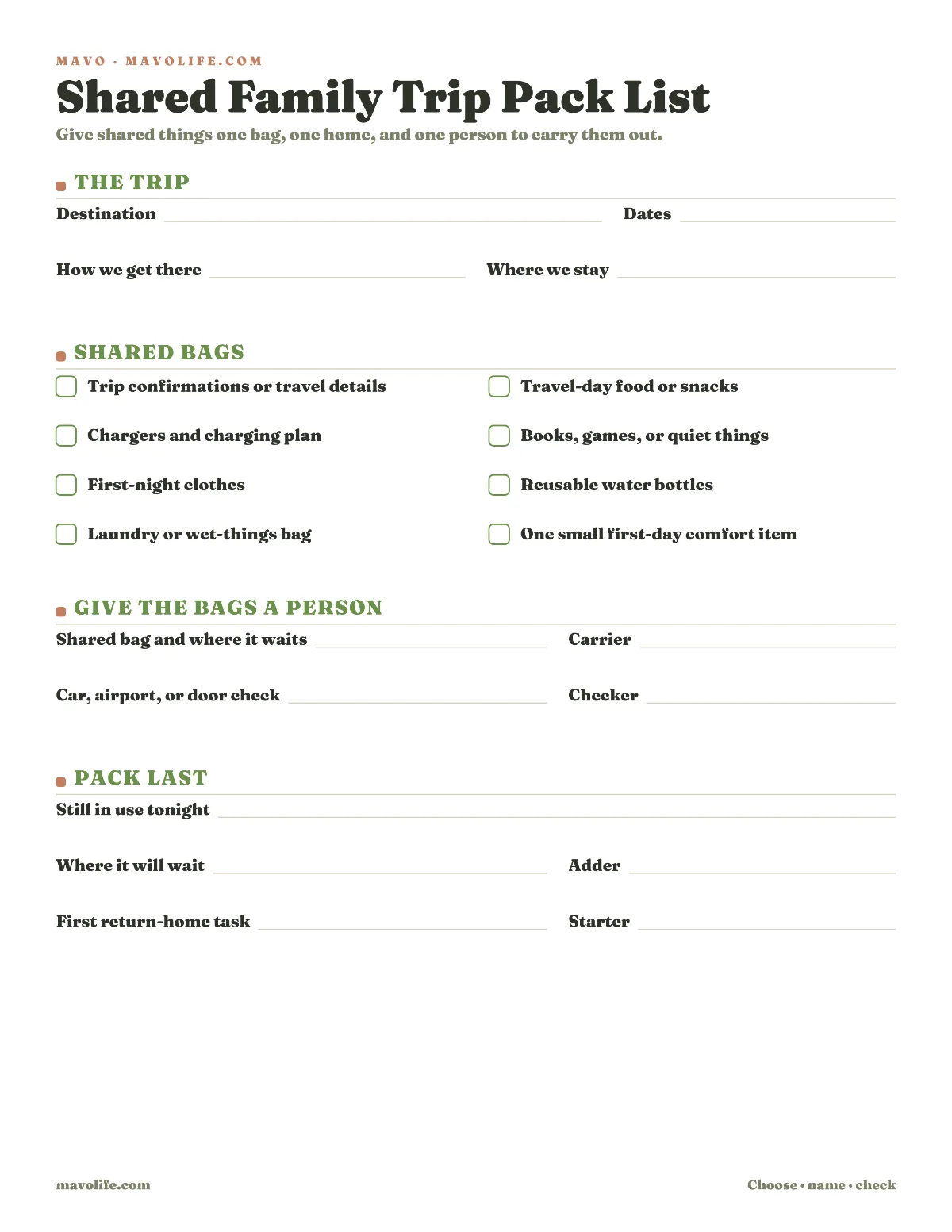
Download the shared family trip pack list (PDF)
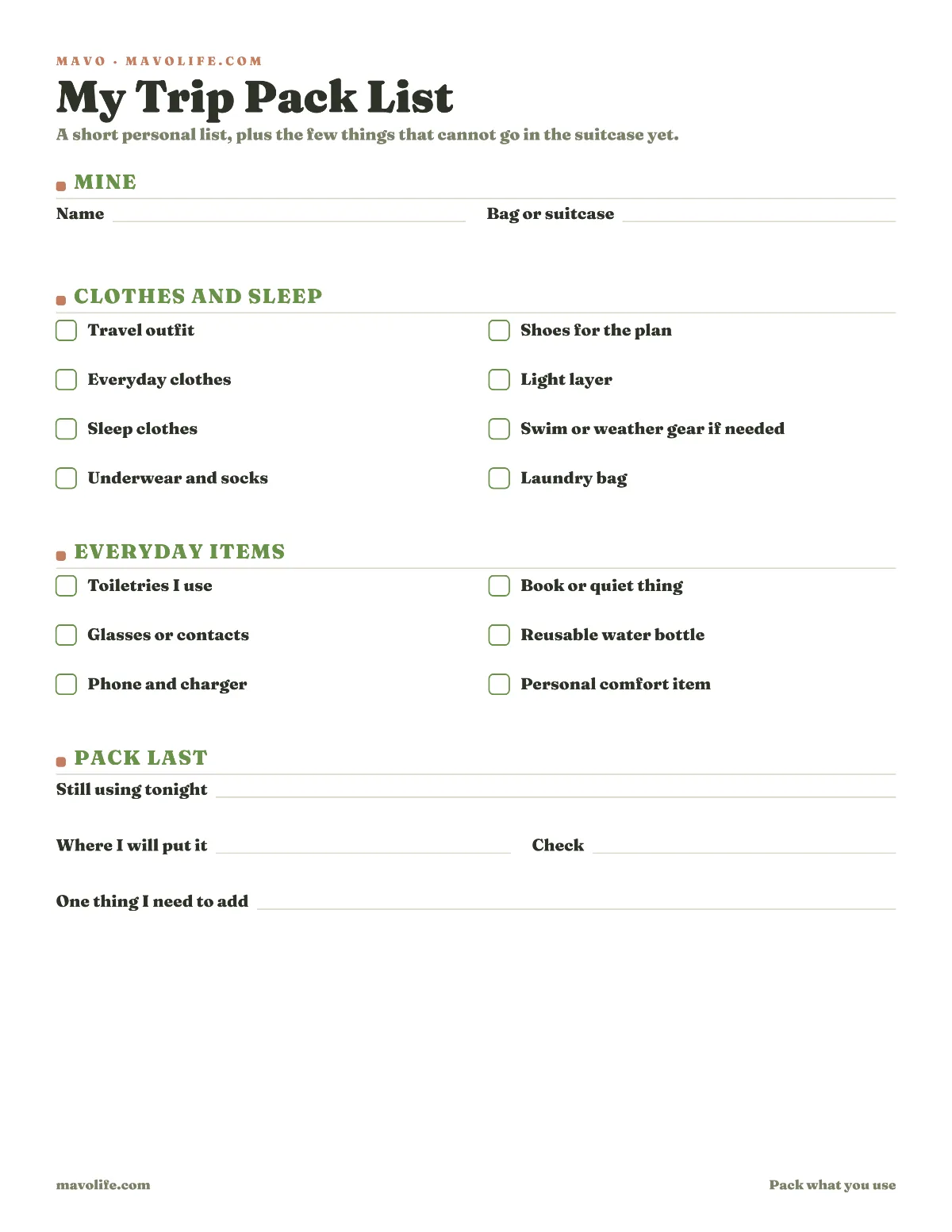
Download the adult trip pack list (PDF)
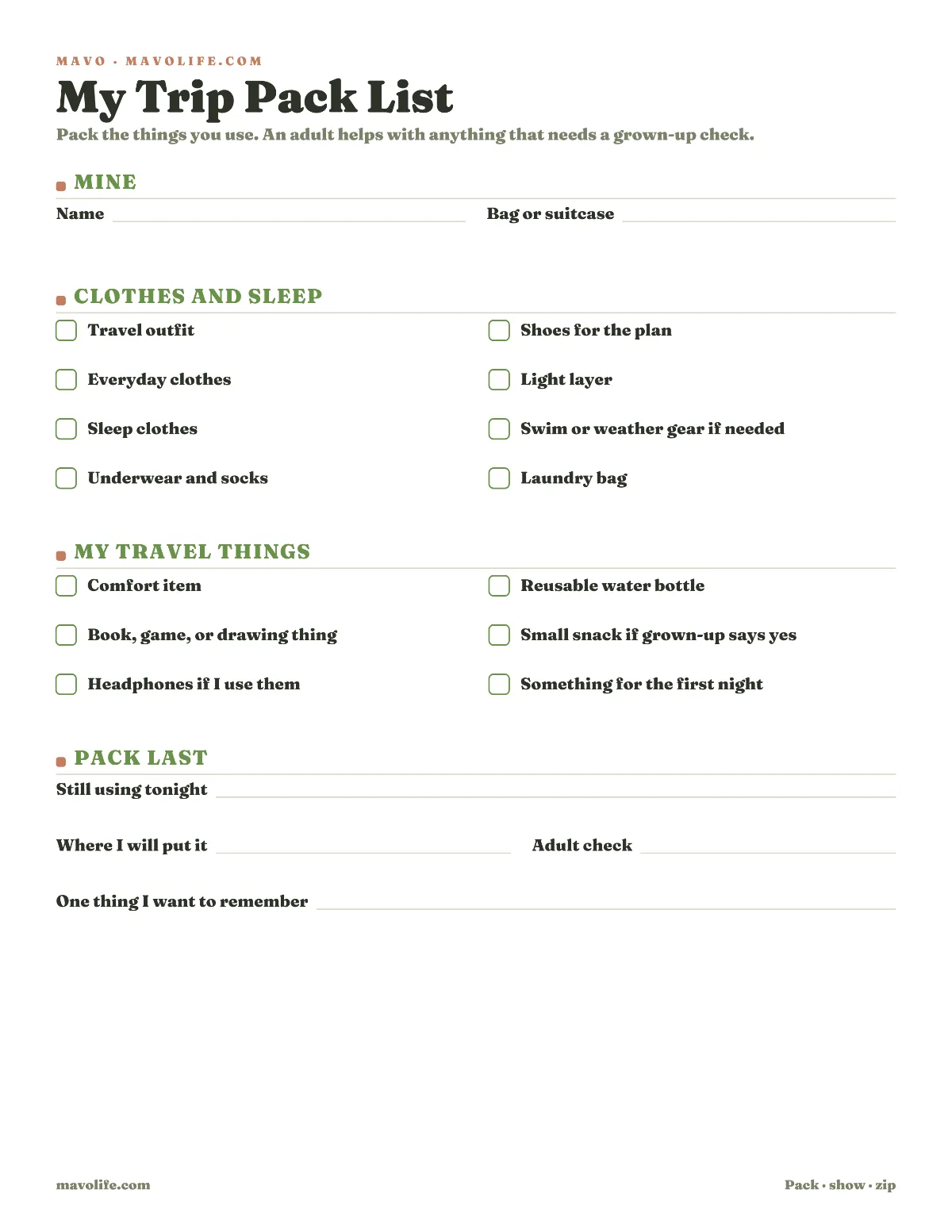
Download the kid trip pack list (PDF)
The sheets are fillable on a computer and usable with a pen. They don’t replace the travel details your destination or lodging requires. Add those to the shared sheet, and leave out anything that isn’t real for this trip.


Let each person finish a short list
The adult and kid sheets share the same backbone: clothes, sleep things, everyday items, and a small travel-day layer. They’re different where the reader is different. The adult sheet leaves room for the personal things an adult manages. The kid sheet gives a child a manageable group of familiar items and an adult check before the bag is zipped.
Don’t make every line a demand. A light layer may not belong on a warm trip. Swim gear may be unnecessary. One book or drawing thing can be enough for the ride. The best list gets shorter as it becomes more specific.
For younger children, choose a few rows together and let the grown-up do the final look. For older kids, hand over the sheet and agree on the check time. It’s a packing job, not a test of whether someone can remember a complete family vacation on their own.
Make a real pack-last spot
Some items need to stay out until the night before or the morning of the trip. A charger, glasses, the clothes someone is wearing, or a familiar sleep item can’t be checked off three days early.
Write those items on the Pack last lines and name the place where they will wait. A tray by the door works. So does one corner of the counter. The location matters more than the container. A person looking for the final items shouldn’t need to remember the planner's private mental map.
Then assign the final check to the person who’ll be there. That can be the same person carrying the shared bag, but it doesn’t have to be. The sheet makes a handoff visible without turning it into a bigger meeting.
Leave the destination details to the destination
This is intentionally a destination-neutral family packing list. It can remind you to make room for weather gear or a first-night comfort item, but it can’t know a hotel's laundry setup or what an activity provider requires. Check those sources directly and add only the details that apply.
That boundary keeps this sheet useful across different kinds of trips. A beach day has its own gear and wet-things plan. A camping trip has different equipment. An international trip may need its own careful check. The shared sheet is where you write the version that’s true for your family. It doesn’t promise that one internet list covers every trip.
Use the return-home line before the trip starts
The shared sheet ends with one return-home task. It can be as small as start laundry or empty the shared tote. Choosing it before leaving means the bag that made the trip possible doesn’t sit by the door until someone eventually notices it.
If your household uses Mavo, a shared list can hold the specific trip details and a reminder can make the final check visible to the people helping with the departure. The sheets are still useful when a page on the counter is simpler. Use the smallest system that lets everyone know what’s theirs and what remains for the morning.
For more no-login resources for trips, browse the family travel collection.