Trips & packing · August 8, 2026 · 5 min read
Beach Trip Packing List: A Family Plan for the Car and the Stay
Use this beach trip packing list to cover the essentials for a day out, then add the family vacation details that make the trip easier.
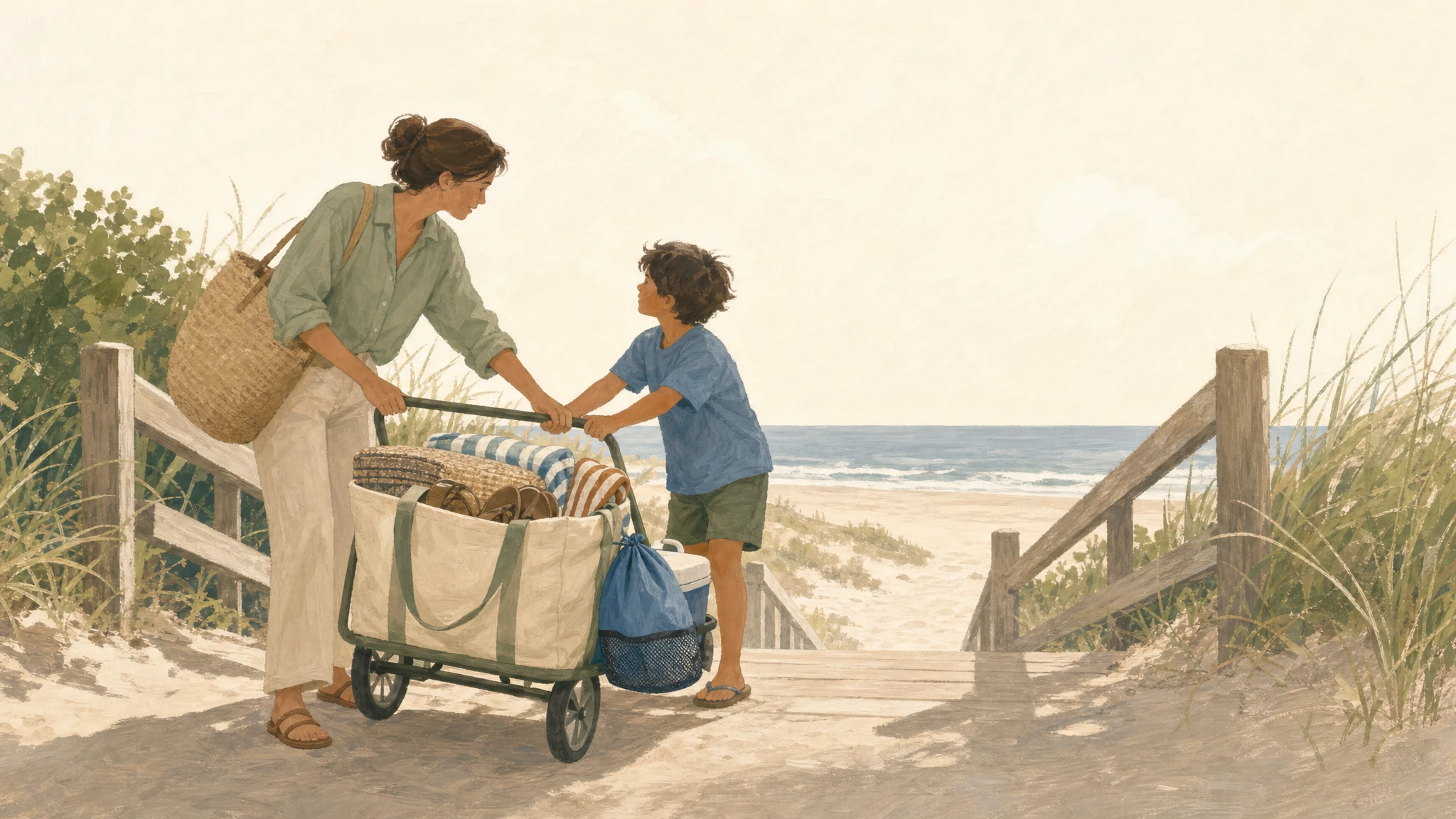
There is a moment at the car when the beach trip becomes real. The towels are folded. Somebody's found the sandals, but the food is still on the counter. A useful packing list gets those basics into the car. It also gives the wet things a place to go when everyone is ready to come home.
Start with the destination you are actually visiting. Its current rules and access details matter more than an internet list that tries to cover every beach. Then cover the basics below. If you're building a custom list for different people or days, use the packing list generator.
The things to bring to the beach
Most families need a version of the same short set of essentials. This is the starting list, before you add the beach's own requirements or your family's preferences.
| Bring | Why it belongs in the car |
|---|---|
| Towels and swim things | They cover the part of the day that happens at the beach, then the walk back to the car. |
| A dry layer and walk-back shoes | The car ride home is easier when the wet beach part does not follow everyone into the seats. |
| Sun protection that fits your family and the place | Pack the items you normally use, then follow the destination's current instructions. |
| Water bottles and food | Give drinks and snacks one container so they do not become a last-minute counter search. |
| A blanket, chairs, or the item your group sits under | This is the shared spot. It is usually the bulkiest thing in the loadout. |
| A bag for wet things | Decide where damp towels and swim things go before they need a seat in the car. |
| One small beach game or toy | Bring a single thing people can share, rather than trying to bring the whole playroom. |
That list is enough for many ordinary outings. Add what your particular destination calls for. Leave out what it doesn't. A compact list is easier to check and carry. It is also simpler to reset. If the bag cannot be picked up by the person carrying it, it's probably too much for the actual day.
Load the car in four minutes
Put the shared things in first. That means the sitting item, the food container, and the wet-things bag. Those pieces take room and are easiest to spot before smaller bags cover them. Then each person brings their own towel and swim things to the car. Their dry layer and shoes go with them too.
This is also where a family can avoid the familiar double-pack and no-pack problem. Choose one person to carry the food container and one person to do the last look through the car. Nobody needs a meeting. You're simply making sure the shared pieces have an actual way from the house to the beach. If the usual person is not going, the job can still move with the bag instead of disappearing.
If children carry a small bag, give them a list they can finish. Their towel and swim things come first. Add a dry layer plus one ride-home thing. That's a real departure job, and it leaves the bulky shared gear with the adult who can carry it. The same small-list approach is why a go-bag card works for repeat activities too.
Print the beach-day checklist before you leave
The beach-day checklist gives you a place for details a generic list cannot supply. Write where you are arriving and the local rules you checked. Then add the shared spot plus the person who has the last car check. Put it by the bag or fill it in on your phone before the towels go into the car.
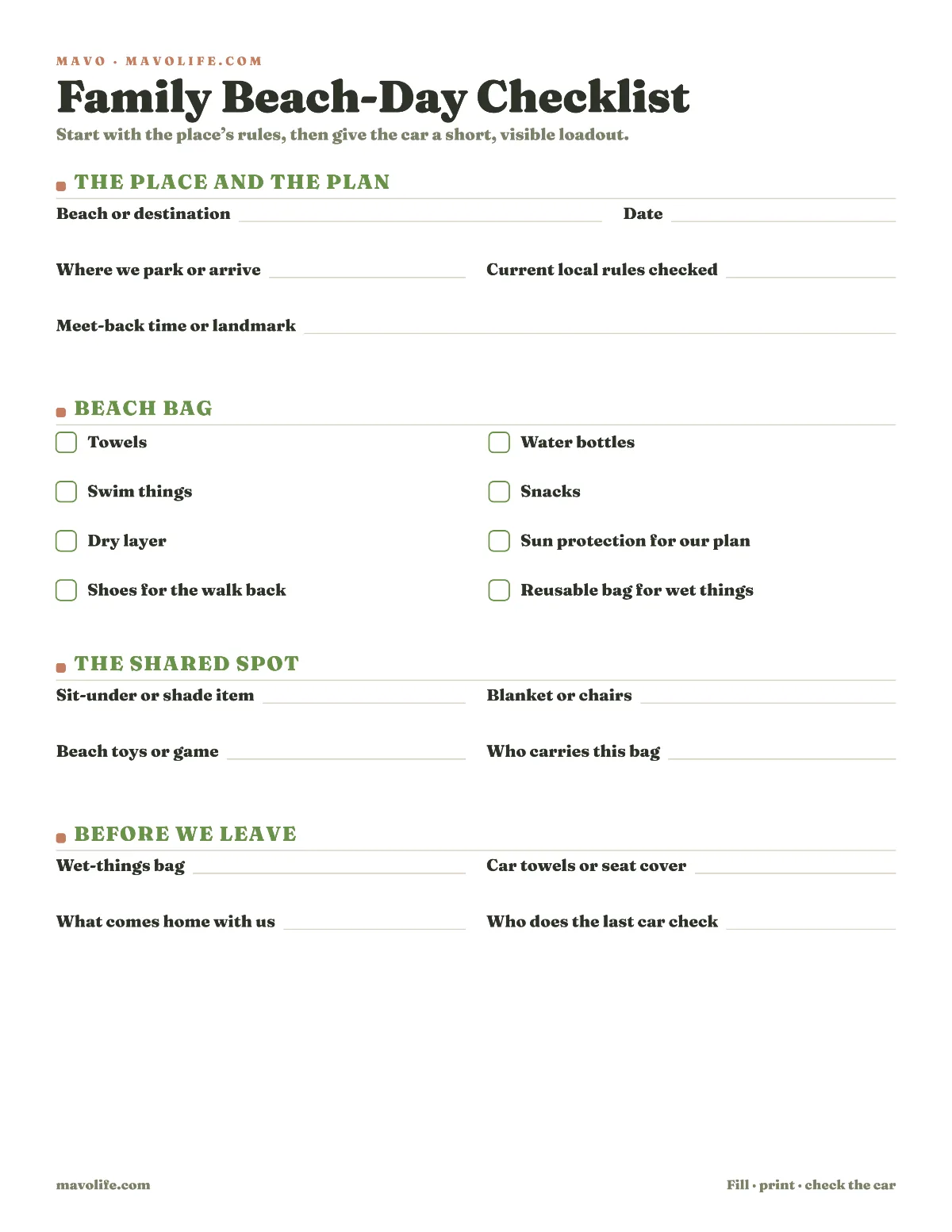
Download the fillable beach-day checklist (PDF)
The final section is there for the return. Write where wet things go and who checks the car. It takes a minute, but it means nobody has to discover a damp towel under a seat later in the week.

When the beach is part of a vacation
An overnight trip adds travel and a place to stay, but it does not turn every suitcase item into beach gear. Pack confirmations and chargers separately. Add first-night clothes, a laundry bag, and something for the ride. The beach-day list can then come out each morning without taking over the whole room.
That separation is especially helpful when the beach is only one stop on the trip. You can pack for the actual day and put wet things where they belong afterward. You'll still find a clean shirt and a charger without unpacking every beach tote.
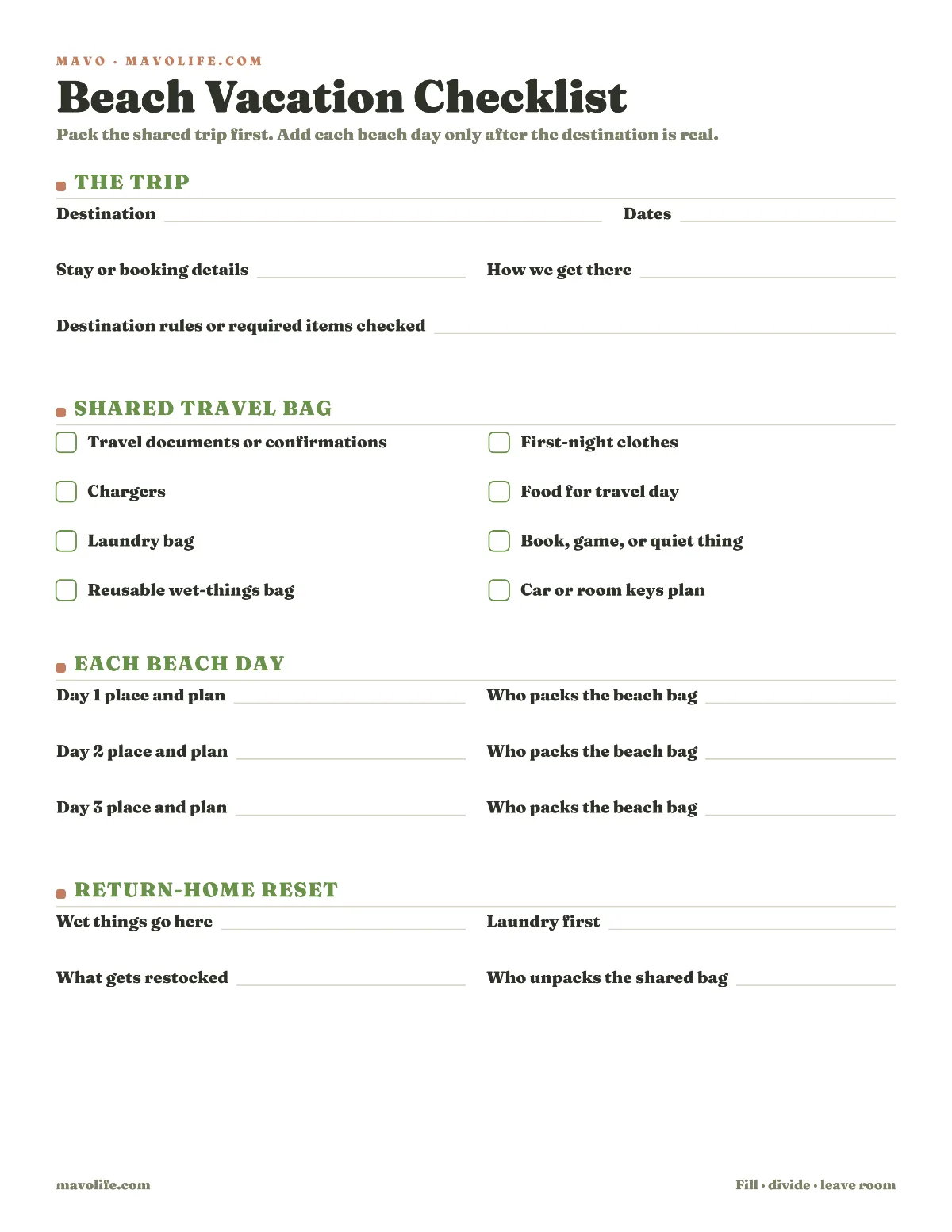
Download the fillable beach-vacation checklist (PDF)
Use a day row only when you need it. Write the place and the person packing the shared bag that morning. At the end of the trip, choose the first laundry load and the person who takes the shared bag out of the car. The trip can end without its last job quietly landing on the person who planned it.
The beach bag after the beach
Keep one reusable bag if that works for your family, but don't treat it as a sealed kit. Towels and food still need a brief check before every outing. Clothing and destination details do too. The bag's job is to give repeat items a home, not to hold yesterday's sand forever.
When you get home, put wet things where you wrote they would go. Take out the shared food container. Then set aside whatever needs replacing before the next outing. The whole reset is small enough that it can happen while the car is being unloaded.
For other travel planning help, browse the family travel collection. Mavo can keep a household list and a reminder visible to the people sharing the trip, so the packing and return-home jobs do not rely on one person's memory.