Caregiver handoffs · September 1, 2026 · 6 min read
Pet Sitter Notes Template for a Clear Handoff
Use this free pet sitter notes template to share your pet’s familiar routine, food labels, supply locations, cues, home notes, and current contacts.
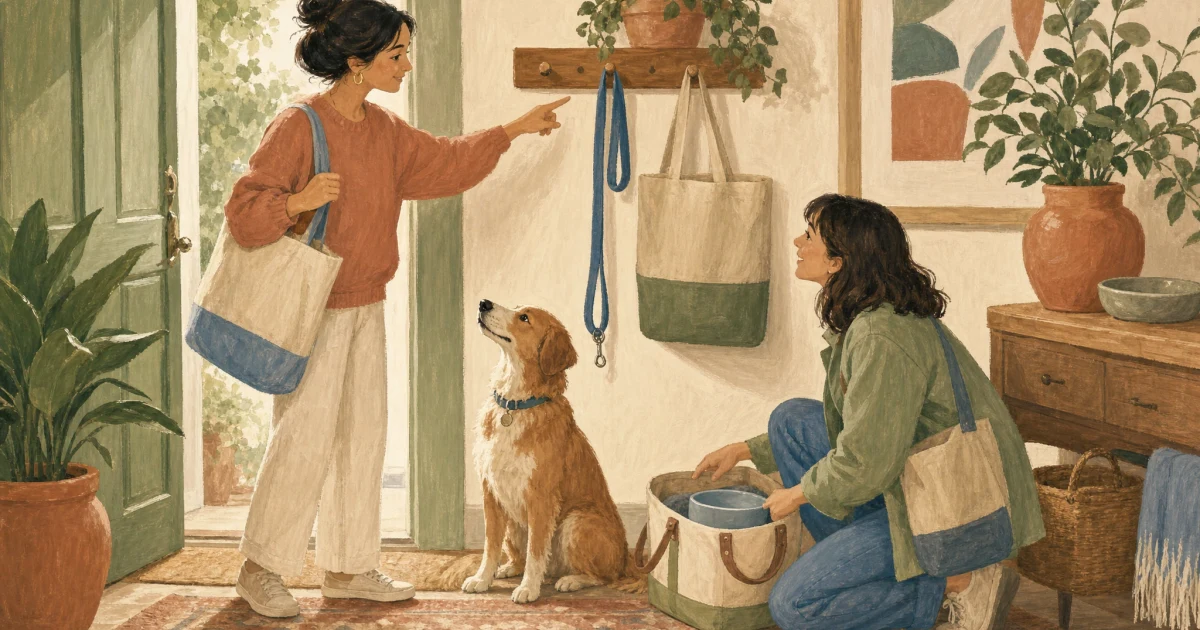
“The blue lead” is perfectly clear until a pet sitter sees two blue leads in two different rooms. The owner remembers the one by the mudroom. The sitter hears a color and starts opening doors.
Good pet sitter notes close gaps like that. They connect the owner's current instruction to a place or familiar cue the sitter can recognize. The free fillable template below captures those facts without prescribing food, portions, medicine, exercise, or emergency decisions. Copy the directions you already follow from labels and professionals, and talk through anything that needs judgment before you leave.
Take the blue-lead test
Stand where the sitter will begin. If the first visit starts at the back door, begin there. If your pet stays at somebody else’s home, begin with the carrier or bag you’re handing over.
Now follow the day without relying on memory. The food has a label and a storage place. The lead, litter supplies, or carrier has a home. A routine has an order, but it may not need a precise clock time. Write the cue the sitter can actually observe: after the first trip outside, when the porch light comes on, or the exact household phrase your pet recognizes.
That small shift is what separates useful pet sitter instructions from a biography of your pet. The sitter needs the next reliable action and the place to find what it requires.
Copy labels instead of translating them
Use the words printed on the food container, supply bin, or written professional instructions. A nickname that makes sense inside your family can become a scavenger hunt for somebody else.
For each routine item, connect three things:
- When: a time or observable moment.
- What happens: the owner’s current instruction, in the words you use at handoff.
- Where or cue: the location, object, or familiar signal that makes the action clear.
Keep health and care decisions in the source your veterinarian or other professional gave you. If something is too important or complicated to summarize safely, point the sitter to that source and discuss it directly rather than squeezing it into a tiny blank.
A small sample shows the level of detail:
| When | What happens | Where or cue |
|---|---|---|
| After the first trip outside | Follow the current serving note on the labeled container | Blue container, left pantry shelf |
| Late afternoon | Use the routine the owner demonstrated at handoff | Blue lead on the mudroom hook |
| Before the final visit ends | Check the usual sleeping place | Green chair in the den |
These are illustrative locations and cues, not care recommendations. Replace every row with the pet owner's current instructions. The value is in the connection: the sitter can move from a moment to an action and then find the right object without translating household shorthand.
Download the fillable pet sitter notes
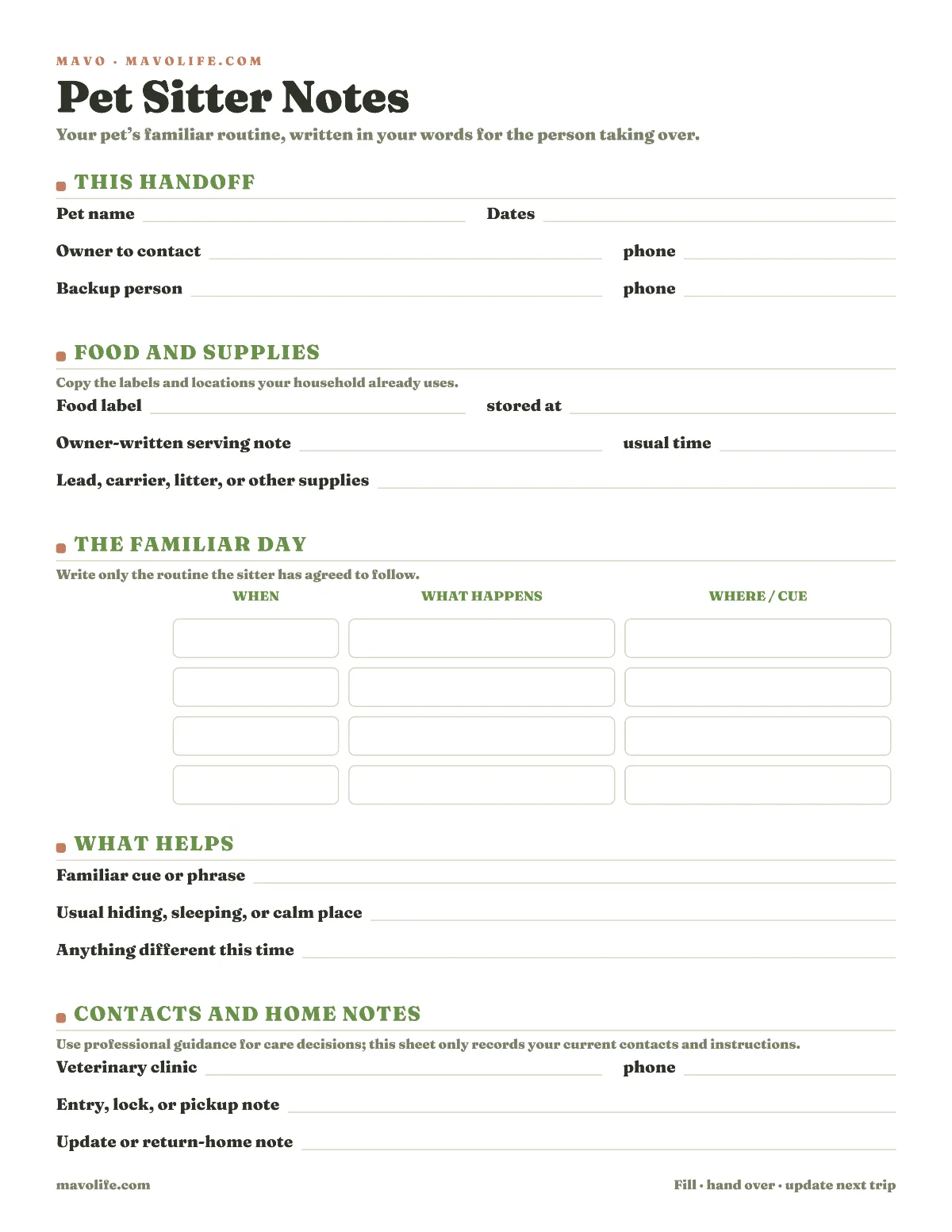
Download the fillable pet sitter notes (PDF)


Fill it in during one sitting before the handoff. The sheet is designed to be read by a second person during the same trip, then reviewed and updated before the next one. If a phone note already gives one familiar helper everything they need, keep the phone note; paper earns its place when it lets the sitter check a shared reference without asking you again.
Add the details that reveal a routine
The most helpful note may be a location or cue rather than another task. Blue lead on the mudroom hook resolves two questions at once. Hides behind the green chair when the doorbell rings gives the sitter a place to look without turning an ordinary habit into an emergency.
Write what’s normal in concrete terms. Avoid reassurance such as usually fine or a long personality description that makes the sitter interpret the situation alone. A familiar sleeping place, household phrase, or return-home habit is easier to use.
Leave the anything different this time line for a real exception. A moved supply, temporary pickup arrangement, or changed point of contact belongs there. Don’t repeat the entire routine in that space.
Separate the routine from the trip exception
Some facts survive several trips. The food label may be the same. The lead may stay on one hook. The familiar phrase may not change. Other details expire as soon as the owner comes home: the dates, the reachable phone number, a temporary supply location, or a different pickup plan.
Read the sheet with a pencil before reusing it. Circle anything that is true only for this absence, then replace or clear it. Printing a clean copy is safer than expecting a sitter to know which crossed-out sentence won.
This is also why a giant lifetime pet profile is a poor substitute for current notes. A profile can hold background, but the sitter still needs to know what applies today. Keep the page small enough that the owner can review every field during the actual handoff.
If more than one pet shares the home, use a separate routine section or separate sheet whenever a row could be misread. Names should sit next to the instruction they qualify. Saving paper isn't worth making the receiver guess which animal a cue, container, or sleeping place belongs to.
Read it once without the owner nearby
Set the completed sheet beside the supplies and read it as if the owner had already left. Can you find the named food? Does every routine row lead to an observable time, place, or cue? Are the current owner, backup person, and veterinary clinic contacts readable?
Then ask the sitter to read it. Their question is more useful than another paragraph you add alone. Revise the sheet while both people are present, and keep any decision-making conversation outside the form.
The best test is physical. Put the sheet where the sitter will look for it and ask them to locate one named item. If food in pantry sends them opening five doors, the note isn't finished. Change it to the label and location both people can identify. If a familiar phrase needs a demonstration, do that at handoff and write only the reminder the sitter agreed was clear.
For a human caregiver staying with children, use the separate babysitter and grandparent handoff template. That page owns the evening plan, child and household information, and broader caregiver handoff. This one stays deliberately limited to a pet’s familiar routine and owner-supplied contacts.
For a longer absence with a household helper, the caregiver household handbook explains how stable home reference information differs from a one-visit handoff. Keep this pet sheet beside the items it names instead of asking it to become a whole-house manual.
Decide what comes back to the owner
A handoff has a return path. Before leaving, agree on what the sitter should record and how they should reach you. The last line on the sheet can hold one short update, such as a supply moved to a different shelf or an item the owner asked to check after returning.
Don't turn that line into a care log. Use the communication method you agreed on for timely questions and keep professional records where they belong. The paper's job is modest: help the next person recognize the owner's routine, find the named supplies, and return one current note.
When the owner comes home, read the returned note before filing the sheet. Then clear the dates and trip-only exception so last time's details don't masquerade as the next plan.