Home systems · August 17, 2026 · 6 min read
Kids cleaning checklist: make a room reset card
Make a kids cleaning checklist for one real room with picture cues, familiar actions, and clear destinations. Free fillable checklist to print.
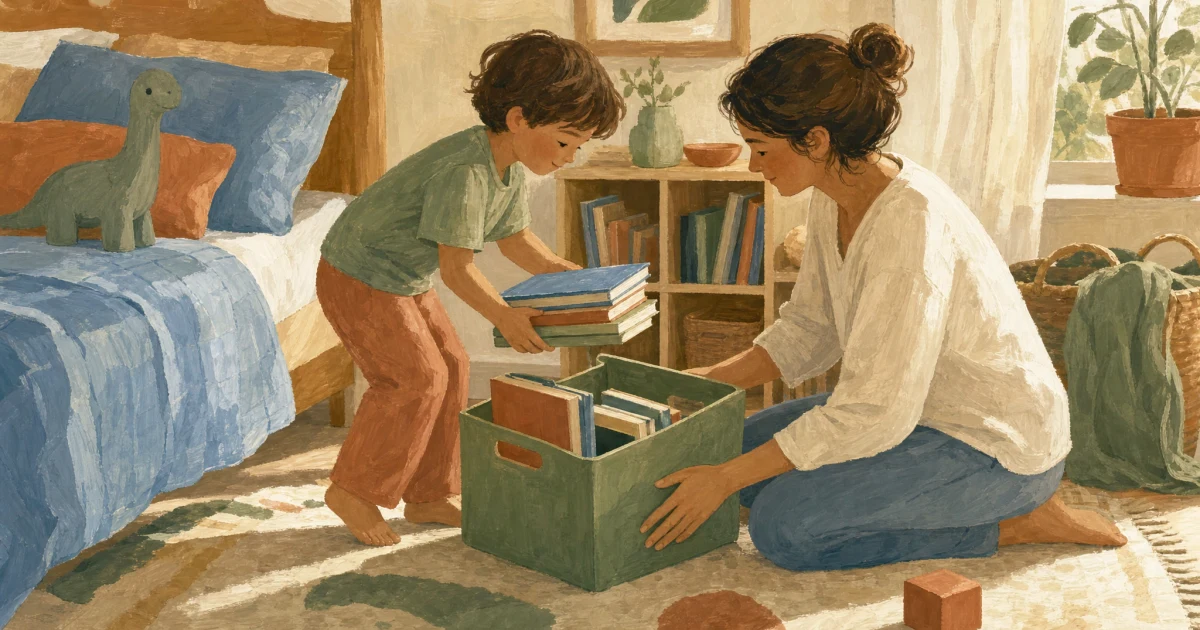
A room can look almost done and still leave everybody stuck. The books are off the floor but not in the basket. The clothes are on the bed but not in the hamper. A vague instruction such as "clean your room" makes the adult translate the finish line every time.
A kids cleaning checklist works better when it is not really a list of cleaning rules. Make it a short room-reset checklist. Put a picture cue beside each familiar action, then name the place where that thing goes. A child or another helping adult can read it without a new explanation. It does not tell a family what belongs in the room.
Decide what reset means in this room
Stand in the room and name the small visible condition that lets the next part of the day happen. In a bedroom, that could mean a clear path and a bed ready for bedtime. The things that live there are back in their usual places. In a play space, it might mean the table is usable again and the toy bins can close.
Keep the finish line narrow. A room reset is not deep cleaning or sorting every drawer. It is the short return trip after play, or the small reset before the room needs its next job.
If a step depends on a product or an appliance, leave it off the checklist. Leave off a decision an adult has not made yet, too. The checklist should only describe things the person using it can do with the room in front of them.
Pick four to six familiar actions
Start with the objects that usually create the pile. The useful words are the ones your family already uses, not a ready-made set copied from the internet. You might write:
- Put books in the blue basket.
- Put pajamas in the hamper.
- Put building pieces in the clear bin.
- Put stuffed animals on the bed.
- Put cups on the kitchen counter.
- Bring papers to the desk tray.
Those are examples, not a required routine. A shared bedroom may need two names or two destinations. A room with one child may only need three steps. If the room is changing because a toy bin moved or a desk became a homework spot, update the card instead of asking the old words to fit the new room.
The destination is what makes the action usable. "Put away books" can start another round of questions. "Put books in the blue basket" points to a place anyone can see.
Add picture cues that point to the real destination
The download gives every step a large picture-cue space. Fill it with a quick drawing or a cut-out photo beside the words. A familiar mark works too. The goal is recognition, not art. A sketch of the blue basket beside "books" does more work than a generic star or a decorative sticker.
Make the card with the person who will use it when that helps, then let the room decide the cues. A picture of a hamper is useful only if it looks like the hamper in that room. If drawing or adding pictures makes the setup harder than the reset, skip the picture space and use the words alone. It doesn't need to look polished. It needs to point to something the person in the room can find without another explanation.
Build the checklist in the room, not from the couch
Bring the blank page to the room before you fill it in. The room will tell you which steps are real. A low book basket may be obvious from the doorway, while the spot for finished drawings might be a desk tray that only makes sense once you are standing beside it. That is why a useful card doesn't start with somebody else's twelve chores.
Start by looking at one ordinary reset. You don't need to wait for the room to look especially bad. Notice what comes back to the same places after play or before bed. Those repeat destinations are good candidates for the card. A loose item that only shows up once in a while doesn't need a permanent row.
Ask these before a line earns space:
- Can the person reading it see the object and the destination without asking where either one is?
- Does the action have a finish that fits this room, such as books in a basket or blocks in a bin?
- Can the adult who sets the card up change the line later when the room changes?
If the answer is no, leave the line out for now. A checklist with four clear steps is more useful than one crowded with every possible thing that could be picked up. You can make a fresh checklist after the storage changes. That old toy bin may finally give up, and the page can change with it.
For siblings sharing one room, make the destinations unmistakable instead of assigning a personality to each task. "Books on Sam's shelf" and "costumes in the green trunk" are easier to read than a card that assumes everybody remembers whose turn it is. If the reset needs a grown-up decision, such as where a donation box goes, it isn't a child card step yet. Decide that first, then write the step when there is a real place to point to.
Download the fillable room-reset checklist
Each page is for one room, with six lines for the familiar reset actions that belong there. Type into the picture space and the destination line before printing. You can also print it blank and fill it in by hand. Make a fresh page if a second room needs a different finish line.
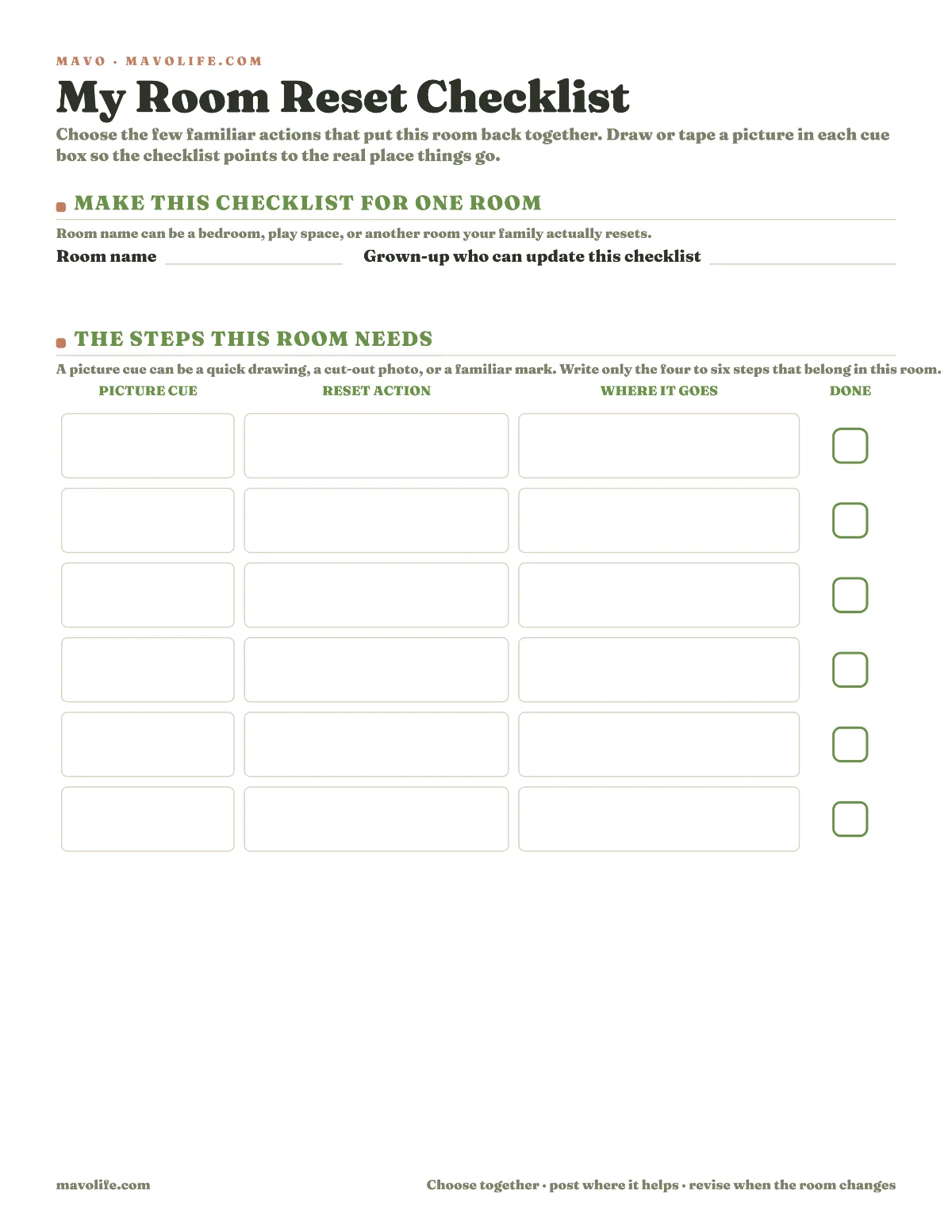
Download the fillable room reset checklist

Use it for a reset, not a recurring chore system
Put the finished checklist where it helps during the reset. A closet door or the side of a toy shelf can work. Check a box if your family finds that satisfying, then clear the checks before the next use. The checklist is a prompt for this room, not a record of who has been good or bad. It shouldn't become a scoreboard. If nobody reaches for it, move it closer to the room's actual starting point or take the extra lines off.
Retire it when it stops matching the room. That isn't a failure. A checklist that describes old furniture only adds one more instruction for everyone to ignore. A fresh page takes a few minutes because you aren't rebuilding a system. You're only naming the places that already work.
For a recurring weekly assignment across several children, use the free Chore Chart Maker. It is built for changing names and days. Families can change the chores there, too. For a family-wide list that includes adult jobs too, the family chore list template has a different job.
When a simple note is enough
You don't need a new printable for every room. If a sticky note that says "books in basket, clothes in hamper" already works, keep it. The checklist earns its place only when the picture and destination cues help a second person read the same finish line without asking. If your family already uses a simple note, don't replace it just to have a prettier page.