Kids & routines · July 30, 2026 · 5 min read
Bedtime Chart with Pictures: Free and Editable
Build a bedtime chart with pictures your child can follow. Start with a ready early-reader routine or make a blank sequence, then print it free.
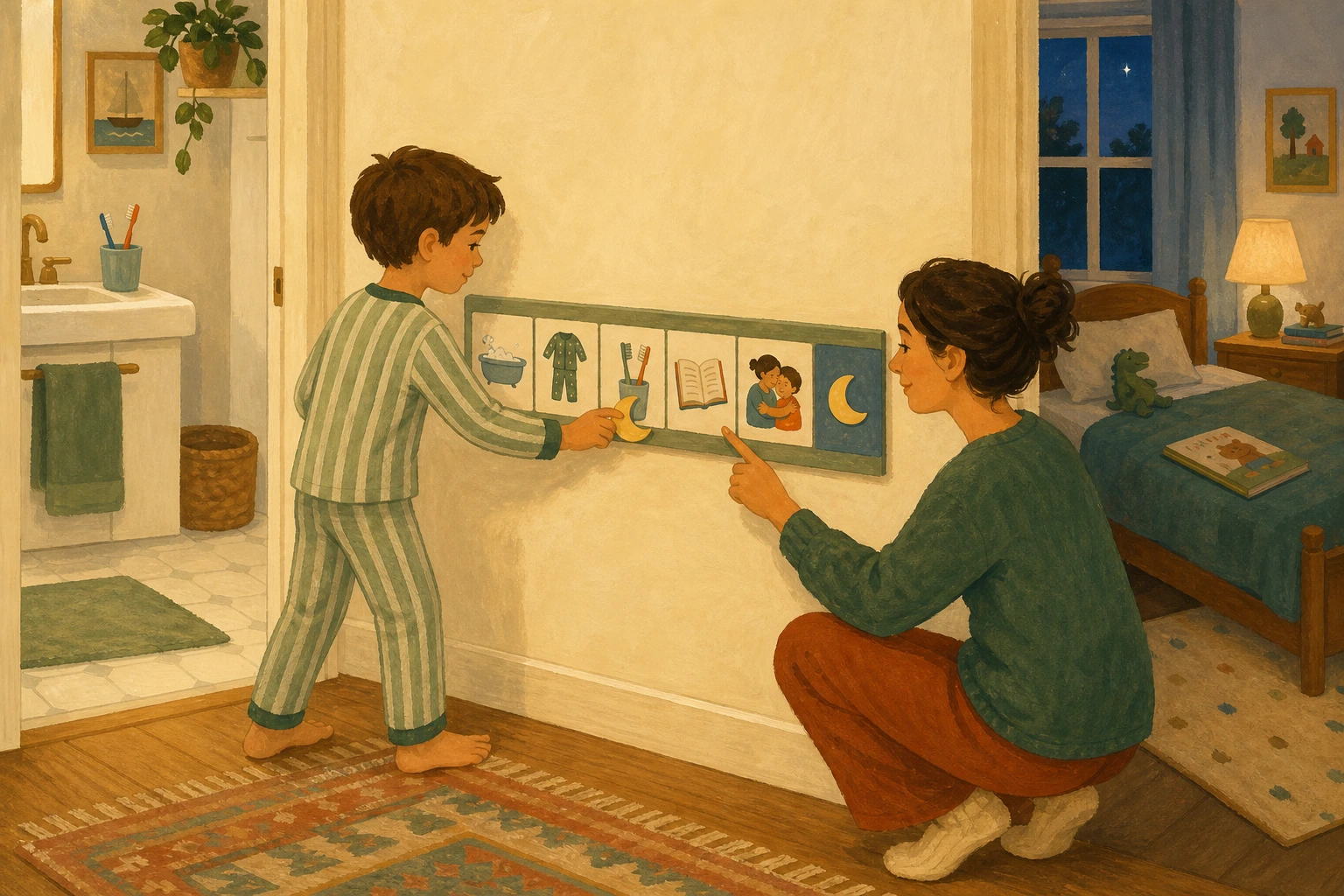
Listen to the words that already repeat at bedtime. Bath. Pajamas. Teeth. Story. Hug. Lights out.
Those six phrases match the sequence a child already hears. They also reveal the order a picture
sequence needs to show.
The routine is already in the repeated words
Say your version once while nobody is trying to follow it. Write one short phrase for every visible action, then read the phrases back in order. The words should sound like the ones your household already uses in the room.
Notice the sequence you keep explaining. The picture chart gives those words somewhere to stay after you've stopped reciting them.
Use the ready early-reader bedtime chart
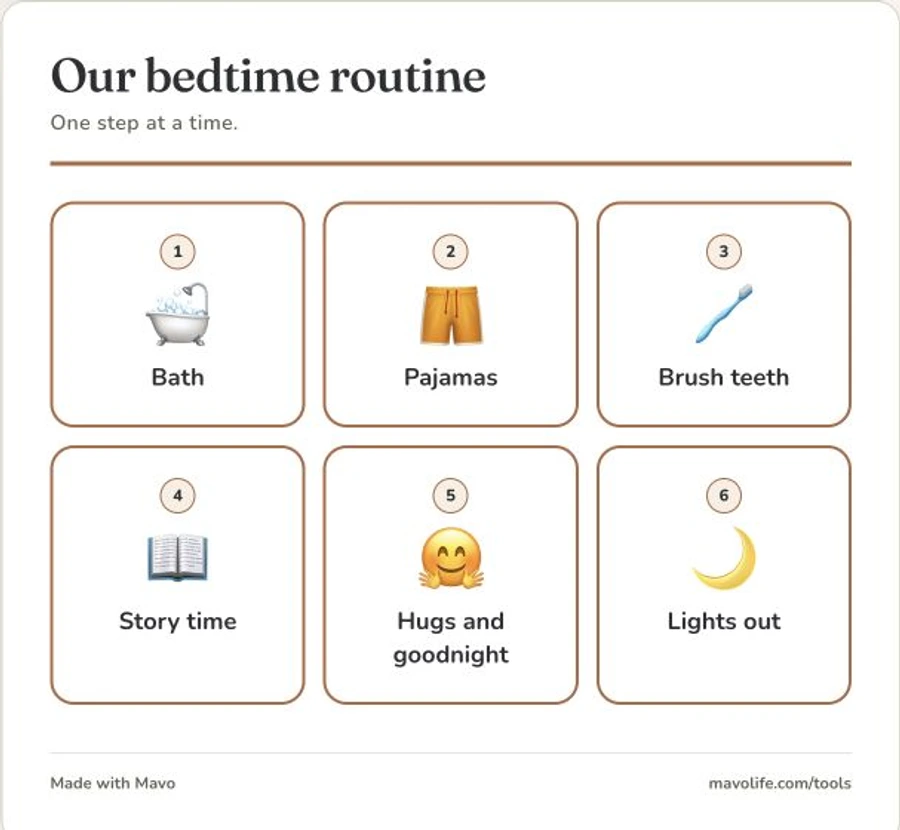
Open the free bedtime chart without signing in, then choose Bedtime. The six picture cards will appear in order:
- Bath
- Pajamas
- Brush teeth
- Story time
- Hugs and goodnight
- Lights out
That's the ready early-reader version. Each card pairs a familiar picture with a short label, and the whole sequence fits on one printed page. Use it unchanged when it matches your house.
If a shower happens before dinner, remove the bath card. If your family says books instead of
story time, rename that card. If pajamas come first, move them. The useful bedtime routine chart
is the one a child recognizes when they look up from the actual routine.
Start blank when the sample is wrong
A blank start is faster than correcting a sample that barely resembles your night. Delete the six starter cards in the maker, then add one picture for each action your child sees between the start of getting ready and the final goodnight.
Say your real sequence once, then label each card with the same short words: potty, blue pajamas,
teeth, choose a book, hug, lamp off.
Leave out actions that happen earlier and do not help answer the next question. Dinner may be part of the evening, but it doesn't have to be part of the bedtime chart. Packing a school bag may belong on a school morning checklist instead. A shorter sequence is easier to see all at once.
Give each card one visible finish
One card should end in a way everyone can recognize. Pajamas is finished when the pajamas are on.
Brush teeth is finished when the toothbrush goes back. Get ready for tomorrow hides several
possible jobs, so it is hard to point to the moment when that card is done.
Split a card only when the action really has two separate finishes. Bathroom might become use the toilet and brush teeth. Do not split every small motion. A card for turning on the faucet and
another for finding the toothpaste would make the picture routine longer without making the night
clearer.
Use this quick check before printing:
- Can the picture be recognized from a few feet away?
- Does the label use a word your household says?
- Can someone tell when the action is finished?
- Does the next card begin where the family expects?
If one answer is no, edit that card before adding another.
Keep the chart out of the scorekeeping job
A bedtime chart can show what comes next. It doesn't need to record whether the night was good. Rewards and detours are separate family decisions.
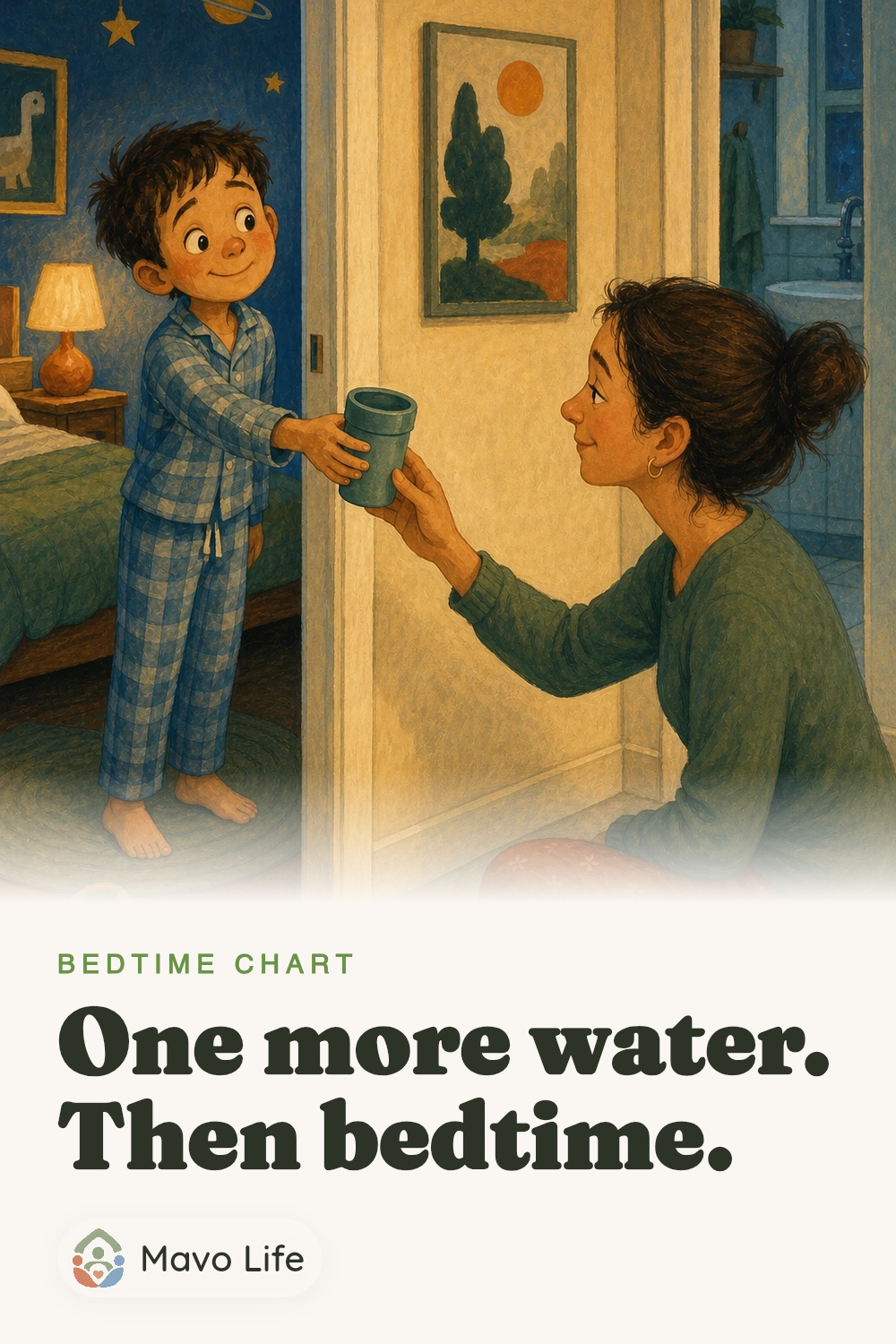
The extra water request is a good example. The cup's encore doesn't automatically need a seventh
permanent card. If it's part of your household's settled sequence, add water where it belongs.
If it's an occasional return after goodnight, keep the six-card route intact and handle the moment
as you normally would.

Keep any household rule in ordinary conversation rather than making the chart judge it. The page should remain useful on an imperfect night. Its job ends when it shows the next familiar action.
Put the chart where the next question happens
The chart has to be visible before someone needs the next card. A strip beside the bedroom door may work when the routine moves from bathroom to bedroom. A copy near the sink may be better when the first three steps happen there.
Walk the sequence once with the printed page still loose. Notice where a child naturally looks back for the next picture. That's a better hanging spot than the prettiest empty wall.
Leave the page whole if returning to one spot feels natural. Cut the cards apart if the routine
moves through several rooms or if your child likes moving a card from next to done. A clothespin
or reusable dot can work when it's easy to handle. The paper doesn't need a complicated tracking
system.
Adapt the sequence when the household changes
Different homes, siblings with different orders, or an unusual night should get separate short versions rather than one chart crowded with names and exceptions. Keep changing adult details, such as who is covering bedtime or tomorrow's school note, in the family plan rather than adding them to the child's cards. A late event belongs there too. Put sitter contacts and house details on the separate babysitter and grandparent handoff sheet. Use the same short-version rule for other kids' routines.
Open the maker and choose Bedtime. Remove one card that does not belong in your house, then read the remaining sequence aloud. If it sounds like your night, print it and walk the first round together.