Hosting & celebrations · September 2, 2026 · 8 min read
Non-Candy Goodie Bag Ideas Kids Can Use
Browse dozens of non candy goodie bag ideas, then use the free printable to settle the quantity, budget, backup, and assembly plan.
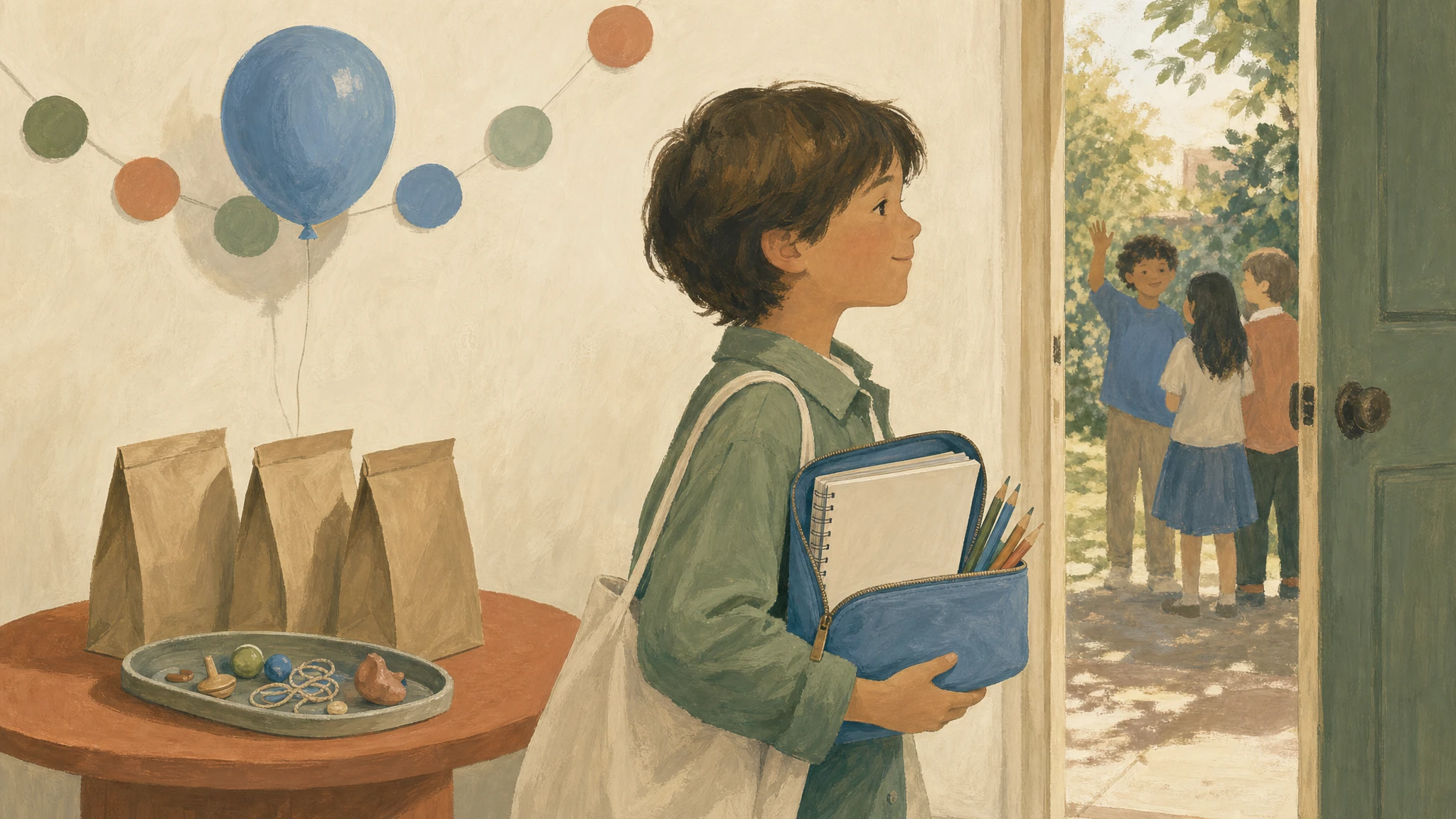
The best test for a non-candy goodie bag happens the next day. What will the child do with it after the cake, balloons, and party energy are gone?
They might draw with it, plant it, wear it, take it outside, read it, or play a small game with someone. That gives you a better starting point than trying to make a paper bag look full. One complete favor can feel generous. Twelve loose fillers often become a pocket of objects that need a new home by bedtime.
Use the ideas below to pick a direction, then choose the exact item using the guest count, your spending limit, the party setting, and what you know about the invited households. Check the maker's age guidance and ask guest families about any restrictions that matter before you buy.
Creative favors kids can make with
A creative favor gives the child a small project without asking the host to assemble a whole craft store into each bag.
- A small blank notebook with a set of colored pencils
- A watercolor postcard set
- A mini stamp and blank cards
- A sheet of reusable stickers with a scene board
- A simple origami paper pack with printed instructions
- Sidewalk chalk in two or three colors
- A decorate-your-own bookmark kit
- A small air-dry clay pack
Pair pieces only when they make one usable activity. A notebook and pencils belong together. A notebook, pencil, eraser, ruler, stamp, bracelet, maze, and loose sticker are eight separate decisions wearing the same ribbon.
If the party already includes a craft, the finished project can be the favor. Write the child's name on a paper handle or plain take-home sleeve and let the party activity do two jobs.
Non-candy goodie bag ideas for outdoor play
Outdoor favors work especially well when the party happened outside or the item has one obvious use.
- A jump rope
- A small flying disc
- Sidewalk chalk
- A bubble wand
- A foam glider
- A packet for growing an easy plant, chosen by the family
- A soft playground ball
- A simple nature scavenger-hunt card and pencil
Check where the child is likely to use the item. A sidewalk-chalk box is complete on its own. It doesn't need a handful of unrelated fillers tucked beside it to count as a favor.
Ideas for reading, drawing, and quiet play
These are easy to pack and don't depend on the party theme.
- A paperback book chosen for the guest group
- A mini comic or puzzle book
- A deck of standard playing cards
- A small magnetic drawing board
- A bookmark and bookplate set
- A reusable activity mat with a washable marker
- A pocket sketchbook
- A set of story prompt cards
For a mixed group, choose a format with room for different answers instead of guessing one character or trend everyone will like. Blank paper, drawing prompts, and ordinary cards leave more of the fun to the child.
Useful favors that still feel like a treat
Useful doesn't have to mean school-supply leftovers. Color, shape, or a party detail can make an everyday object feel chosen for the occasion.
- A bright pencil pouch
- A reusable name-tag or bag-tag kit the family can personalize
- A small zip pouch
- A patterned pair of socks
- A soft headband or scrunchie
- A fun bookmark
- A small set of blank note cards and envelopes
- A clip-on reflector or zipper pull selected with its maker guidance
Personalization raises the assembly time quickly. Twenty-four names are twenty-four chances for a spelling mistake, missing piece, or late-night redo. If you personalize, copy names from the current guest list and assign one person to check the finished set.
Favors kids can play together
A favor can invite another person in instead of giving every child a solitary trinket.
- A mini card game
- A set of conversation cards
- A small matching game
- A pair of foam dice with a movement-game card
- A travel-size classic game
- A deck of silly drawing prompts
- A paper fortune-teller activity sheet
- A make-your-own comic strip pad
Open one package before the party. If the instructions take longer to explain than the game takes to play, it may be a better fit for a different group. The test isn't whether the box says "game." It's whether someone can begin without hunting for missing context.
One larger favor instead of a filled bag
The bag is optional. Put a tag on one item, place the favors in a basket by the door, or hand each child the project they made at the party.
Possible single favors include:
- One book
- One small puzzle
- One craft kit
- One ball or flying disc
- One plant pot the child decorated
- One tote or pencil pouch
- One framed instant photo from the party, when the invited families have agreed to photos
- One take-home activity connected to the party
This approach makes the spending decision visible. If your limit is $4 per guest, you can compare complete $4 options instead of buying five bulk packs and discovering that the pile costs $7.30 per child.
Choose one complete favor
Start with the number of children who will receive one. Add a few extras only for a specific reason, such as a sibling already included in the invitation or an uncertain reply. "Just in case" can turn a guest count of 14 into shopping for 20.
Then choose one direction:
- Make something: the favor is a complete small project.
- Do something: the item starts outdoor play, a game, drawing, or reading.
- Use something: it has an ordinary job after the party.
- Keep one thing: a single larger item replaces the filled bag.
- Take home the activity: the party project becomes the favor.
- Skip it: guests leave with the party memory and nothing else to carry.
Write down the exact item, quantity, price limit, and one backup. A backup keeps an unavailable color or sold-out pack from reopening the whole search. It should solve the same job, not start a second theme.
Use the free goodie bag choice sheet
The printable is for the sitting when the guest count is known and you're ready to buy. Fill it out once, then leave it with the person shopping or assembling. It isn't meant to become a keepsake or a running party planner.
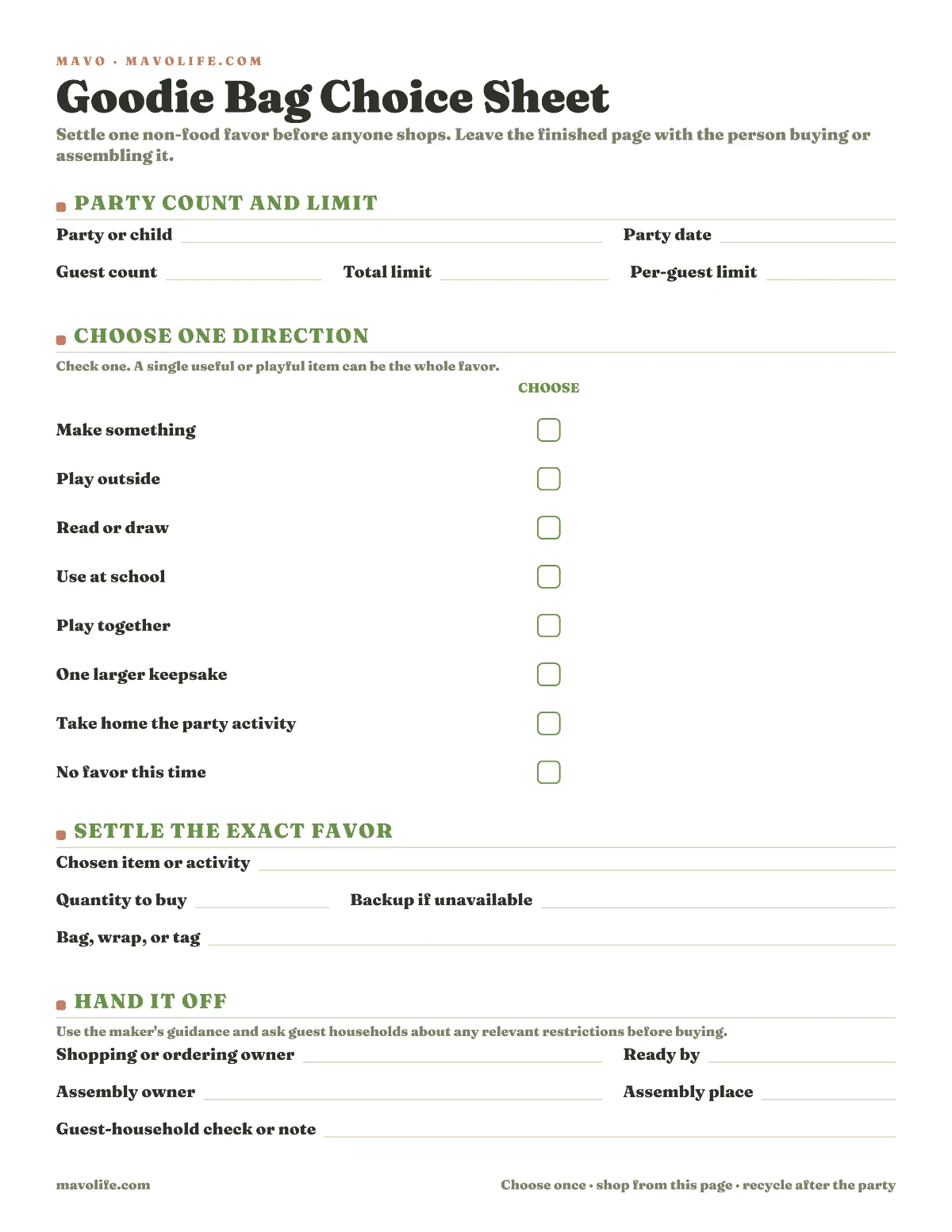
Download the fillable goodie bag choice sheet (PDF)
The sheet holds the guest count, total and per-guest limits, the chosen direction, exact item, quantity, backup, packaging, shopping owner, assembly owner, and ready-by date. It also leaves a line for a guest-household check. The page doesn't decide which item fits your guests, and a filled line doesn't replace the maker's guidance.

If you're planning the whole celebration rather than only the favors, use the first birthday party checklist for dates, guests, costs, bookings, and party-day jobs. More gathering guides live in the family hosting collection.
Plan the assembly before the packages arrive
Count the touches in one finished favor. A tag, name, ribbon, divided bulk pack, and separate bag can create five small jobs per guest. Across 24 guests, that's 120 touches before you account for mistakes or cleanup.
Try one finished sample first. Put every needed supply beside it, then decide whether the plan still fits the available evening and helpers. If it doesn't, remove a layer. The child receiving the favor won't know that the original plan included tissue paper inside a bag inside a decorated tote.
Keep one finished favor untouched until assembly is done. It gives the helper a visible example and makes the final count easier: finished favors on one side, supplies in the middle, completed set on the other.
Adjust for the party you are hosting
For a small mixed-age gathering, one family-selected book, drawing set, or outdoor item may be easier than building different bags. Use maker guidance rather than guessing suitability from the oldest or youngest guest.
For a classroom celebration, ask the school or teacher what may be distributed before buying. A non-food item can still conflict with classroom rules.
For a party with a take-home activity, plan the drying, labeling, and carrying step. A painted pot that is still wet when families leave needs a different handoff from a finished bracelet or folded drawing.
For two households hosting together, settle the spending limit and assembly owner on the same page. Otherwise one person can be buying bags while the other thinks the craft itself is the favor.
Non-candy goodie bag questions
How many items should go in a goodie bag?
There isn't a required number. One complete activity, book, game, or outdoor item can be the whole favor. If you combine items, make sure they work together rather than filling space.
What can I use instead of a goodie bag?
Add a tag to one favor, place finished party crafts in simple sleeves, or set a basket of one-item favors near the exit. You can also skip favors entirely.
How do I keep the cost from growing?
Multiply the per-guest price by the real guest count before buying. Include bags, tags, shipping, and personalization in the total. Pick one backup in the same price range so a sold-out item doesn't restart the search.
Should every guest receive the same favor?
The same favor makes counting and assembly easier, but the invited households may give you a reason to adapt. Ask instead of assuming, record the settled choice, and label any intentional difference clearly for the handoff.