School emails · July 14, 2026 · 7 min read
First Day of Kindergarten Checklist for Parents
A first day of kindergarten checklist for parents: what to confirm, pack, lay out, and hand off, plus a printable checklist and photo sign.
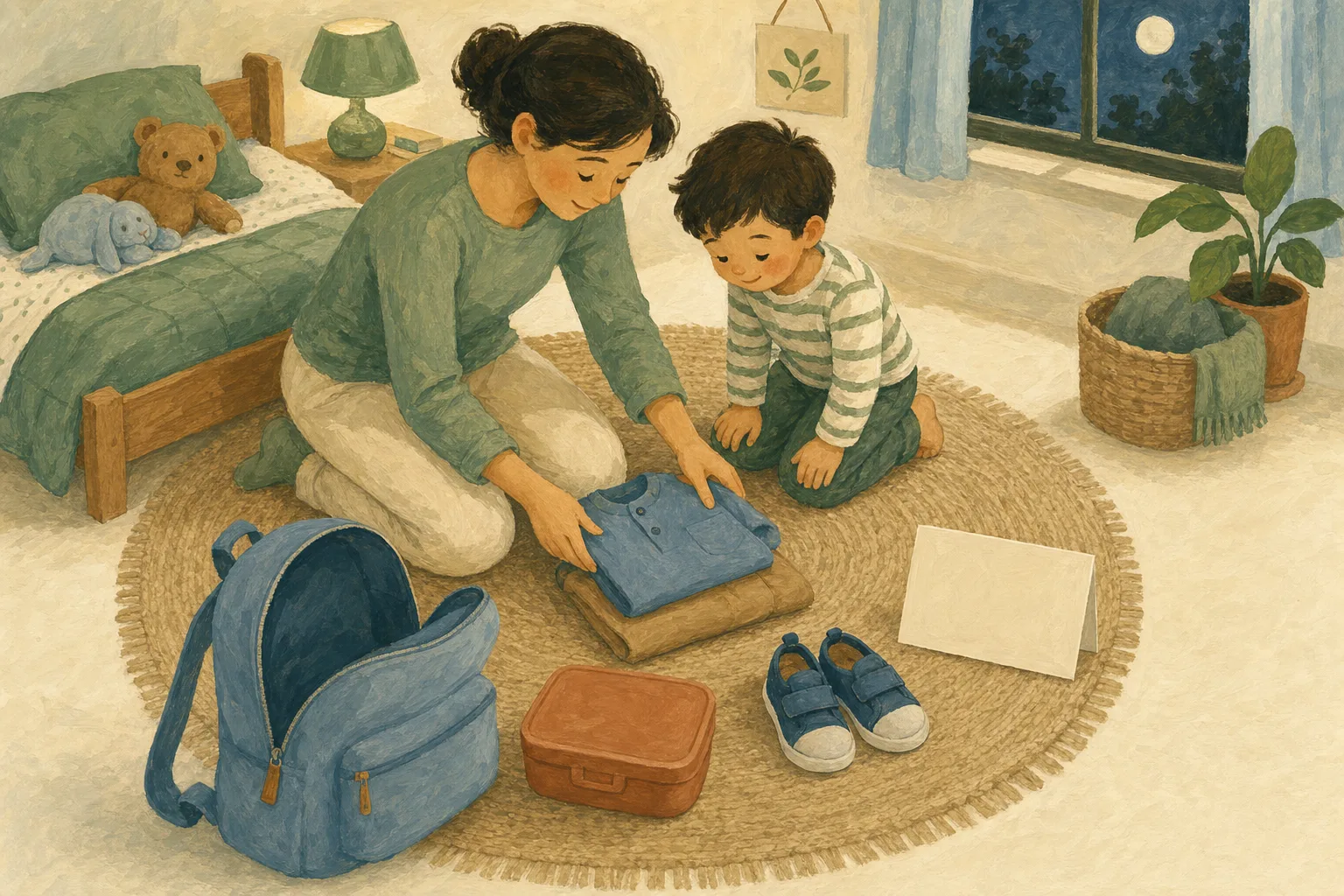
Picture the Rivera family's bedroom floor the night before kindergarten. Their son Mateo is kneeling on the rug beside an open backpack, choosing between the green shirt and the striped one. His lunchbox is ready. His left shoe is ready. Nobody can find the water bottle, and the arrival instructions are still sitting in a school email on his mom's phone.
That's the first day in one picture: a milestone mixed with six very ordinary details. A perfect breakfast or complicated tradition can wait. Confirm the right entrance, the right bag, and the right pickup plan, then leave enough room for everyone to feel whatever they feel.
This first day of kindergarten checklist keeps those details together. Use the school-specific information you were given, fill in the printable, and leave it beside the backpack. Once those pieces are settled, the first morning gets to be a morning instead of a scavenger hunt.
Confirm the details only the school can answer
Start with the orientation note, welcome email, parent portal, or teacher message. Schools handle the first day differently, so a general checklist can't tell you which door opens or whether the teacher wants a snack. Your school's instructions win.
Pull out these six answers:
| Confirm | Write down |
|---|---|
| Arrival | The drop-off window, not only the bell time |
| Entrance | The door, gate, classroom, or line your child should use |
| What to bring | Only the items on the teacher's list |
| Food | Lunch plan, snack request, and water bottle |
| Getting home | Bus, walker, car line, aftercare, or an approved pickup adult |
| Pickup handoff | The adult handling it, the place, and the time |
If one answer is missing, ask the school before you invent a plan. "Which entrance should kindergartners use on the first morning?" is easier for the office to answer than a broad "what do we need to know?" Save the reply with the rest of the first-day details so the adult doing drop-off isn't trying to reconstruct it from a group text at the curb.
The full back-to-school form pile is a separate job. If registration, the emergency card, and the photo release are still stacked on the counter, use the back-to-school paperwork checklist to clear those in one sitting. This page stays with the first morning itself.
Print the checklist and first-day photo sign
The printable pair gives the practical details and the memory their own pages. The checklist stays by the backpack. The sign gets filled in before the morning gets busy.
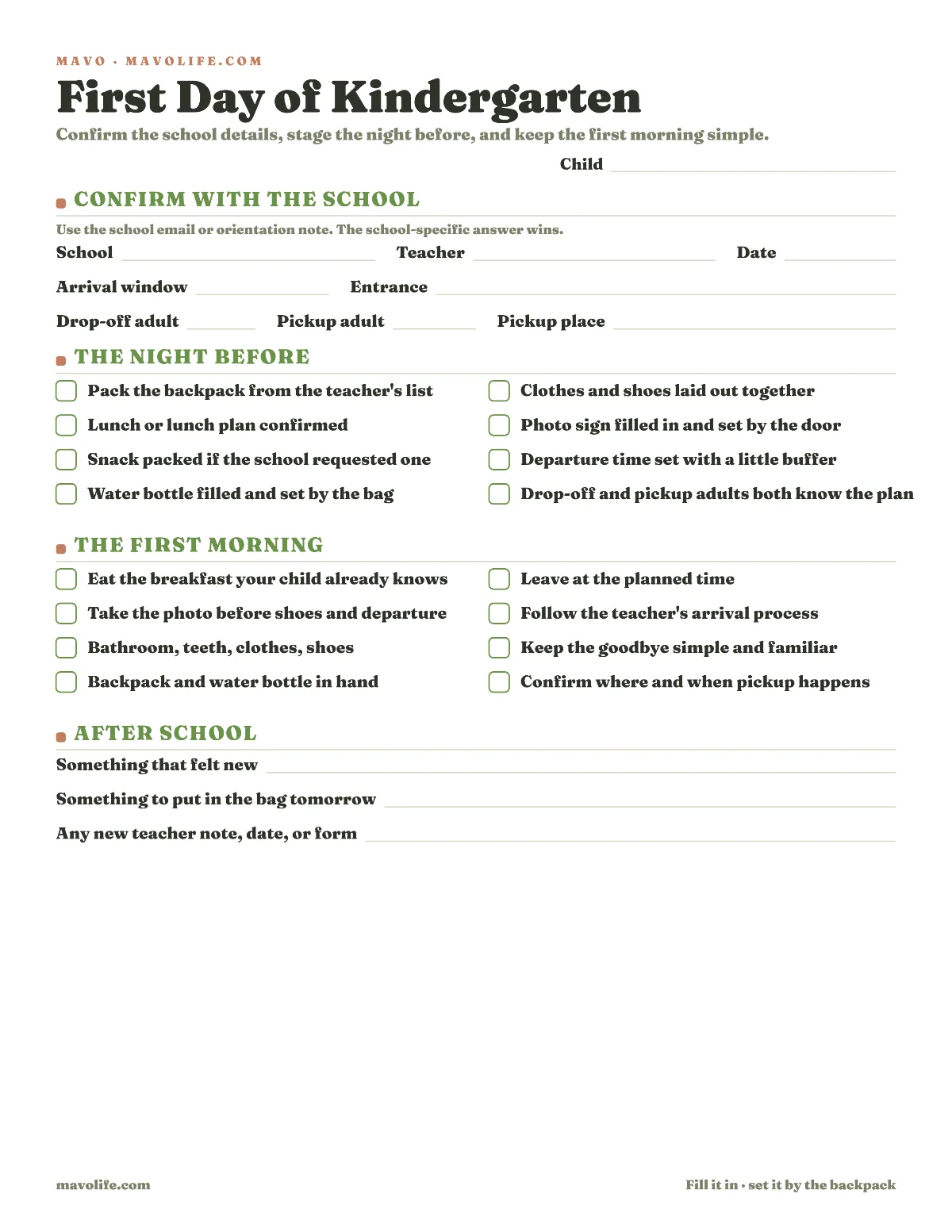
Download the first-day checklist (PDF)
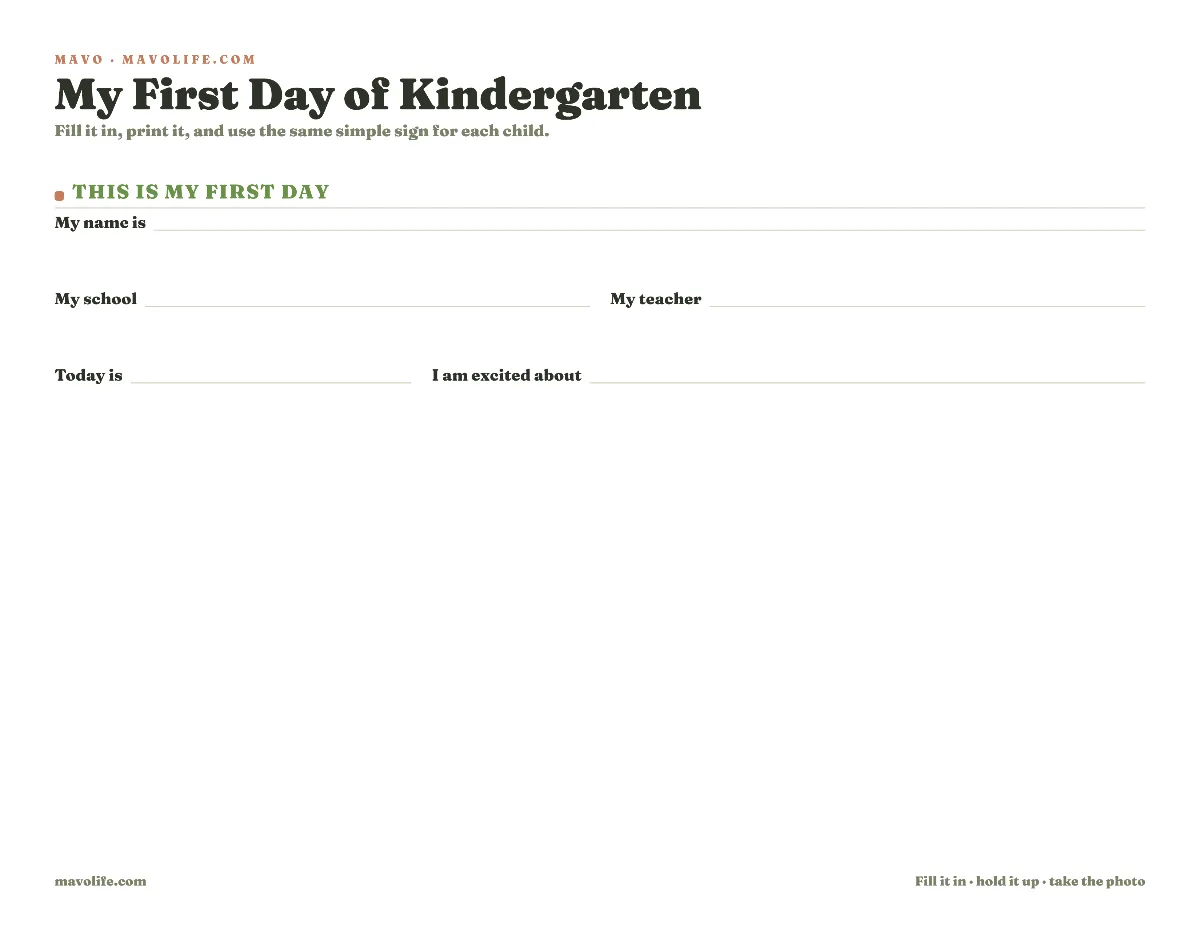
Download the first-day photo sign (PDF)
Fill in the school fields first, then invite your child into the parts that really are theirs. They can choose the shirt, pick the breakfast from two familiar options, and finish the sentence "I am excited about." The adult keeps ownership of the clock, the school instructions, and the handoff. That split gives a child some control without asking them to run the morning.
If the sign will appear in a public photo, use your child's first name only. Leave the school and teacher fields blank, or crop them out before you share it.
Set up the night before kindergarten
Put everything in one physical place. A backpack by the door doesn't help if the shoes are upstairs, the water bottle is in the dishwasher, and the photo sign is still attached to the printer.
On the bedroom rug or by the entry bench, stage:
- The clothes and shoes your child picked.
- The packed backpack, using the teacher's list rather than a generic school-supply list.
- Lunch, snack, and water bottle, if the school asked for them.
- The filled-in photo sign.
- Anything the adult doing drop-off needs, including the arrival instructions.
Then work backward from the school's arrival window. If the door opens at 7:45 a.m., choose the time you want to reach the school and the time you need to leave home. Add the amount of buffer your own family needs. The checklist shouldn't promise that every family can get ready in 20 minutes, because some children wake slowly, some siblings need to come along, and some commutes are their own event.
One child may want to pack every part of the bag. Another may be done after choosing a shirt. Either version is fine. Keep choice and responsibility separate: the child can participate, but the grown-up checks that the actual school list made it into the actual bag.
Give the handoff a name
Drop-off and pickup sound obvious until two adults each assume the other one has the exact plan. Write a name beside both handoffs, even when the same person handles them.
| Part of the day | The child can choose | A grown-up confirms |
|---|---|---|
| Night before | Shirt, breakfast option, photo-sign answer | School details, bag, departure time |
| Drop-off | A familiar goodbye phrase or gesture | Entrance, arrival window, adult handling it |
| Pickup | One thing they want waiting in the car or at home | Adult, place, release process, pickup time |
Keep the goodbye plan small and familiar. It might be a hug and "I'll see you after school," the same fist bump you already use, or a wave from the place the teacher asks families to stop. Follow the school's arrival process, and don't build a brand-new ceremony that everyone has to remember under pressure.
Pickup deserves the same precision. "Dad gets Mateo" is incomplete if Dad doesn't know which gate, what time, or whether the teacher needs to see the pickup card. Put the whole handoff on one line: "Dad, north gate, 2:50 p.m., pickup card in the glove box." Now the plan can survive the adults splitting up after drop-off.
Put the first day where both adults can see it
The Rivera family's school email has the arrival window, classroom entrance, and pickup note. In Mavo, they can forward that email into the shared plan, keep the first day on the family calendar, and assign the event to the adult handling the handoff. Keep the date, the instructions the adult needs at the door, and the owner visible in the same place.
An event in Mavo can carry one responsible person, so use the owner for the handoff that needs the clearest accountability. If one parent handles drop-off and another handles pickup, put both names in the event notes and choose the owner for whichever part is easiest to miss. The family can still see the whole plan, along with its covered status and anything that still needs attention.
Treat this as a one-time event. You shouldn't need to build a kindergarten dashboard or maintain a special first-day tracker after Wednesday. The shared calendar keeps the school instructions from living on one phone while the other adult is standing at the wrong door.
Start a free shared plan in Mavo, then forward the school's first-day email so the date, entrance instructions, and handoff owner are visible to the family member who needs them.
Keep the first morning ordinary
The morning will still have a personality. A child who was excited at bedtime may be quiet in the car. A child who was worried may walk straight through the door without looking back. The checklist handles the water bottle, the entrance, and the pickup plan so the adults can pay attention to the child who's actually in front of them.
If several kids are leaving at once, give the kindergartner's first-day items their own landing spot instead of mixing them into the usual pile. If two households are involved, send the completed checklist to both homes and name which home holds the packed bag the night before. Keep that answer at the top of both copies.
Reset once after school
When your child comes home, start with reconnection instead of a full interview. Food, a drink, or a few quiet minutes may get you farther than "tell me everything." Later, three small questions are enough to set up day two:
- What felt new today?
- What should we put in the bag tomorrow?
- Did the teacher give you a note, date, or form?
Write the practical answer on the bottom of the checklist. Put tomorrow's item by the backpack. Add the new date or form to the family plan, with an owner if it needs action. Then let the first-day page be done.
Day two is where the routine begins. If repeated mornings need picture cards, a ready spot, and a reset, use the school morning launch pad. Put the first-day sheet away and set up tomorrow's landing spot.