Meal planning · July 10, 2026 · 7 min read
The empty lunch box stare
An open lunch box and the same decision every morning. A five-day rotation per kid that ends it, plus a printable grid and the staples to keep stocked.
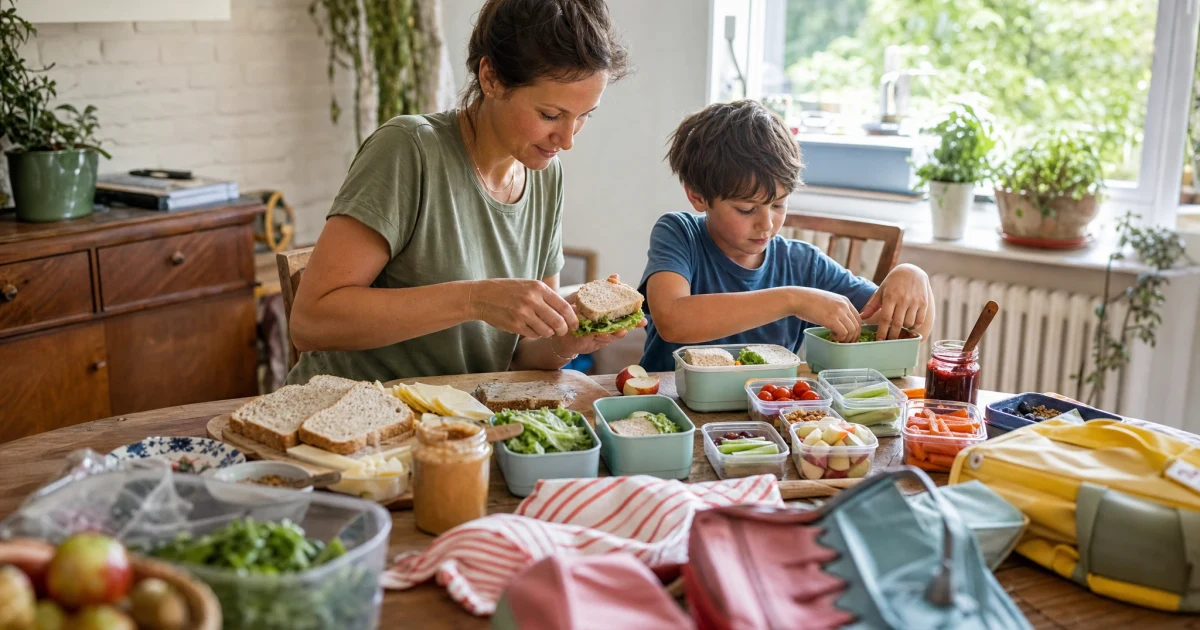
The lunch box is open on the counter and you're standing at the fridge running the same inventory you ran yesterday. Is there bread. Does she still eat the cheese sticks. Did somebody finish the applesauce pouches. Then you pack it, and packing takes four minutes, and the four minutes were never the hard part.
A school year runs about a hundred and eighty days, and the lunch box shows up on most of them. Each decision is too small to complain about, and there are enough of them that by October the deciding is the part you dread.
So make the decision once, for the whole term. Five school mornings, one short rotation per kid, the same shape every week. Monday is wrap day whether or not you slept. Whoever's holding the lunch box reads a line off a grid and assembles it.
Five slots per kid
The five slots are the five school mornings, and each kid gets their own set. The rotation your second grader inhales is the one your fifth grader trades away at the table.
Each day's box is the same six parts:
- Main (the center of the meal)
- Fruit
- Veg or side
- Snack
- Treat (small and predictable)
- Drink
Fill those six for each weekday and the week is built. What keeps a rotation from going stale is anchoring each day to a format and letting the food inside it move. Monday is wrap day, and the wrap can be turkey one week, ham the next, then hummus, then cream cheese and jam. Your kid gets variety inside a shape you don't reinvent every Sunday. Forty bento ideas saved on Pinterest have never once packed a lunch.
Here's one kid's filled week, so you can see the shape before you build your own:
| Component | Mon | Tue | Wed | Thu | Fri |
|---|---|---|---|---|---|
| Main | Turkey wrap | Pasta salad | PB and jam | Cheese and crackers | Bagel and cream cheese |
| Fruit | Apple slices | Grapes | Clementine | Blueberries | Banana |
| Veg/side | Carrots and ranch | Cucumber coins | Snap peas | Cherry tomatoes | Carrots and hummus |
| Snack | Pretzels | Yogurt tube | Goldfish | Cheese stick | Popcorn |
| Treat | Two cookies | Fruit snack | One cookie | Chocolate square | Graham crackers |
| Drink | Water | Water | Milk box | Water | Juice box |
Making it a week they'll finish
Whether the box comes home empty is mostly settled before the week starts.
Build it with the kid. Fifteen minutes at the table, each kid picks the mains and snacks they'd finish. A lunch the kid chose comes back empty far more often than one you guessed at, and fifteen minutes is a cheap price for that.
Lean on their safe foods. Every kid has two or three mains they eat without a fight, and putting one of them on the grid twice is fine. Kids like knowing Wednesday is always PB and jam, and you're not running a restaurant.
Keep the treat slot small and identical. If the treat is a fresh negotiation every morning, you've reopened the exact decision you were trying to close. Same treat, same slot, nothing to argue about.
Make peace with the veg slot. It's the one that comes home untouched most often. Keep the portion tiny, pair it with a dip they like, and count "she tried it" as the win, with a clean container as a bonus. A carrot in front of a kid every day still does something, even on the days it comes back.
Let one day be a wildcard. Friday can be leftovers, a build-your-own snack box, or breakfast for lunch. A little novelty keeps the four predictable days from feeling like a rut, for them and for you.
The blank grid, one per kid
Fill it in on the computer, or print it and tape it inside a cabinet door where whoever's packing will see it. Work one column at a time, in pencil, because week one is a draft.
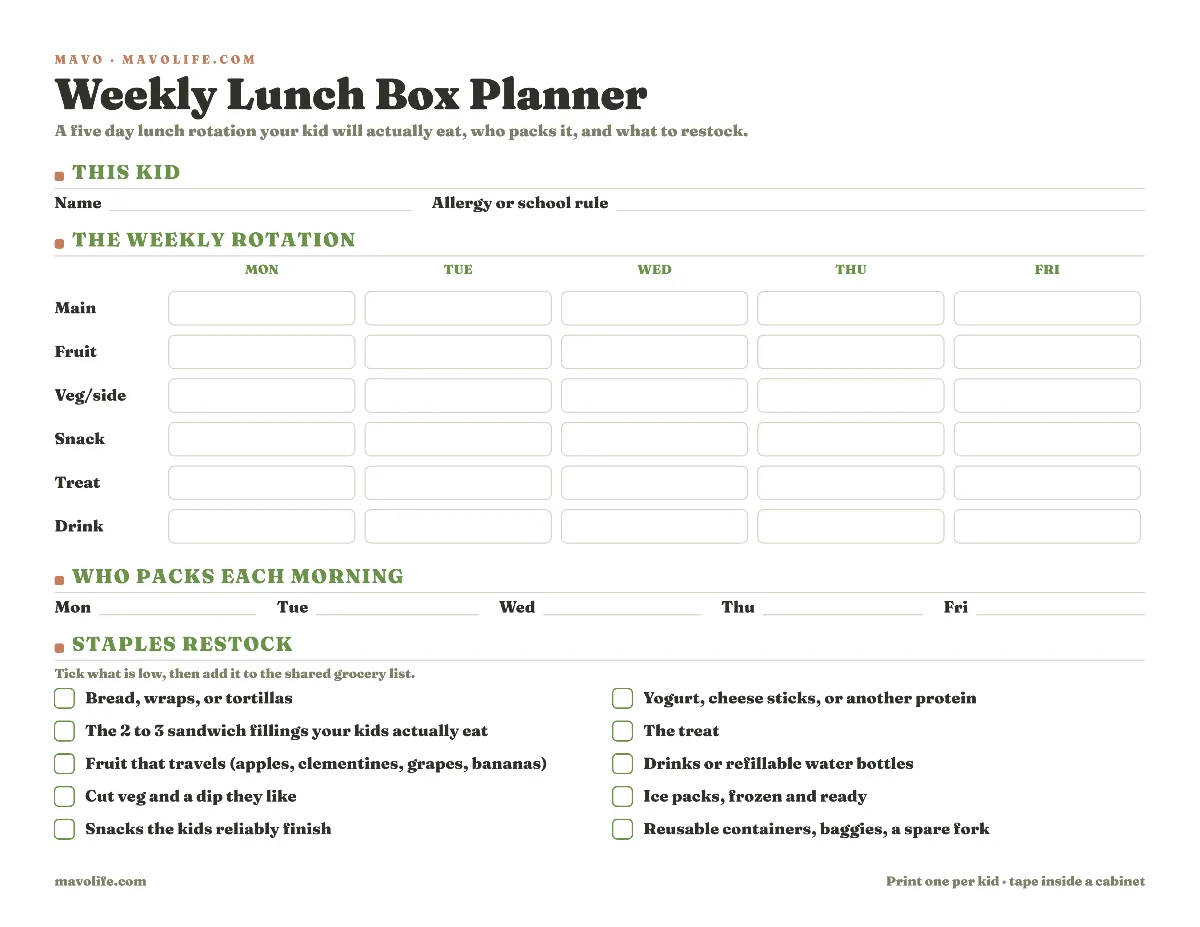
Download the printable lunch box planner (PDF)
For a little message to tuck into the bag, these printable lunchbox notes include 60 short notes and 12 blank cards for your own words.
What a rotation does to the grocery list
The list mostly stops changing. Read across each kid's grid and you already know the week's mains, fruits, veg, and snacks, times however many kids share a given day.
It helps to hold two lists in your head. The fresh stuff is this week's produce and anything perishable: the apples, the cucumbers, the yogurt tubes. The staples are what the whole rotation runs on, and they empty out mid-week without announcing it: bread, the one snack your kid finishes, applesauce pouches, ice packs. Scan the staples every week so the rotation doesn't collapse because you're out of tortillas.
Keeping the list itself true between trips is its own problem, the one where three people come home with the same box of crackers. That fix is here: how to keep one shared grocery list current.
Lunches and dinners pull from the same kitchen, so it's worth planning them within sight of each other. The evening version of this, built around practices and late meetings, is the weeknight dinner plan.
Who packs which morning
Packing lunch is invisible work, and it tends to land on one person by default. The rotation makes it shareable, because the hard part (knowing what each kid will eat) is already written down. Whoever packs follows the grid.
So assign the mornings out loud. One parent takes Monday, Wednesday, Friday; the other takes Tuesday and Thursday. Kids old enough can pack their own against the grid, which is a real Friday-morning gift to you and a small dose of independence for them. If your family already shares a calendar, the packer for each morning can be an owner on it with a reminder the night before, so the job lives somewhere other than one person's memory.
The night-before move shrinks the whole thing. Pack the parts that keep (the snack, the treat, the drink, the cut veg) after dinner, and leave only the fresh main for morning. On the day the shoe is missing, the lunch box is already most of the way done.
If the mornings are chaos well beyond lunch, the lunch box is one card in a bigger routine. A reusable school-morning card deck handles the rest of the launch: shoes, folder, water bottle, out the door.
Keeping the rotation and its groceries together
The rotation, the staples it needs, and the who-packs plan usually end up in three different spots: a printout on the cabinet, a note on one phone, a text thread nobody scrolls back through. The moment they drift apart, somebody's making it up at the counter again.
Mavo keeps meals, the grocery list, and the family calendar in one shared plan, so the rotation and the staples that feed it sit side by side where the whole family can see them, not just the parent who built the thing.
A simple setup:
- Put the week's rotation in meals, one entry per kid per day.
- Keep the staples as a standing block on the shared grocery list, and tick them back on when they run low.
- Put "who packs" on the calendar as an owner with a night-before reminder.
You don't have to type it all in, either. Paste the rotation or snap a photo of the cabinet-door grid, and Mavo AI turns it into plan items for you to review. When the school sends a nut-free-table note or a "wear green and bring a green snack" email, forward it in and it lands as a plan item you can slot into the week instead of a Thursday-morning surprise.
A few lunch box questions
My kid is so picky the list would be four foods long.
Then it's a four-food rotation, and it will do. A colorful week isn't better if it comes back full. Rotate the safe foods, add exactly one "try it" item in the fruit or veg slot, and widen it when they're ready. The goal is an empty box, not a balanced photo for the internet.
What about allergies at school?
Start with your school's policy, because it varies a lot. Plenty of elementary schools are nut-free or run a nut-free table, and some restrict outside food for certain events. Build the rotation around what's allowed so nobody's repacking at drop-off, and if a grandparent or sitter packs sometimes, write the "no ___" rule right on the grid where they'll see it.
Can I prep ahead, or does it have to be packed fresh?
Both, split by what keeps. Batch the sturdy, shelf-stable parts on Sunday: portion snacks into containers, wash and cut hardy veg like carrots and peppers, bake the muffins. Assemble the fresh parts in the morning: sandwiches, cut apples, anything that goes soggy. And keep the box cold on the way to school. USDA guidance is to pack at least two cold sources with perishable lunch food and keep it at or below 40°F, so send two ice packs, or one plus a frozen water bottle.
Set the rotation at the start of the term. Redraw the column that stops working the week someone swears off cheese sticks. The rest of the year, packing lunch is four minutes and no thinking.