Meal planning · July 10, 2026 · 6 min read
The chili is in the freezer somewhere
You cooked it, you froze it, and now it's an unlabeled brick. What freezes well, what to write on the pan, and how the oldest meal gets eaten first.
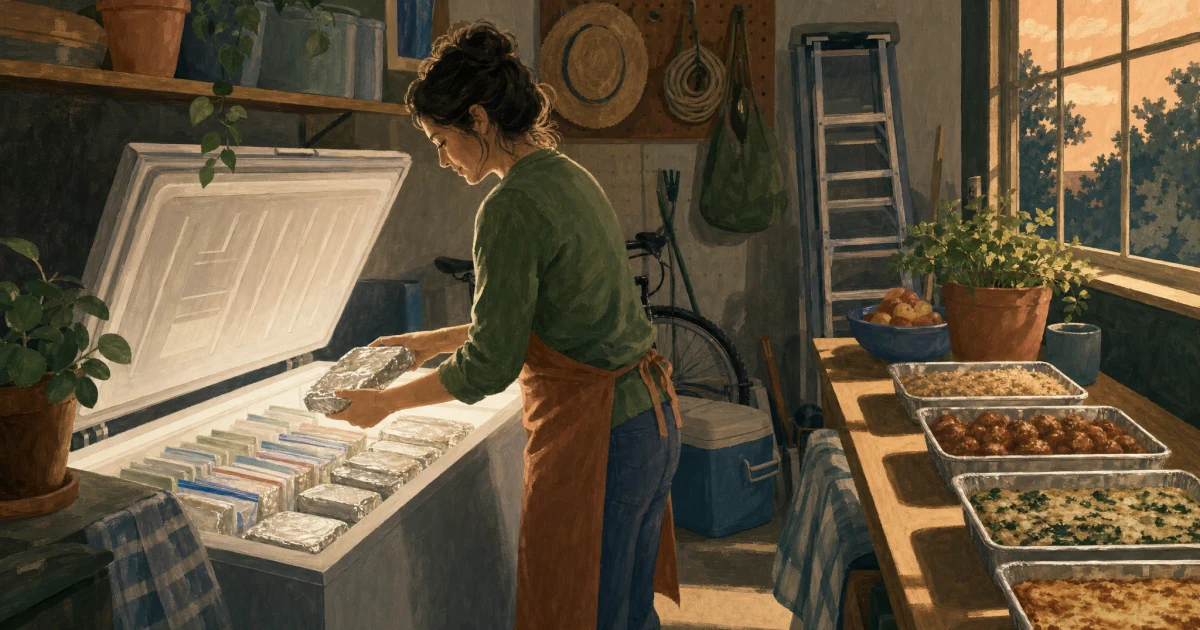
There are four foil pans in the freezer and nobody in the house can say what's in them. One is chili, probably. One is either the marinara or the soup with the beans in it. From every angle they're the same frosted silver rectangle, and not one of them says how many people it feeds or how long it needs in the oven. So the door closes and somebody orders pizza on top of food that's already cooked.
All of that is fixable with a roll of freezer tape and about forty seconds of writing. A pan that says what it is, how many it feeds, and how to reheat it gets eaten on a Wednesday. An unmarked one drifts toward the back wall until the frost wins, and throwing out food you cooked on purpose stings more than never having cooked it.
Building the stash takes one afternoon. Keeping it usable is the part that decides whether any of it gets eaten: what survives the trip, what goes on the label, a spot for whatever should get eaten next, and handing one specific meal to one specific bad night.
Double what you're already cooking
You don't have to spend a whole day cooking to build a reserve. Start by doubling something you're already making, such as chili or soup. Taco meat, meatballs, and enchiladas also scale well. Eat one batch and freeze the other. A few normal dinners can stock several hard nights without turning Sunday into a production.
If a busy season is coming, one larger session can still help. Pick three or four recipes that scale well and shop for them together. A couple of hours can produce eight or ten meals. Clear the freezer space before you begin. Otherwise the last hour of batch cooking becomes a game of balancing warm pans around old ice packs.
This reserve has a different job from the rest of your meal planning. A reusable dinner rotation gives you a trusted list of possibilities. A weekly dinner map fits meals to the schedule ahead. The freezer holds the prepared food that can replace one of those plans when the week changes.
What freezes well, and what turns to mush
Choose food that still feels like dinner after freezing. Saucy and braised dishes usually handle the trip well. Crisp or creamy foods are more likely to return as a texture nobody wants twice. The same goes for food that's already soft.
Freezes well:
- Soups and stews, including chili and braises.
- Cooked ground meat and taco filling, meatballs, pulled pork, shredded chicken.
- Saucy casseroles: baked ziti, enchiladas, lasagna, shepherd's pie.
- Cooked beans and marinara; curry; most tomato- or broth-based sauces.
- Breakfast burritos and pancakes; muffins; cookie dough.
Freezes poorly:
- Crisp greens and raw salad vegetables (they thaw limp and weepy).
- Plain cooked potatoes (they go grainy) and most cream- or dairy-heavy sauces (they can separate).
- Anything fried you want to stay crisp, and pasta cooked past al dente (it turns to mush on reheat).
A practical rule of thumb is to start with something saucy or braised. If a batch of pasta or rice is headed for the freezer, undercook it slightly because it'll soften again when reheated.
Write on the pan before it goes in
The dish you'd know anywhere tonight stops being recognizable faster than seems fair. A label keeps the food connected to the plan long after the cooking session is forgotten.
Write the meal and date frozen on every package. Add the number of servings and instructions for reheating that specific dish. Freezer tape and a marker are enough. Freeze soups and sauces flat in zip bags, then stand them upright once solid so it's easy to read the labels.
The date is about keeping food in use, not inventing an expiration rule. Food held continuously at 0°F stays safe indefinitely, while quality declines over time. The USDA lists frozen soups and stews as well as casseroles at best quality within two to three months. A visible month helps you choose older meals before they disappear behind newer ones.
Portion by the dinner rather than by the batch. That might mean one big pan, or two smaller ones if half the family eats before practice and half eats after. Two small containers can be combined into one dinner; a single large pan can't be split back into two. Freeze the amount you expect to use together so you don't have to thaw extra food to reach one dinner.
Give the oldest meals the easiest places to see. In a chest freezer, that may mean one basket for use-next meals. In a drawer freezer, put them at the front. The labels and the use-next spot are the whole system. You don't owe the freezer a ledger.
The label, written out
Here's the label side of three common meals, the way it'd read on the tape or on a card rubber-banded to the pan:
| Meal | Frozen | Servings | Use by | Reheat |
|---|---|---|---|---|
| Turkey chili | Sep 8 | 6 | Dec | Thaw in the refrigerator or reheat from frozen; stir and confirm 165°F. |
| Baked ziti | Sep 8 | 8 (one pan) | Nov | Bake covered until the center reaches 165°F; uncover at the end if desired. |
| Chicken and rice soup | Sep 15 | 4 | Dec | Reheat from thawed or frozen in a pot; stir and confirm 165°F. |
Reheat cooked dishes to 165°F on a food thermometer. USDA guidance also allows frozen leftovers to be reheated without thawing, but the method and time still depend on the food. Keep the instruction attached to the package rather than treating one table example as a rule for every meal.
We used to offer a printable freezer inventory here, a taped-up table where you log each meal in and cross each one out. We pulled it. Nobody updates that sheet with their hands full of a frozen pan, so it drifts into a second, more optimistic freezer, and a wrong list is worse than opening the drawer and looking. Everything the sheet promised is already on the pans and in the use-next basket.
If you want a count somewhere, put one line on the list your family already reads after a batch day: "8 freezer dinners, oldest is the chili," and knock the number down when the stash runs low. In Mavo that line sits on the shared list next to the groceries, where anyone can see it or lower it. It'll drift out of date, and that's fine. It's a hint about dinner, and the person standing at the freezer can see the truth.
For the batch session itself, build the stock-up trip on the grocery list your family already uses; the shared grocery list method covers that job.
Hand one meal to one hard night
Freezer meals get eaten when somebody picks them on a calm day, not when everyone is already hungry and standing in the kitchen. At the start of the week, look for the nights wrecked by a late practice or overlapping pickups. Name one freezer meal as that night's backup. A long workday can get the same treatment.
A weekly dinner map may already include a backup night. Make the entry concrete: backup: turkey chili in the garage freezer; thaw Wednesday night is usable in a way that leftovers or something isn't. Choosing an older meal here also keeps the reserve moving.
In Mavo, meals sit next to the family calendar. Put the chosen meal on the busy night, and if the thawing has to start the night before, make that its own task with somebody's name on it. Then nobody has to remember that the chili was the plan for Wednesday, because Wednesday says so.
Start with three recipes and one shelf
Before the next batch session, clear one shelf or basket and label it use next. Choose three recipes you already make well. Portion them for real dinners and write the labels while the packages are still on the counter. When the last meal goes into the freezer, choose the first one that will come back out.