Pickup & drop-off · July 10, 2026 · 6 min read
Same bell, and all three of them go somewhere different
Aftercare, practice, a grandparent on Thursdays. A printable page per kid that names who collects them, so the afternoon that changed is hard to miss.
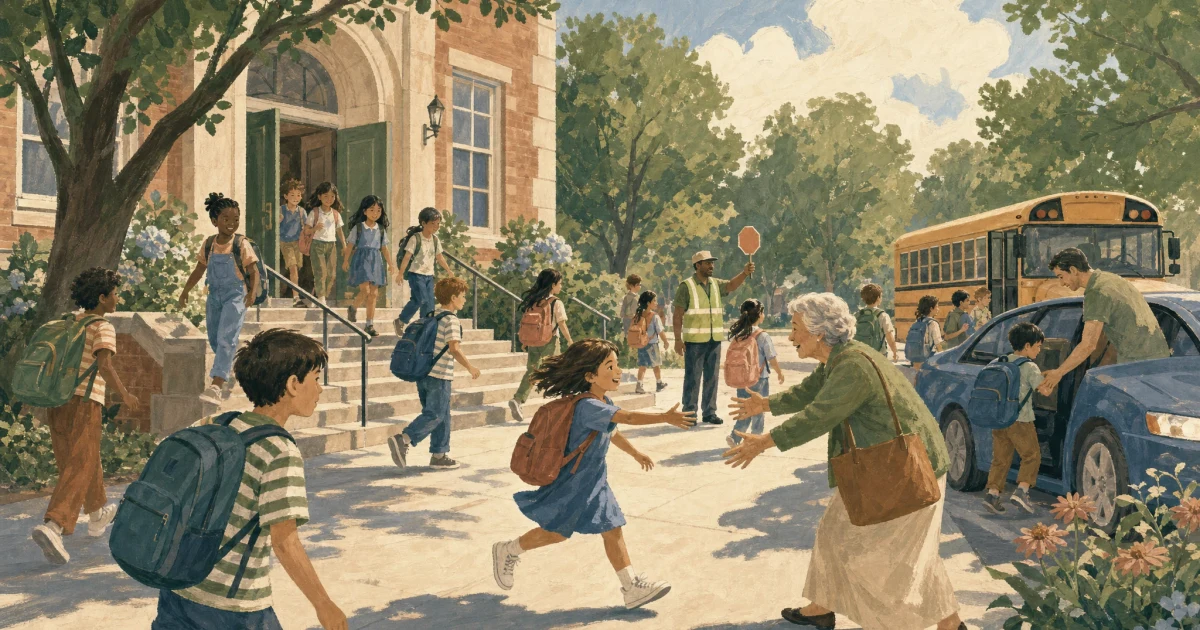
One bell, and then they scatter. The oldest stays in the building for aftercare. The middle one crosses campus to practice. The youngest leaves with a grandparent on Thursdays and rides home with a neighbor the rest of the week. Same dismissal minute, three completely different afternoons.
Most weeks that holds, because most weeks it repeats. What gets you is the afternoon that doesn't: the week practice starts, the Thursday the grandparent is out of town, the kid waiting at a pickup loop nobody is driving toward. It slips past because the other four afternoons were fine, and because the whole arrangement lives in one person's memory instead of on a page the rest of the house can read.
What follows is the handoff side of the day. Where each kid goes after the bell, when that stop ends, who picks them up, and what had to be in the bag that morning. It isn't a snack-homework-play routine. For the other end of the day, the reusable school launch cards handle getting everyone out the door.
Where each kid lands after the bell
Start with destinations rather than dismissal times. A time tells you when school ends. It doesn't tell you whether a kid walks to aftercare, crosses campus for practice, goes home, or leaves with another adult.
Most weekday afternoons land in one of four places:
| Where they land | What it means | Who usually collects |
|---|---|---|
| Aftercare or extended day | The kid stays at school in a supervised program until someone comes. | Program staff, until a parent or a ride arrives. |
| An activity | Practice, a lesson, a club, or tutoring, on campus or across town. | A coach or instructor, until the drive home. |
| Home | Straight home to a parent, a sitter, or an older sibling in charge. | Whoever's home, or whoever drives them there. |
| A relative or friend's | A grandparent, an aunt, a neighbor, or a carpool family's house. | The host adult, until a parent collects later. |
With one kid you can hold all of this as a single weekly line and mostly get away with it. With several, the side-by-side view is where the collisions turn up: two stops ending at the same minute a mile apart, or one kid needing a ride right as another practice starts.
Each row answers two separate questions. Who is supervising the child immediately after school? And who becomes responsible when that stop ends? Program staff may cover the first while a parent, grandparent, sitter, or carpool covers the second. Writing only "aftercare" leaves the second one blank, and the second one is the half that involves driving.
Fill one page per kid, then read them side by side
The printable gives each kid a Monday-to-Friday block with four columns: where they land, when it ends, who picks them up, and the snack and gear to pack. Fill one copy per kid, then keep the pages together. Reading across them is the point, so three sheets riding around in three backpacks won't do much.
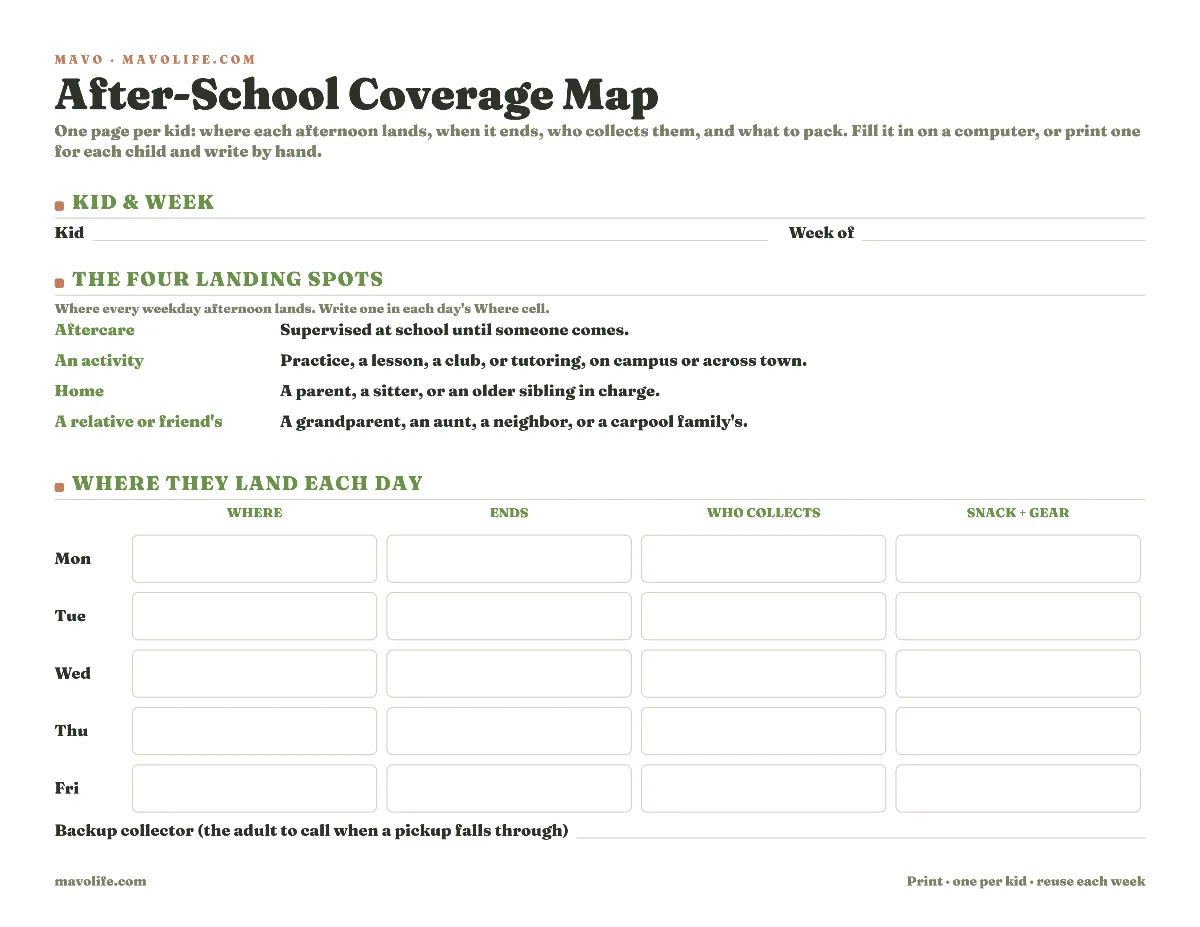
Download the printable coverage map (PDF)
Mark the steady pattern lightly, or leave it in place for the whole season. Save the pen for what's different: a new destination, a changed pickup, an earlier end time, or a bag item that shows up on one day only. A full grid looks busy, but most weeks have only a few cells worth talking about.
The backup line under the grid is for the next person to call when a ride falls through. Being on that line isn't the same as being authorized by the school or the program, so check the local pickup procedure before you count on anyone there.
Name who collects, and what goes in the bag
Write a real name in every row that ends with a pickup. "Soccer ends at 5:30" is a fact about soccer. It says nothing about who is standing in the parking lot at 5:30. "Dad gets him after soccer" does. If a coach or a program has an agreed procedure for late pickups, write down what that procedure is rather than assuming someone can wait around.
If two parents are splitting the driving, working out whose day is whose is its own puzzle, and splitting the week between two working parents walks through it. This map sits on top of that. Once Tuesday belongs to one parent, their name goes in the pickup cell for every kid that day.
The snack and gear column belongs next to the destination because the bag gets packed hours before anyone drives anywhere. A straight-to-practice afternoon needs cleats, shin guards, a full bottle, and something to eat. Aftercare needs the homework folder and a second snack. Thursday's swim bag has no chance if it only exists on an evening calendar.
In Mavo, each of these stops can be an event on the shared family calendar with one person handling it and a reminder attached. Filter by person and you get one kid's week without the others stacked on top of it, and Home shows which afternoons are covered and which still need an owner. Snack and gear can stay on the printed page, since that column gets read while someone is packing, not while they're driving.
The Tuesday-only pickup that slips
Repeated afternoons are easy to scan past, which is exactly what you want them to be. The exception has to interrupt that on purpose.
Look for five kinds of change:
- a kid lands somewhere different;
- the stop ends earlier or later;
- a different adult collects;
- a bag item appears or disappears;
- the usual backup isn't available.
Chess club on Wednesday, a grandparent pickup on Tuesday, and an every-other-Friday carpool all belong in the changed cells. If a variation repeats, give it its own event on the calendar with the current owner and a reminder. If the named pickup falls through, the backup pickup plan has the ordered contacts and the school-specific release process.
Glance at tomorrow's rows before the bags close for the night. If one kid is headed straight to a field and another to a relative's house, the shoes, the snack, the instrument, the library book, and the pickup names should all agree with each other. A lonely pair of cleats by the door is usually the first visible sign that they don't.
When one afternoon changes
A single changed afternoon doesn't need a page of its own. Cross out the cell and write the new answer beside it. Leave the crossed-out version legible until the day has passed, because the other adult read this sheet on Sunday and is still carrying the old answer around.
Before the week starts, read down each kid's column and across each day. Most of it should be boring. The cells that aren't should tell you what moved, who's driving, and what has to leave the house that morning.