Pickup & drop-off · July 7, 2026 · 5 min read
Summer camp checklist: the reusable weekly command sheet
A reusable summer camp checklist you build once: the daily packing kit, the forms and deadlines, and a drop-off and pickup grid for the whole session.
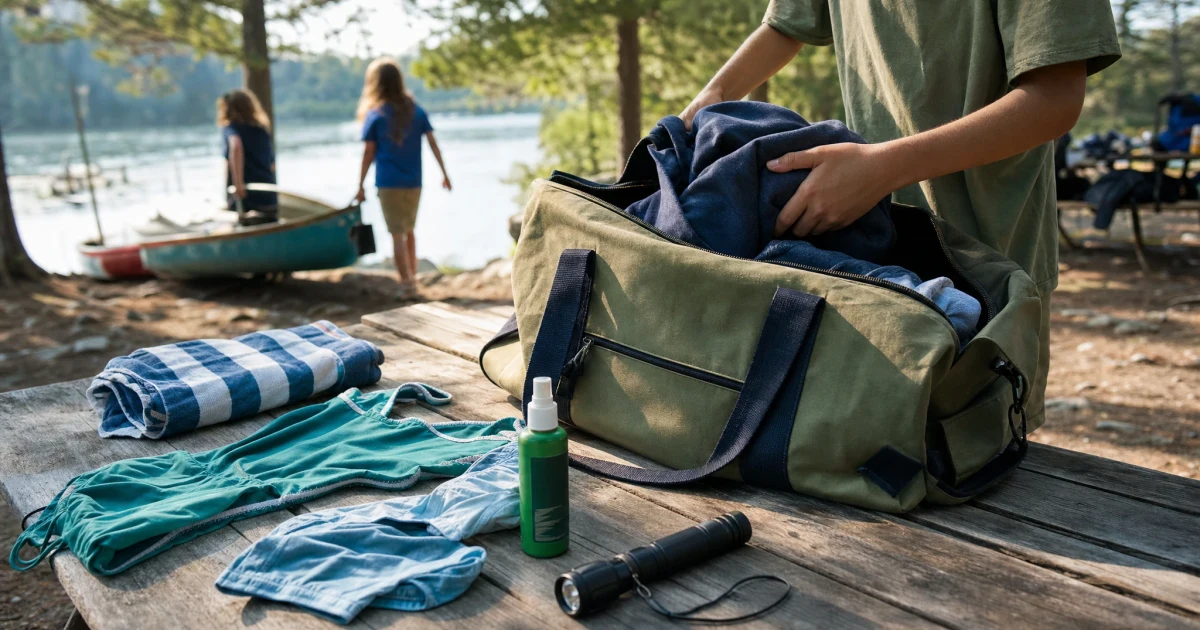
Camp sends the official packing list. Your week still has its own questions: Which days need swim gear? Is the field-trip form finished? Who is picking up Thursday? A family command sheet keeps those changing answers together.
Start with the camp's current materials. Packing requirements, health procedures, hours, and pickup rules vary, which is why the American Camp Association recommends using the camp's own packing list. Camp Minikani's day-camp guidance shows how those details can be split across paperwork, packing instructions, and pickup rules.
The command sheet below brings the household side together without pretending to replace either source. Build it once for the session, then reset only the parts that change.
What goes on the command sheet
A camp command sheet holds the household answers, not the camp's instructions. Some stay steady for the session. Others change every week.
- Camp facts. Copy the camp name, session dates, hours, address, and useful contacts from the camp's current materials. If an instruction changes, the camp's version wins.
- Forms and money. Track whether required forms, authorizations, and fees are complete, along with their due dates. A wall sheet should show status, not private medical details.
- The medication handoff. One line for what goes to the camp's nurse, when, and which adult handed it over.
- The drop-off and pickup grid. Put one name beside each leg from Monday through Friday, plus the backup pickup when your family needs one. This is a family assignment. It does not replace any pickup authorization the camp requires.
Those blocks answer a practical question: what does the household need to know today that won't be obvious from a generic packing list? Form status, meds, and ride names all change, and none of them are written down anywhere else.
The packing kit is deliberately not on this sheet. The base bag is the same every day, so a printed copy of it is a list to read rather than a thing to fill in, and it belongs with the kid who packs it.
The command sheet, ready to print
The one-page printable keeps the camp facts, form status, the meds handoff, and the week's rides in one view. Print it into a page protector or laminating pouch and use a wet-erase marker, or print a fresh copy when the session changes.
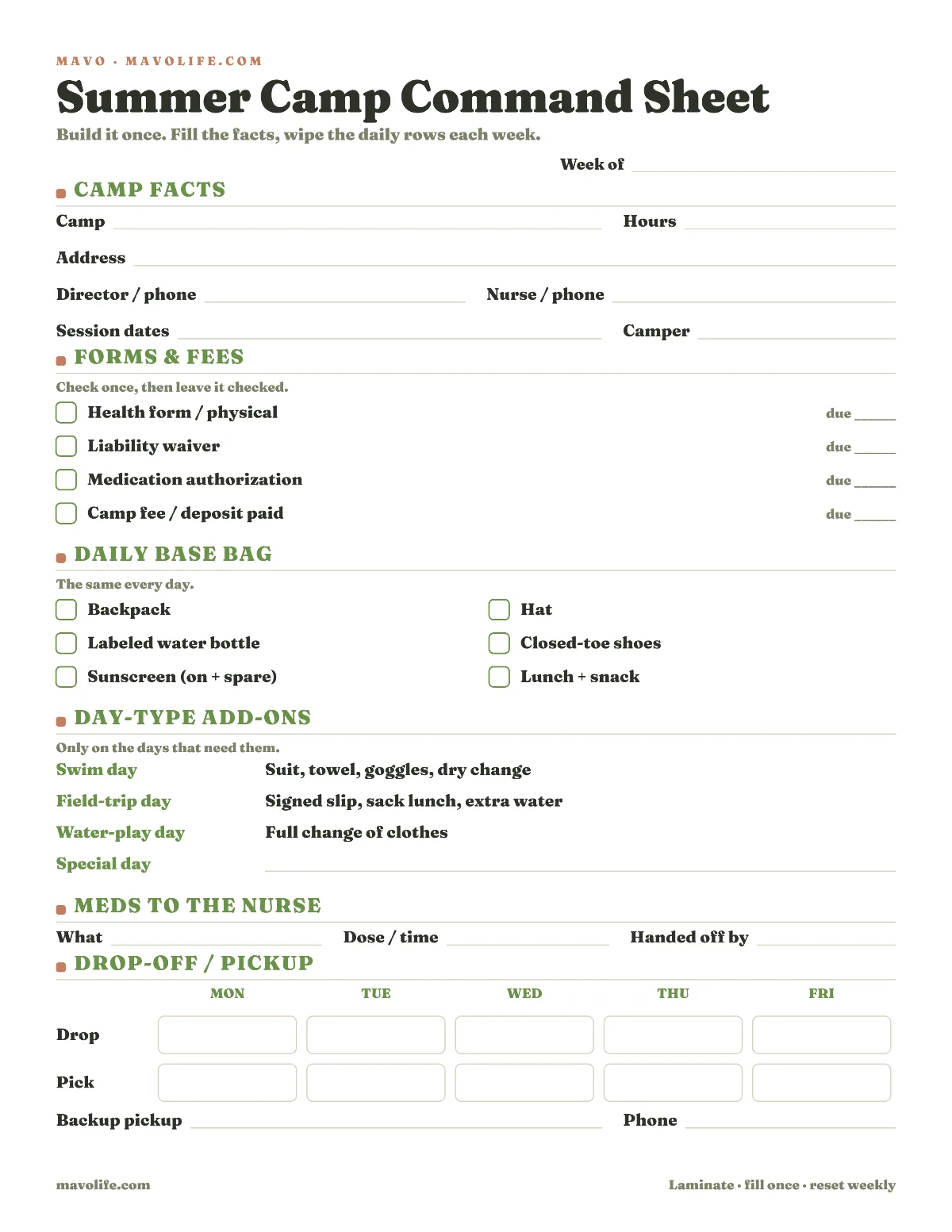
Download the printable command sheet (PDF)
The meds line is a reminder to follow the camp's adult handoff instructions. It isn't a place to write doses or improvise a procedure. Keep the camp's original health and medication directions available to the adult who needs them.
The daily go-bag is its own small artifact. Build the exact go-bag card here if a child is ready to pack the repeated base items. That keeps the packing job with the kid and leaves the command sheet holding the adult-owned forms, meds, and rides.
Build it once, reset it weekly
The sheet works when its steady information stays put and its weekly information is easy to replace.
- Copy the camp facts from the camp's current instructions.
- Record form and fee status once for the session, then update a line only when its status changes.
- Write the meds line if anything has to reach the camp's nurse, and name the adult handing it over.
- Write a drop-off and pickup owner for each day, then confirm that any substitute pickup adult has completed the camp's authorization requirements.
- Check tomorrow's row the night before, while a ride can still be swapped.
If the next week is a different camp, use a separate sheet. Mixing two camps' hours, packing rules, or pickup processes into one set of facts is more confusing than keeping two clearly labeled pages. For two children at the same camp, one sheet may work if the forms and bags remain easy to distinguish. If they attend different sessions or have different instructions, give each child a sheet.
Where it breaks down
A paper sheet can be current at breakfast and stale by pickup. A field trip moves, a form deadline changes, or the adult covering Thursday is no longer available. The command sheet still has value, but it needs a clear correction when the camp's source changes.
Mavo can hold that changing family layer. Forward the camp email, paste the notice, or upload a photo or file, and Mavo can turn it into plan items for review. Put one owner on each pickup or task, then use Covered and Needs Attention to see which family assignments are settled. On the Plus plan, the family can be alerted if an event loses its owner.
When a camp notice changes an event, Mavo AI can draft the update for approval. If the schedule came from a linked outside calendar, that source still controls its date and time; family-only details such as owner and notes can be added in Mavo. Neither path authorizes a pickup adult with the camp. It also can't complete a form or confirm a medication handoff.
If a grandparent or sitter is covering pickups, the babysitter and grandparent handoff template holds the broader care context. If camp is one of several activities, one family calendar everyone can see helps compare the camp week with the rest of the season. The camp's rulebook still stays with the camp.
Quick questions parents ask
Day camp or overnight, does the same sheet work? The blocks can still help, but their weight changes. Day camp leans on the pickup grid, because there is a ride to sort out twice a day. Overnight camp leans more on the camp's packing list, forms, travel details, and labeled belongings. Drop any block that doesn't match the session rather than forcing the day-camp routine onto it.
What if I have two kids at two different camps? Use one sheet per camp unless a split board remains unmistakable. Label each camp and child at the top. The facts and forms may differ. So may the meds and the pickup rules. Clarity matters more than fitting the week onto one page.
My kid is a first-timer and nervous. A checklist can't settle every worry, and it shouldn't treat social, sensory, accommodation, or health needs as packing problems. Understood's camp-evaluation questions are a better source for discussing fit and support. Use the command sheet for the household details, then use the drive and drop-off for the child in front of you.